



Last week, Rajya Sabha MP and senior artist from West Bengal Jogen Chowdhury wrote a letter to the prime minister. It is very rare for an artist to do this, but Chowdhury was moved by the anxiety that has gripped several artists all over the country ever since the government announced goods and services tax on art. Art was exempt from value-added tax in some states like West Bengal. But the introduction of GST has changed all that, putting artists across India in a quandary. In the GST regime, “paintings, drawings and pastels”, “original engravings, prints and lithographs”, “original sculptures and statuary in any material” and “antiquities of an age exceeding 100 years” are under the tax bracket of 12 per cent.
So Chowdhury wrote to the prime minister, the finance minister and the GST Council seeking exemption for art under GST. The new tax structure does gross injustice to visual artists who were already languishing from palpable state apathy. Now, they are subject to double taxation as artists are already paying income tax on revenue they get from the sale of their works. “Given that the overall turnover of the total art market would not even cross Rs 500 crore, it hardly qualifies as a commodity in today’s economy….” Chowdhury wrote.
Art has been last on the priority list of successive governments in India, and despite decades of lamentation, it still has to knock at the doors of policymakers begging for alms. And we talk about taking on China in the competitive world, ignoring the fact that China had long ago realised the importance of cultural capital. In fact, it has given a tax holiday of ten years to artists, resulting in the opening of more than 300 auction houses in that country. In India, an international auction house had to shut up shop after demonetisation. GST is going to deter others, too. Indian artists, who had began to gain recognition in the last decade or so, do not deserve this stepmotherly treatment.
In most countries in the west (like the US, the UK, Germany and France), artists are exempt from income tax with a ceiling on income limit. Only works that exceed a certain price point are subject to taxation and that, too, is nominal. Income earned by writers, composers, visual artists and sculptors from the sale of their project is exempt from tax in Ireland.
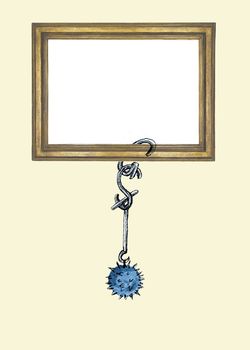 Illustration: Bhaskaran
In India, under GST, artists will have to pay a 12 per cent tax before they send out their works anywhere in the country whether it is for an exhibition in a gallery or for a charity auction or even a non-profit event like the Kochi-Muziris Biennale. Holding an art event or engaging in any creative activity for that matter is not an easy proposition in this country. The introduction of the GST will make art making even more difficult. Not only will this restructuring have a negative impact on the fledgling Indian art market, mostly operated by galleries and collectors, but it will affect artists who are beginners and are still trying to establish themselves, putting pressure on their minuscule sales and hampering their livelihoods. Galleries, auction houses and other big players may survive, but those in the margins will have to, unfairly, bear the brunt.
All this I suspect, germinates from the mistaken notion developed from news headlines that tom-tom the astronomical prices some artists fetch in the art market, particularly at international auctions. They forget that most of those artists are either dead or have no use of the money transacted. In the west, artists do get a percentage from such sales, but not in India. This raises the hydra-headed question once again: Is art a commodity?
editor@theweek.in