


Donald Trump used social media with deadly effect to win. But his victory also exposes the deadly effects of social media.
In the new mediascape, Facebook is the champion, charlatan or challenger—depending on your worldview. We see the chasm between the multiplicity of the real world and the echo chamber of the Facebook world, which not only reflects but magnifies your views back to you. This is not virtual, but augmented reality. Your group augments your opinions resulting in confirmation bias.
Social media’s original purpose to connect people is brilliant. But when it morphs into primary purveyor of news, then we slide into a “Twilight Zone”. This poses a danger to journalism—and to societies as a whole. In the Facebook world, opposing and dissenting views are shut out. People who were part of a pro-Hillary group were “unfriended” because they posted something favouring Trump. Self-censorship for the sake of belonging to a group is widespread. Social media is, therefore, not always an open forum for free, frank and fearless exchange of contrarian ideas and opinions. It is a closed loop for the same species to hang out, post, share and reinforce their outlook. Part of Facebook’s feel-good tactics is to spoon-feed people what they want to hear, while minimising exposure to opposing narratives. Social media is the prozac of the masses.
Alarm bells ring when facts are distorted. In TechCrunch, Sarah Perez blogs: “An increasing number of fake news sites with completely fabricated content have filled the network even as Facebook abdicated responsibility for the disinformation it lets virally spread.” Facebook argues it is not a media organisation, so cannot be held to the standards of traditional media. The problem is that Facebook has become the biggest source of news in the United States. A Pew Research study from May 2016 shows that 140 million Americans get their news from Facebook.
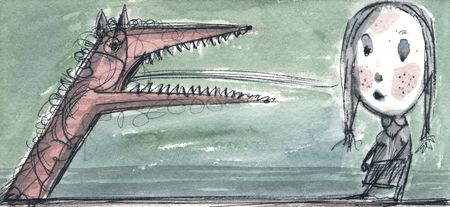 Illustration: Bhaskaran
Yet, human judgment vanishes as editors are deleted from networking sites’ newsrooms, replaced by an impartial, impersonal, but fallible, algorithm that has trended inaccurate stories. Enter Faceless Fakebook Frankensteins. No checks and balances are in place, nor is content vetted for veracity, before memes go viral. As German Chancellor Angela Merkel said, “Politicians now have to deal with campaigners who shape public opinion by using fake websites, bots and trolls.”
Still, Facebook’s spectacular rise is a result of the dismal failure of the traditional media, which is guilty of many “social media sins”. It has been partisan, shutting out opposing narratives—would Al Jazeera have become so popular in the Middle East if the American media were not so biased? The losers and discontents of globalisation were airbrushed from reality as the profiteers of “free trade and flow of capital, goods and labour” hogged the limelight. Seattle’s 1998 anti-globalisation protestors were nuclear fissioned from the main streets and the mainstream media. Ditto ‘Occupy Wall Street’ protestors, 15 years later. Little of the rage seething in America’s underbelly ever made it to news pages or TV studios. As readers and viewers flocked to social media, traditional media’s economic bedrock disintegrated. Experienced, but expensive, journalists were fired, investigative journalism floundered and the edifice of fact checkers crumbled. Little remained of the venerable institution of journalism. Few brave media organisations soldiered on… and still do.
Trump’s triumph is a wake up call on many fronts. Societies deserve serious, fair and, above-all, honest journalism.