



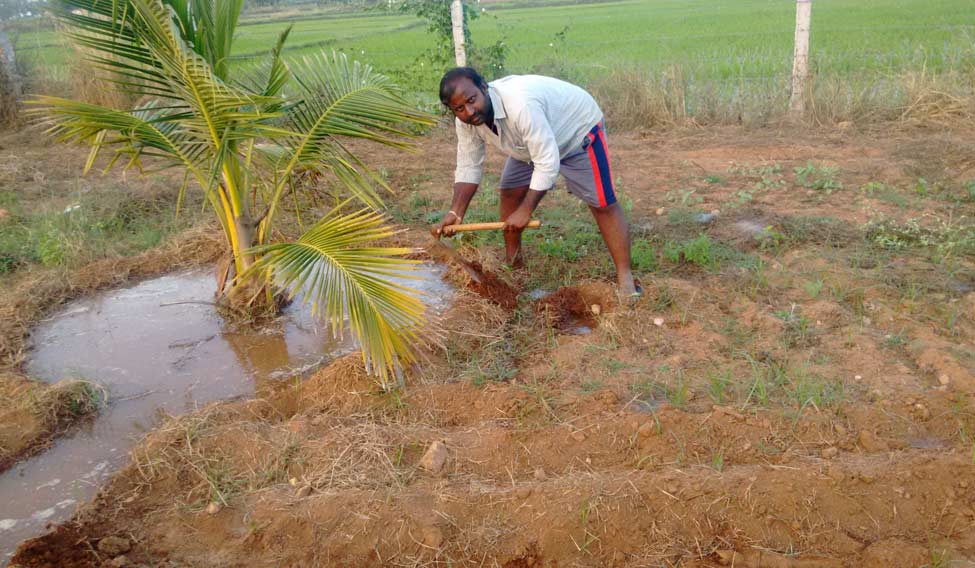
Returning to the roots is a fulfilling feeling. That is probably why many are passionately taking this path, literally—leaving cushy IT and filmmaking careers to return to the soil, tend to it, and reap joy.
Saraswati Kavula has done it all before she decided to follow her inner voice and settle down on nine acres of land. "I entered the village of Nandi Wanaparthy (in Telangana), saw some broken houses, felt the calm and peace, and decided that I would buy land here," she says. What was to be a venture with like-minded friends, turned out to be a single-handed effort.
From hotel management, to a bank job and then to documentary filmmaking, Saraswati has a lot of experience in various fields. She says she learnt a lot from people when she was making her films. "I would talk to people, learn about their lives and how they lived," she says. Through these interactions, she picked up lessons and tips on caring for the land, crops and environment.
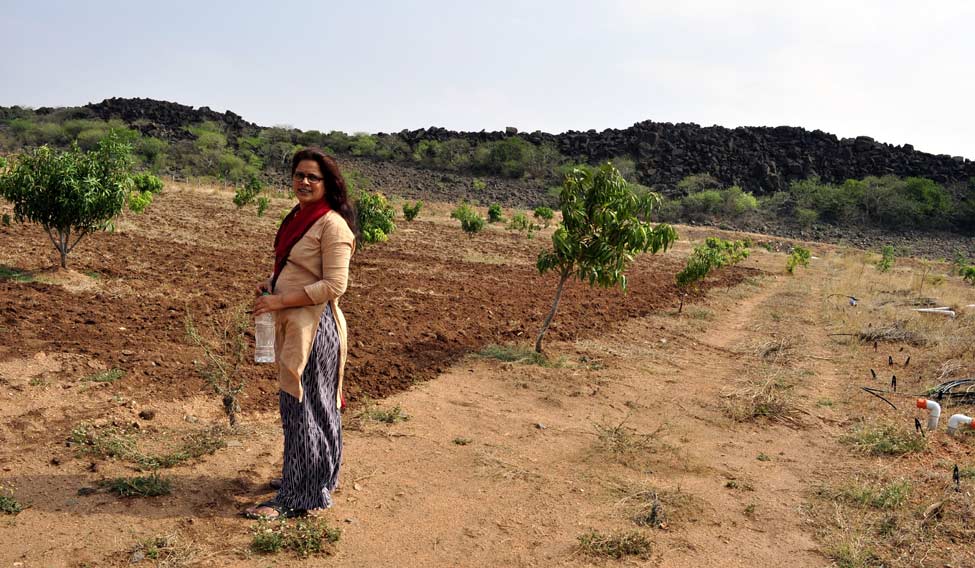 Saraswati Kavula in her farm | Ramachander Pentuker
She initially bought 4.5 acres of land in 2009 and later added to it. She started with the traditional millets including ragi, jowar and bajra. “It is a dry land and even six bore wells do not provide any water. Though we are close to Nagarjuna Sagar, this entire region is a rain shadow," she says. She also grew other dry land crops like green gram, black gram, castor and pigeon pea. In fact she grows two varieties of pigeon pea, one of which needs still lesser water. "I have planted hardy trees like neem and mango, which are self sustaining," adds Saraswati.
"I had no knowledge of soil, but I learnt by trial and error," she says and adds: "My investment is done and I will not need to spend any more on it. Now I have to think about how to reduce my input cost and market what I produce," she says. Currently she packs the produce and calls friends who come and pick up everything at market rate. Now, she is also thinking of growing black plums (jamun), Indian gooseberry and the three trees which help in making Triphala—Amalaki, Haritaki and Bibhitaki.
"My learning from all this is that if you learn to live like this you learn to live with less."
With almost similar thoughts, Talakanti Praveen Kumar Reddy, too, returned to the soil. He was born in an agricultural family and was working as an IT professional. "My grandfather was a farmer, but my father faced losses with the land and so gave the 21 acres of land on lease." When he was in Bengaluru, he would go around on weekends and realise that people were growing organic and he realised that he had the land but did not have the inclination till now. But soon he, too, began to think along the same lines and he returned to Pebbair village in Mahbubnagar district, where his forefathers owned land. "After much thought, my focus was on safe, healthy food and this is what brought me to the land," he says. He also agrees that though he is making money off the farm, it was because his wife, who is an assistant professor at CBIT, Hyderabad, that he could leave his job to work on the land full time.
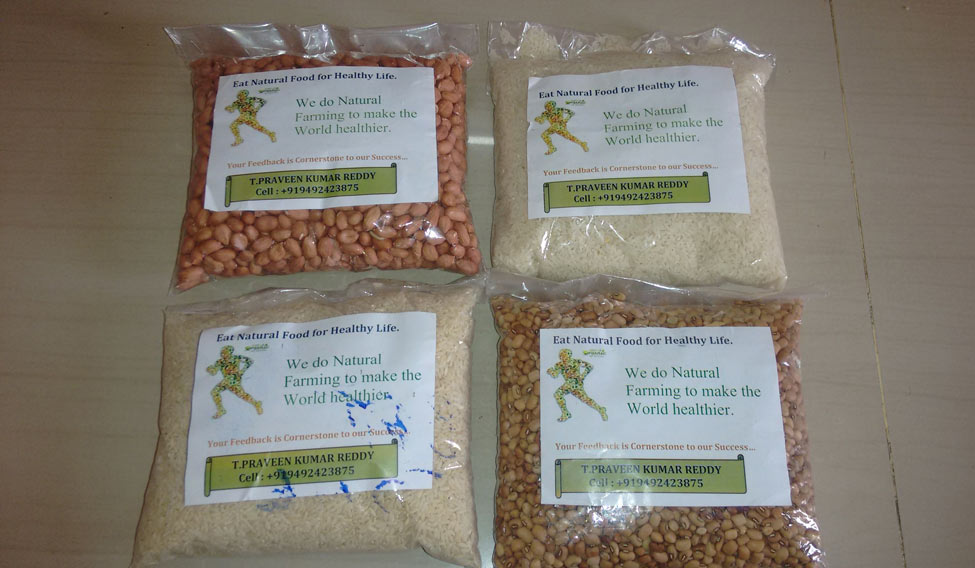 Praveen Kumar's farm produce
While the Jurala project is near his land, it has been dry for the past two years he says, and he carries out drip irrigation through two bore wells.
"Multicropping is the best way to work on a farm," he says. He grows groundnut, green gram, black gram and on seven acres he grows citrus fruits and mangoes for inter-cultivation. On one and half acres he grows all kinds of gourds. And for ready cash, he grows vegetables on five acres of land.
He along with 10 other farmers have also started an organic restaurant called Prakruthi at Mahbubnagar where the rice, vegetables, pulses, legumes and curd are sourced from their own farms.
"It also helps that I am doing my own marketing," says Praveen. He has his own brand called `Palamuru' which he sells in the open market. As part of natural farming, Praveen is also cultivating a variety of rice developed by Professor Jayashankar of Telangana State Agricultural University. "This variety can be consumed even by diabetics," he says. The urine and dung from his seven cows and two bulls is used for production of organic manure—jeeva amrutham—which is then fed to his crops through drip irrigation.
Sama Yella Reddy was an SAP consultant working in Spain, the US and Dubai when he felt a strong calling to return to his land near Vemulawada in Medak district in 2012. Along with his wife, he now runs an organic shop called Aahara Yoga in Siddipet and his land is about 20 kms away at Mari Muchalla. He lived the good life, but he says after a period of time, the cultural clash within the mind takes its toll. His health was the worst affected with him getting skin problems and he began to think about stability in life. There were family issues, too. "In Spain, life is slightly better. They, too, have a family system like in India, but I had enough and I wanted to come back and become a farmer," he says.
Reddy, who did not know anything about farming, visited farms and read about technology involved in various types of farming, and chose polyhouse farming. Along with gerbera flowers, he also grows asparagus grass and golden rod, both of which are used for making bouquets along with the gerbera flowers.
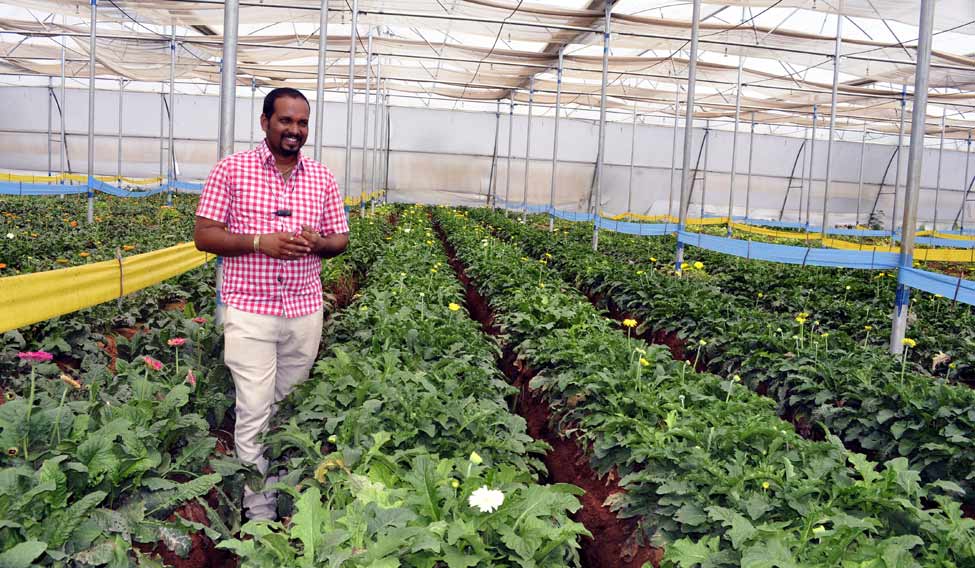 Sama Yella Reddy in his polyhouse | Ramachander Pentuker
'Yellanna', as he is popularly known as returned to the soil, not with the idea of making money, but to become healthy and grow healthy food. And most of these young new age farmers are smart enough to think of marketing right at the beginning stage, thus realising their efforts much faster than their predecessors. "I kept the farm as the marketing point with a radius of 50 kms. The second place is Hyderabad."
Thanks to Yellanna, there are 200 polyhouses in that region and cultivators bring their goods to him. "Polyhouses are for floriculture. You should not grow anything else within the confined spaces," he says. And he is happy with this system because he has an upper hand over his counterparts in north India. "In winter we continue to grow, whereas up north nothing can grow thanks to the frigid weather," he says.
He relies on drip irrigation since that consumes very little water. He has three bore wells which do not yield any water and in fact he had to dig 350 ft for one of them and still found no water. He grows fruits, vegetables, millets, rice, legumes, etc on his six acres of land. He has taken another six acres on lease to grow all this. Yellanna practices the concept of 'food forest' and he uses the five-layered model to grow crops. He also grows mangoes, oranges, guava, sapota, pomegranate, papaya, banana and black plum or jamuns. "The idea is to allow people to bring one basket and take back various items in it," he says.
Ranganadha Sarma quit his job in Australia and returned to Ayyagaripalli under Midgil mandal of Mahbubnagar and is cultivating organic crops, because he thinks that healthy food is difficult to find. He has cows to help with his organic farming and is multicropping with groundnut and other crops. He is keen on teaching other farmers not to use chemical fertilisers and pesticides.
Yellana puts it right: "It isn't only money that matters. I am looking for satisfaction and I am getting it through farming.”