



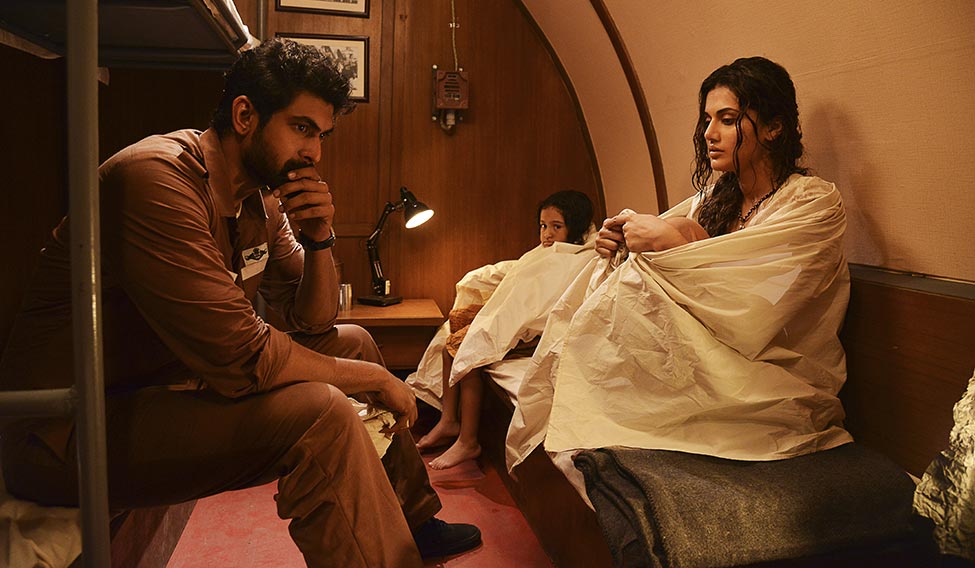
Though this film is inspired by the events relating to the Pakistan naval submarine, PNS Ghazi, being sunk by the Indian Navy near the Visakhapatnam coast, it is a pure work of fiction, with the filmmaker taking creative liberty with all the events projected in this film,” says the extended disclaimer as The Ghazi Attack begins. The story has two versions, that of India and Pakistan.
The ‘mystery’ surrounding the story is what intrigued debutant director Sankalp Reddy. Even if the popular Indian version is quite straightforward—an Indian ship, INS Rajput, attacked PNS Ghazi, a submarine deployed by Pakistan to destroy the aircraft carrier INS Vikrant—the Pakistan version of the story claims that the submarine sank after it accidentally detonated the mines it was laying along the Visakhapatnam coast.
The idea of making a film on the Indian Navy first occurred to Reddy during a visit to Visakhapatnam four years ago. He visited the Kursura Submarine Museum there and instantly knew that a submarine would be the main subject of his first film. However, finding an interesting story to tell was a difficult task. Reddy decided to tell the story of PNS Ghazi precisely because of its contradictory versions. He did a lot of research and also faced a few brickbats in the process. Even when the censor board insisted on the long and dreary disclaimer, it didn’t bother Reddy or the producers. “Even if things shown in the film were checked for facts, creative liberties were taken in terms of the characters we have shown and the story we have followed,” says Reddy. “Plus, both sides of the story have still not been verified completely. How does a disclaimer change the cinematic experience we have put forward for the audiences anyway?”
Interestingly, the bilingual film that opened to a lukewarm response, making just Rs 4.25 crore on the first day, witnessed a 40 per cent jump on the second day, thanks to word-of-mouth promotion. Even though several critics have panned the film, it has been doing decent business because of the courage shown by the young director to make India’s first war-at-sea film.
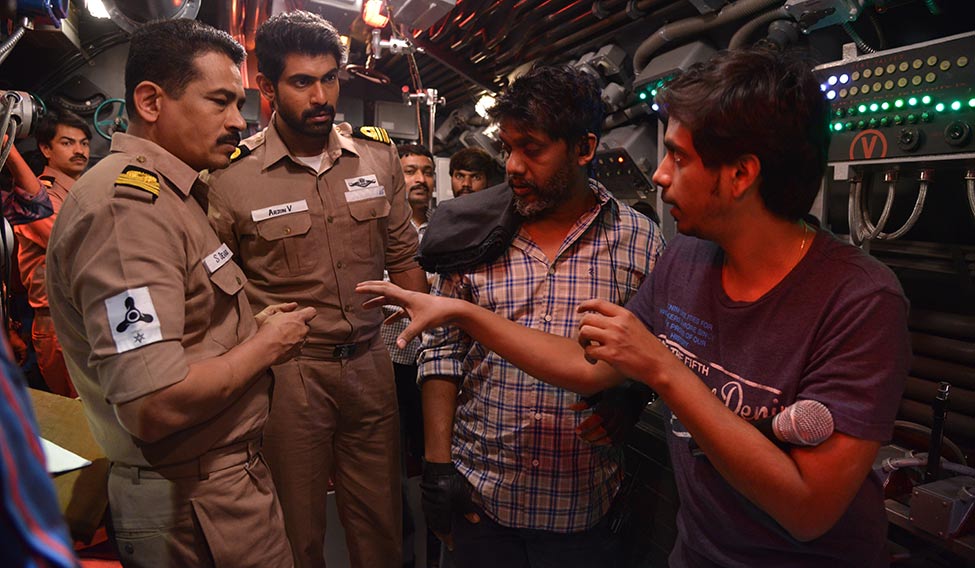 History reloaded: Director Sankalp Reddy (extreme right) on the sets of the film. Reddy was intrigued by the mystery surrounding the Ghazi’s sinking.
However, the task of recreating a slice of history was not easy for Reddy. While building the sets, he ran out of funds. “I just had a few theatre actors onboard till then,” says Reddy, who had spent more than six months doing research on how to build the sets. He also sought help from retired Navy officers to get a thorough understanding of how a submarine works. “After the research, with the help of my production designer [Shivam Rao], we started building miniatures of submarines,” says Reddy. The initial plan was to make the film on a budget of Rs 15 lakh. However, the set—erected in Hyderabad, part of which was on land and the rest was inside a huge swimming pool—itself cost Rs 25 lakh. Reddy thought of turning it into a film for YouTube. But he had already invested a lot of time and energy into it, so he decided to find a way to generate funds. “The good part was that since I had built a part of the set, I had a few graphic shots and a few small visuals, which I could share with potential investors,” he says.
A production company expressed its interest in the film. With the issue of finances sorted out, Reddy had to pick the lead actor next. Rana Daggubati was so impressed by the “different theme” of the film, he agreed to do it. But the team had to make some modifications in the sets to accomodate him. “He is six feet three inches tall while the inner height of a submarine is only six feet,” says art director S. Venkat Murali. “Keeping that in mind, we had to increase the height of the set to 7.5 feet.”
However, these liberties aside, the team tried to keep most of the things real, from the way the men lived in the cramped conditions of a submarine to the underwater sequences for which the team had scuba-divers onboard at all times to avoid any discrepancy. “We took in-depth details of a torpedo firing. We must have watched almost all the Chinese, Hollywood and documentary films made on submarines to get everything right,” says Reddy, who was very specific even with the special effects used in the film.
Reddy is not worried about the film’s fate at the box-office. He is happy that he has made a bigger and better film than what he had set out to in the first place. “And I have touched a chapter from history,” says Reddy, “that was mostly unknown.”
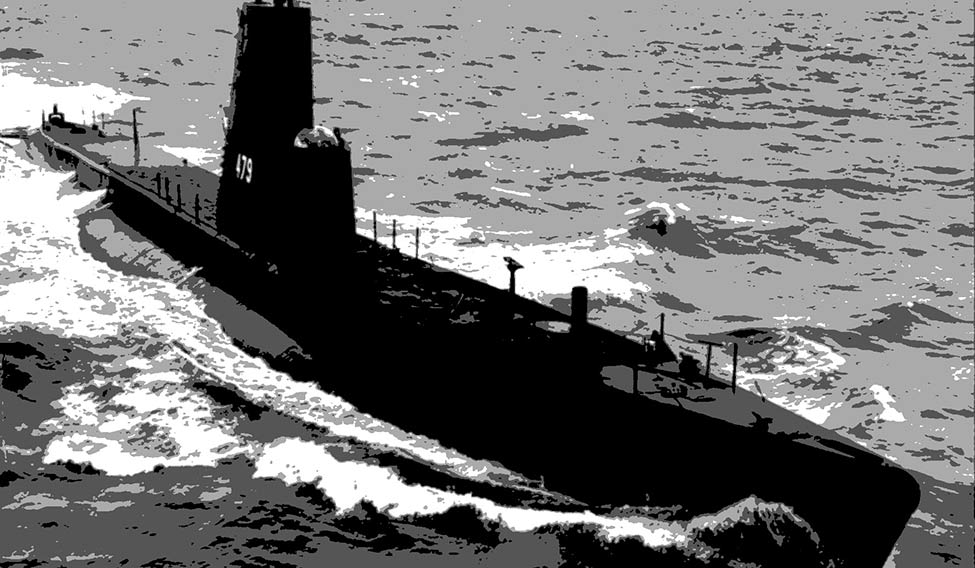
ONE INCIDENT, TWO VERSIONS
* During the 1971 war, the Indian Navy deployed the aircraft carrier INS Vikrant to create a blockade in the Bay of Bengal and isolate East Pakistan.
* In retaliation, Pakistan deployed its first fast-attack submarine, PNS Ghazi, to attack INS Vikrant and lay mines along the Visakhapatnam coast.
* A World War II submarine of the US Navy, PNS Ghazi was inducted into Pakistan navy in 1964.
It set sail from the Karachi Harbour on November 14, 1971 for the attack.
* On learning about Pakistan’s intentions, India quietly moved Vikrant to a secret location.
* India then sent INS Rajput, an ageing WWII destroyer which was awaiting decommissioning, to distract Ghazi.
* Not finding Vikrant, Ghazi began laying mines, unaware that a destroyer was approaching it.
* When Ghazi sensed Rajput’s presence, it tried to escape. But Rajput fired two depth charges (anti-submarine weapon) and hit the submarine.
* The mines and torpedoes aboard the submarine caused an explosion. This is the Indian version of the story.
* Pakistan claims that the submarine was destroyed after it accidentally detonated the mines it laid along the coast.