



One evening, a few of us sat in a group, singing with a guitar. A friend’s seven-year-old son and his two friends joined us when they heard the instrument strum. “Do you want to play?” I asked the boys, offering them the guitar. One of them took it quite willingly and began to play a few chords. While we were pleasantly surprised, the boy’s two friends were even more so. They were probably unaware that ‘one of them’ could play the instrument.
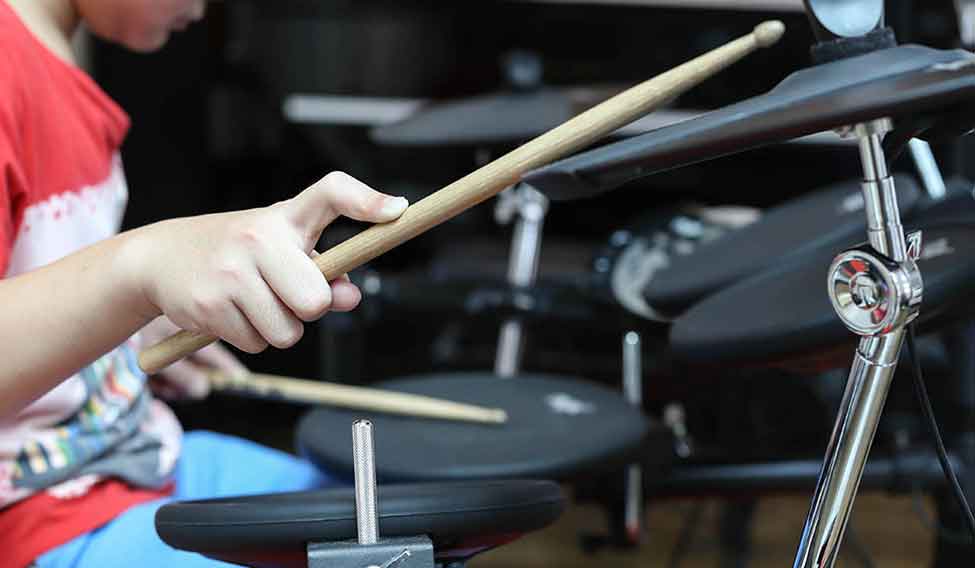
“Good, isn’t it?” my friend said to her son, happily. “Now would you choose music over play? Would you like the drum kit we talked about?” The boy hesitated. Though the rest of us didn’t know what his choices were, he seemed torn. It was plain to see that he admired his friend for playing the guitar, but he dithered on accepting his mum’s generous offer. “What does he need to choose between?” I asked. “Well, I have told him he could either have a drum kit or an X-box,” his mother said.
Brain circuits
Experts around the world confer that the brain goes through bursts of development. The first is in early childhood, when the child absorbs things around him like a sponge. The brain develops rapidly, forming connections with reference to his or her immediate environment and people around. This is the time to inculcate a feeling of security in children in terms of emotional, psychological and physical comfort. These impressions could shape the individual powerfully. A second burst happens in the teen years. In the interim, the brain and its circuits continue to develop, influenced by what a child engages with. In this context, whether a child chooses a musical instrument or a video-gaming console bears considerable impact on the mind and psyche.
The effect
Consider the effect of gaming on the brain. First, there is the noise and the jerky visuals. The game calls for quick impulses, where you need to be faster than the adversary. That isn’t so bad, except that it makes a child jumpy and constantly impatient with his or her own self, when expected scores aren’t met. If speed and expectations are met, look where they lead to—the child rejoices in having decimated or shot down an adversary. “Kill! Kill! Kill!” is what the content, context and competition is most about.
The addiction that comes with this kind of play is another matter of concern. Powerful graphics pull the brain convincingly into virtual reality, making it difficult to deal with the pace and context of the real world.
A musical instrument, on the other hand, has a profoundly positive effect on the brain. It trains the mind to be patient and persistent. It soothes the senses, spurring the child on to be increasingly precise and perfect in his or her eye-hand-motor coordination, and to aspire towards something positive. Scientists are just about beginning to decipher the beauty of music in its impact on living creatures. In short, were the boy to choose the drum kit, his mind would learn to be creative. Were he to opt for the console, instead, his brain would train to be destructive. The latter would make him aggressive or numb to aggression. In either case, it would have its bearings on him as a person to deal with, now and in the future.