



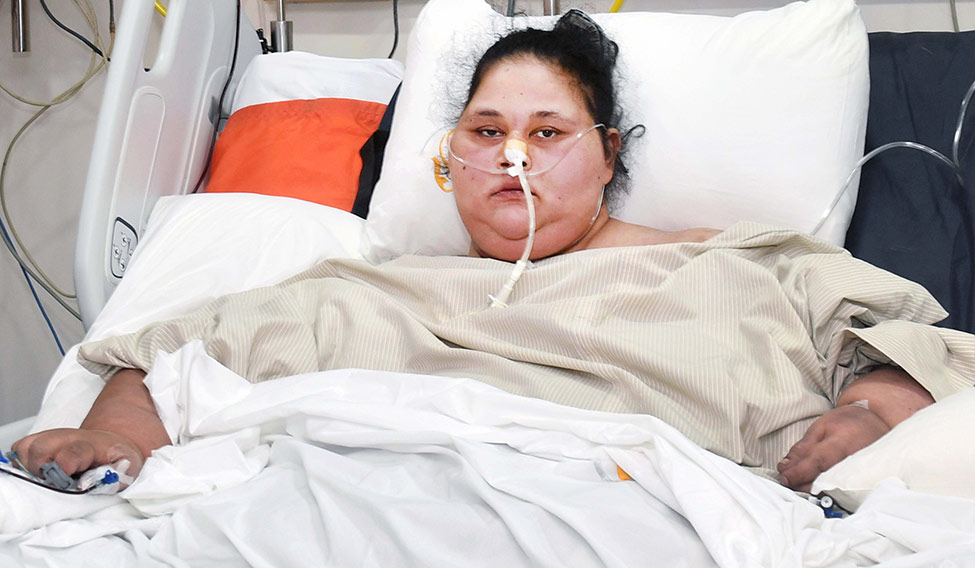

Silence, interrupted regularly by Eman’s snores, is what greets visitors to her spacious room at Saifee Hospital in Mumbai. She looks much younger than her 36 years while she sleeps, with the TV on mute. By her bedside, a nurse stands, watching her like a concerned mother. A few feet away, a resident doctor is seated.
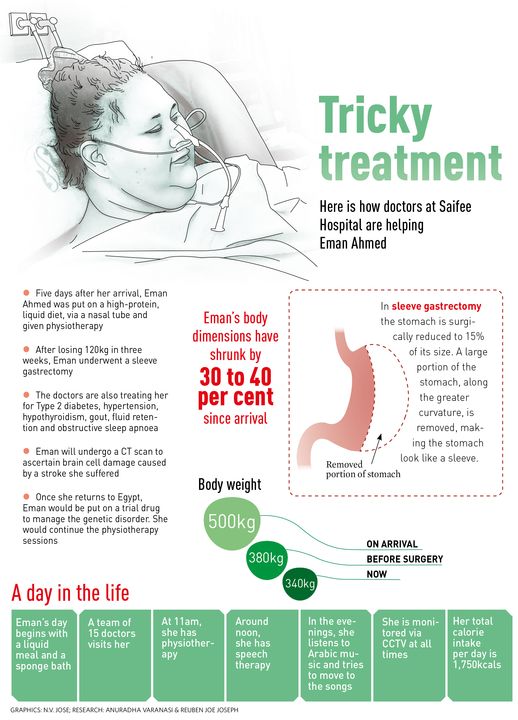
Having lost 160kg in the past two months, Eman Ahmed Abd El Aty—the Egyptian national who left her Alexandria home on February 11 and flew to Mumbai for treatment—is looking forward to going home. Believed to be the heaviest woman in the world, Eman’s journey from 500kg to 340kg was not easy. She suffers from a host of ailments caused by extreme obesity —Type 2 diabetes, hypertension, hypothyroidism, gout, fluid retention and obstructive sleep apnoea.
When her snoring gets too loud, the nurse places a continuous positive airway pressure mask over her nose and mouth to improve her breathing. Three days before she landed, the hospital was set to receive her. A 1,000sqft room on the first floor of a one-storey building behind the hospital’s main building was converted into a patient room. It has wide windows; the curtains are kept closed at all times. It also has an attached bathroom and a pantry that are mainly used by doctors and nurses. Eman’s sister, Shaimaa, has been allotted the adjacent room.
 Road to recovery: Eman being lifted into a specially designed room.
The entrance to the building is guarded by at least half a dozen security staff who keep the curious at bay. A few visitors who are allowed in are told to leave their cell phones with a security guard. “We have grown very close to Eman and Shaimaa over the past few weeks. We have bonded with Eman over Arabic music and her love for Salman Khan movies,” says the on-duty nurse, requesting anonymity. “Nurses and even resident doctors sway to her favourite Arabic music along with her, and it is something that we now look forward to.” The hospital staff uses Google Translate to communicate with Eman, who has a rare genetic disorder. Her brain keeps telling her that she is starving. The drug for treating this disorder is undergoing clinical trials.
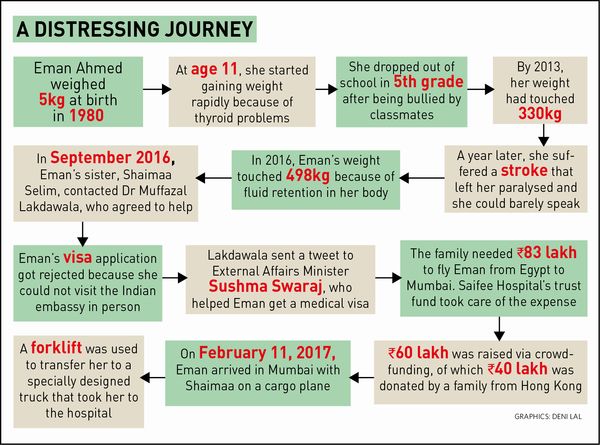
On March 7, Eman successfully underwent sleeve gastrectomy, a surgical procedure that reduces the size of the stomach to 15 per cent of its original size. But, how did she get so big in the first place? At birth Eman weighed 5kg. The average weight of a full term baby is around 3.4kg. So, she was big from the very beginning. But, she started gaining weight rapidly only at age 11, says Shaimaa. The weight gain was so much that her legs could not support her. So, she started crawling on her knees. Her parents pulled her out of school in fifth grade after she was bullied by her classmates.
Eman spent the next 25 years at home. As she continued to gain weight, her movements became more restricted. Three years ago, Eman suffered a stroke. Her family had a tough time finding a hospital that could do an MRI scan, considering her size. Eman was left paralysed and her speech was impacted. “After the stroke, she was unable to talk or even sit up,” says Shaimaa, an engineer. She quit her job to take care of Eman. While their mother, a tailor, would feed her, Shaimaa would give her a bath. The duo took such good care of Eman that she hardly had any bed sores.
Shaimaa had approached many doctors back home; everyone baulked because of the risks involved. “I would wait outside their clinic for hours on end. But, none of them wanted to take up my sister’s case,” says Shaimaa. “I also tried to contact doctors from other countries on social media, but to no avail.”
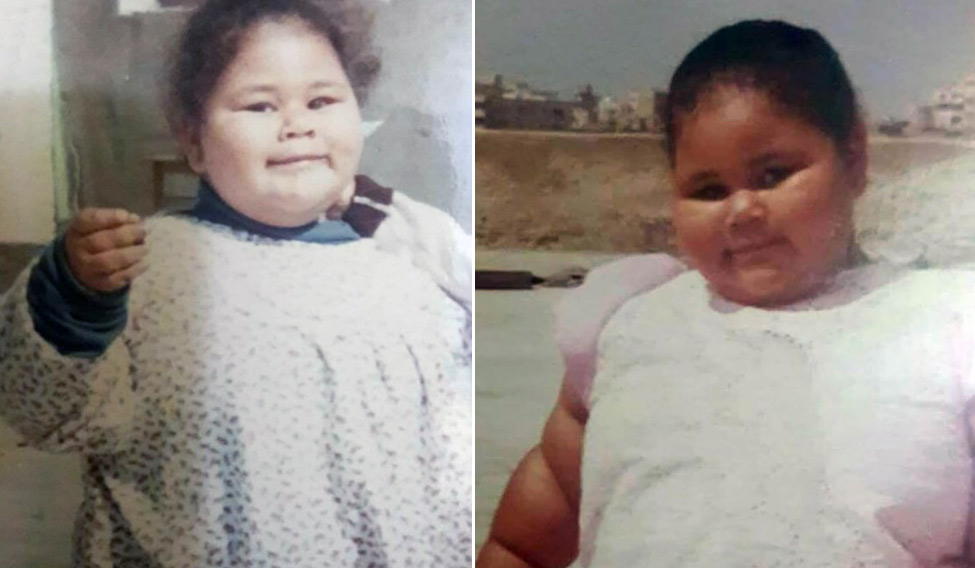 A young Eman.
In September last year, a friend recommended Dr Muffazal Lakdawala to her. Shaimaa wrote a heartfelt letter to Lakdawala, chairman of Minimal Access Surgical Sciences and Research Centre at Saifee Hospital, urging him to help Eman, who she thought had elephantiasis—which is marked by severe swelling of the limbs. Lakdawala took up the case as a challenge. However, at the very onset, they faced an obstacle. Eman’s visa application was rejected because she could not visit the Indian embassy in person. Lakdawala sent a tweet to External Affairs Minister Sushma Swaraj seeking her intervention. She stepped in and Eman was given a medical visa. Next, they had to raise funds for her travel and treatment.
“I had promised Shaimaa that I would work out the logistics,” says Lakdawala. “I first reached out to prominent people in my social circle and asked them if they would be willing to donate for the cause.
Though many of them were willing, I realised that we would have far better reach by crowdfunding.” Lakdawala started ‘Help Save Eman’ campaign on Bitgiving, a crowdfunding platform.
The initiative soon picked momentum through word of mouth and media coverage. But, the family needed Rs 83 lakh urgently to pay for a cargo freighter to fly Eman to Mumbai. The hospital took care of the expense from its trust fund. A specially-designed 3G torque bed was arranged, to endure Eman’s weight during take-off. She was accompanied by Shaimaa and a team of doctors from Saifee Hospital. Given Eman’s medical complications and the high risk of her having a pulmonary embolism, the plane carried 300kg of medical equipment to tackle all eventualities.
“An entire wall of Eman’s house, which is on the first floor of a government building, had to be knocked down to evacuate her using a crane,” says Huzaifa Shehabi, chief operating officer at Saifee Hospital. Once the plane landed in Mumbai, a forklift transferred Eman to a specially designed open truck, which shifted her to the hospital. Five days later, Eman was tapered off her old diet of chicken sandwiches and custard, and was put on a liquid, high protein diet. She was fed through a nasal tube. Shortly after, the doctors got a rude shock.
Early one morning, the doctors got a CPR or resuscitation call from Eman’s room. The intensivist, Dr Kamlesh Bohra, and his team rushed there. “The intensivists suspected she was having another stroke,” says Lakdawala. “She went into continuous convulsions for three hours. We tried giving her four different drugs, but she did not respond.” The convulsions stopped after she was given anaesthetic drugs as a last resort. She was put on ventilator support. “We then used an electroencephalogram to track her brain activity,” says Lakdawala.
Shaimaa was so tense during the entire episode that she couldn’t even eat. She feared that Eman would never wake up again. “For two nights, I slept in the bathroom of Eman’s room,” says Lakdawala, “and our efforts paid off because we won our first battle.”
In the next few weeks, Eman knocked off more than 100kg. The doctors then decided to perform the surgery, despite the risks. The surgery went well, and, two days later, Eman’s nasal feeding tube was removed and she was put on oral feeding. “But she couldn’t swallow and the fluids got accumulated in her lungs, which led to a severe throat infection. We had to dehydrate her in a desperate attempt to save her life,” says Lakdawala. “It was the first time we were managing a patient with this level of obesity, so we were constantly left wondering about the dosage of drugs.”
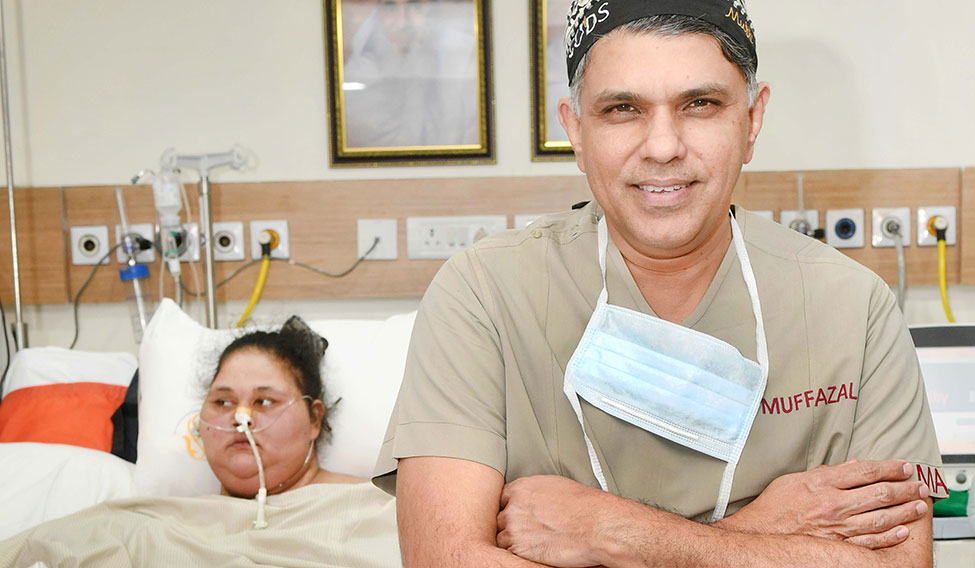 Dr Muffazal Lakdawala | Janak Bhat
While coming to Mumbai, Shaimaa wasn’t sure if Eman could survive a surgery. “I had read about a patient in Egypt who had died shortly after undergoing a bariatric surgery though she was only 200kg. I am overjoyed that Eman’s surgery was successful. We now look forward to going back home,” says Shaimaa, who left her two-year-old daughter in her mother’s care to accompany Eman.
Post surgery, Eman has been following a strict regime. Her day begins at 6am with a high-protein liquid meal and a sponge bath, followed by a series of routine blood tests and check-ups. A team of 15 doctors, including an intensivist, physician, endocrinologist, nephrologist, neurologist, anesthesiologists, pulmonologist and nutritionist, visits her each morning. Around 11am, she has physiotherapy sessions, which include massages and light exercise. She then takes a nap. Lakdawala and Shehabi monitor her via CCTV.
“The thyroid gland is responsible for the body’s metabolism. It sets the pace for all organ functions. In Eman’s case, it was not working,” says Dr Hemal Shah, nephrologist at Saifee Hospital. “Normally, we give 50 to 75 micrograms of the medicine, but we gave her 400 to 500 micrograms to keep her thyroid functioning normally. She is losing weight daily and we are happy to see her face finally taking shape and her features are becoming clearer.”
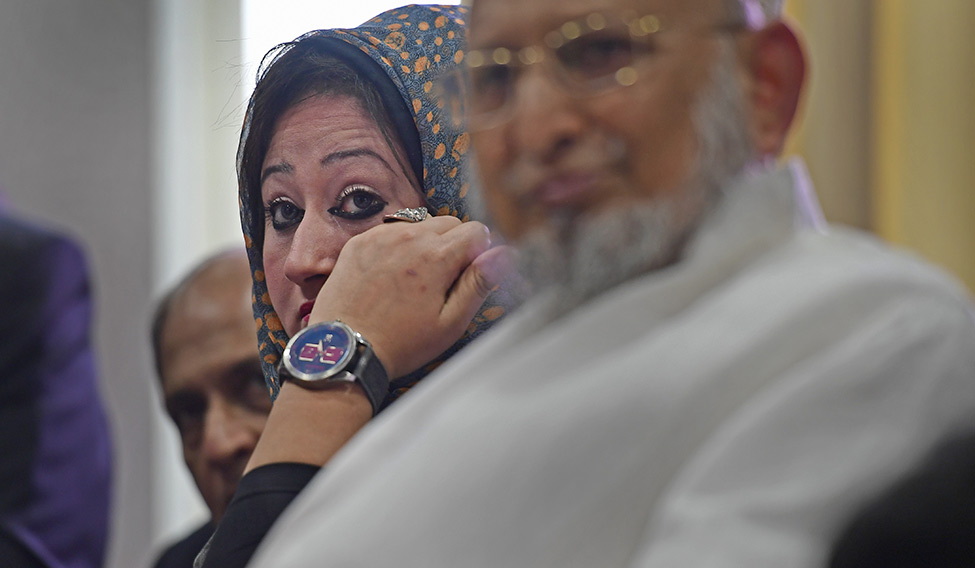 Shaimaa, Eman’s sister | Amey Mansabdar
Eman gets 200ml feed every two hours starting at 6am till midnight, says nutritionist Carlyne Remedios. Her total calorie intake is 1,750cals per day and her diet mainly consists of a protein supplement which is mixed in 200ml of unflavoured soy milk. Initially, ten people were required to care for Eman, now two caretakers do the job. Eman is also undergoing speech therapy. As of now, the only two words she can speak clearly are ‘Shaimaa’ and ‘mama’.
Next up, the doctors want Eman to sit upright on a chair and pass urine without the help of a catheter. But, would she be able to walk again? “She is very short and her legs have not developed at all below her knees. She will need intense physiotherapy to be able to walk again,” says Lakdawala. His three-year-old son, Kiaan, has also grown close to Eman. “My son calls her Eman didi [big sister] and always looks forward to meeting her,” says Lakdawala, who listens to music and pursues photography to de-stress.
And, what happens to the underlying condition? Since no treatment is available for now, Eman would be put on a trial drug. “As of now, only three people in the world are using the drug. We don’t know if it works. We have to wait and watch to see the drug’s effectiveness before deciding on a second bariatric surgery,” says Lakdawala, who is hoping to send Eman home in the first week of May.
And, the perfect farewell gift? A meeting with Salman Khan.