




-
“Babasaheb Khidrapure may have been aborting foetuses irrespective of the gender of the unborn baby to make more profits” - Dr Sanjay Salunkhe, civil surgeon at Sangli Civil Hospital
Almost two weeks after her mother’s death, Swaranjali, 4, has hardly spoken to her grandparents. On a sunny Sunday afternoon, she is busy playing with a stick and an old tyre while her grandparents are working in their vineyard. Her 2-year-old sister, Pranjali, is fast asleep inside the house.
“The girls are angry because their parents are not around. They don’t even talk to us anymore,” says the grandfather, Patangrao Jamdade. “When their parents were here, they used to be so lively and talkative.” He doesn’t know how to break the news of their mother’s death to the children. “Whenever they feel lonely, they quietly follow us around in the fields without saying a word. We have taken up the responsibility of bringing up the girls singlehandedly,” says Jamdade, who lives in a secluded corner of Mane Rajuri village in Sangli district of Maharashtra. “When the time is right, we will explain to them why their parents are no longer around.”
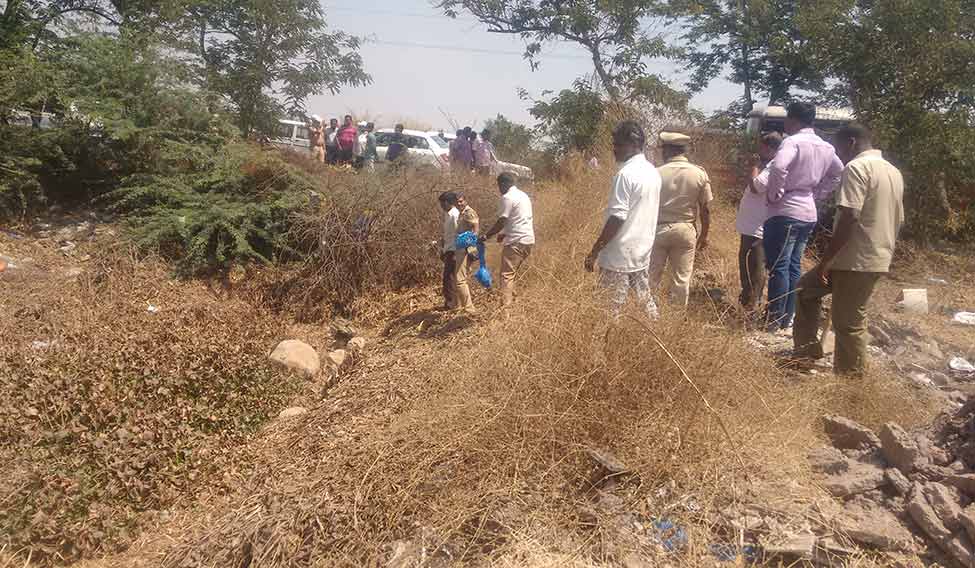
On March 1, Swati Jamdade, 24, died of haemorrhagic shock after she underwent an abortion at Bharti Hospital at Mhaisal village in Sangli. The abortion was allegedly done by Dr Babasaheb Khidrapure, a homoepath, who didn’t know that Swati had an ectopic or tubal pregnancy—she was carrying the embryo outside the uterus. Two days after her death, Swati’s husband, Pravin, was arrested for forcing her to undergo a sex determination test and abortion. Khidrapure was arrested five days later from Belgaum in Karnataka. On March 6, the Sangli police said they had uncovered an abortion racket after 19 aborted foetuses were found wrapped in polythene bags and dumped in an open field in Mhaisal.
According to Swati’s parents, her husband and in-laws had wanted her to give birth to a son. When Pravin learnt that she was carrying a girl child yet again, he took her to Khidrapure’s hospital for an abortion. By then, the pregnancy was nearly five months old, which is the cutoff for legal termination of a pregnancy. Swati died soon after the abortion. Her parents were told that she died of a heart attack. “On the day she was admitted to the hospital, Swati told me she was going to undergo an abortion and I was completely against it,” says her father, Sunil Jadhav, who works in a silver refinery in Puducherry. “When I was informed about her death a few hours later, we knew she couldn’t possibly have died of a heart attack. She was only 24 and in good health.” Jadhav saw his daughter for the last time on January 15 when she, along with Pravin, visited him in Puducherry. The postmortem examination was done at Sangli Civil Hospital and the police started an investigation after Swati’s parents gave a verbal complaint. Her in-laws denied any involvement in the case.
Two days after Khidrapure’s arrest, five more people were arrested in Sangli. One of them, a pharmaceutical distributor, had allegedly supplied the doctor a large quantity of misoprostol, a tablet that triggers labour and causes abortion. Swati had been given the tablet. Raiding the hospital, the police found that it had a fully functional operation theatre even though it is illegal for homeopaths to perform any surgical procedures. The hospital was also not registered under the Bombay Nursing Act.
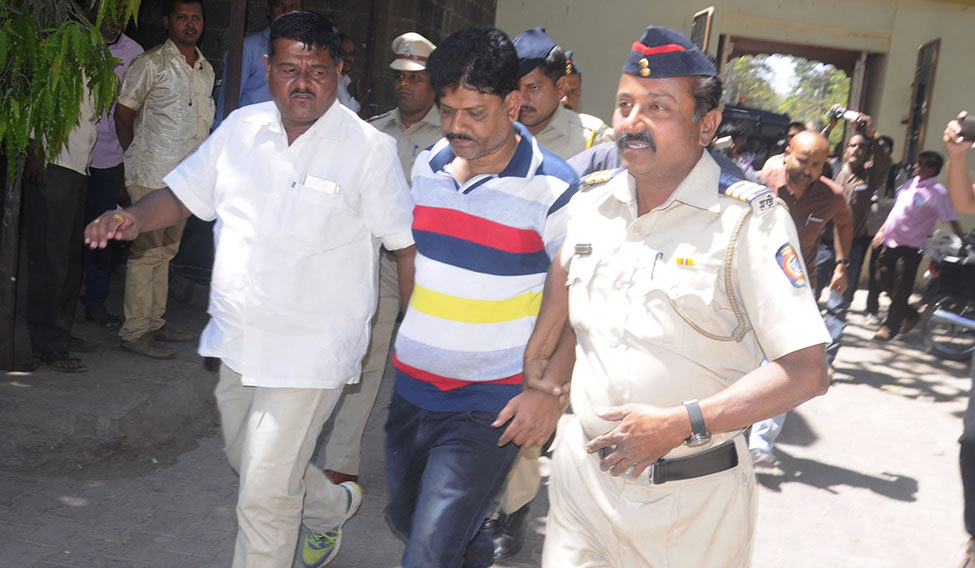 Dr Babasaheb Khidrapure, one of the three doctors allegedly involved in the racket | Ashwini Waghmare
Khidrapure led the police to two other doctors, Shirhari Ghodke, 68, of Kagawad village in Belgaum and Ramesh Devgikar of Vijapur district, both in Karnataka. They were arrested along with a nurse for allegedly carrying out sex determination tests.
“Khidrapure told us where the aborted foetuses were dumped,” says Sangli superintendent of police Dattatreya Shinde. “The sex determination tests were done at Ghodke’s clinic in Kagawad. A homeopath, Ghodke had a sonography machine, which he was using to illegally conduct sex determination tests.”
The police have also arrested four agents who persuaded pregnant women to undergo sex determination tests and abortions. According to Shinde, the agents made Rs 3,000 per abortion.
According to Swati’s postmortem report, she suffered severe internal bleeding in the abdomen after she was given misoprostol vaginally. “If only a qualified doctor had examined her and found out about her tubal pregnancy, she would not have died and the pregnancy could have been terminated safely. In case of an ectopic or tubal pregnancy, misoprostol should never be given,” says Dr Sanjay Salunkhe, civil surgeon at Sangli Civil Hospital.
Salunkhe suspects that the doctors were taking gullible couples for a ride. “Khidrapure may have been aborting foetuses irrespective of the gender of the unborn baby to make more profits,” he says. “In fact, four complaints were made against him in the past and though a raid was conducted on Bharati Hospital, sufficient evidence could not be gathered to take any action against him. We have sent the foetuses to Forensic Science Laboratory in Pune to determine their gender and we are expecting the results in the next one month.”
The shocking incident has put the public health department in a spot. It is now taking steps to monitor pregnant women, especially those who already have a girl child. “Every pregnant woman will be given a unique ID so that we will be able to track her if she goes for a sonography test and decides to terminate the pregnancy,” says Salunkhe. “We will also start a surprise inspection campaign, comprising 11 teams, for each taluk in Sangli. It will ensure that all hospitals and nursing homes are registered under the Bombay Nursing Act.”