



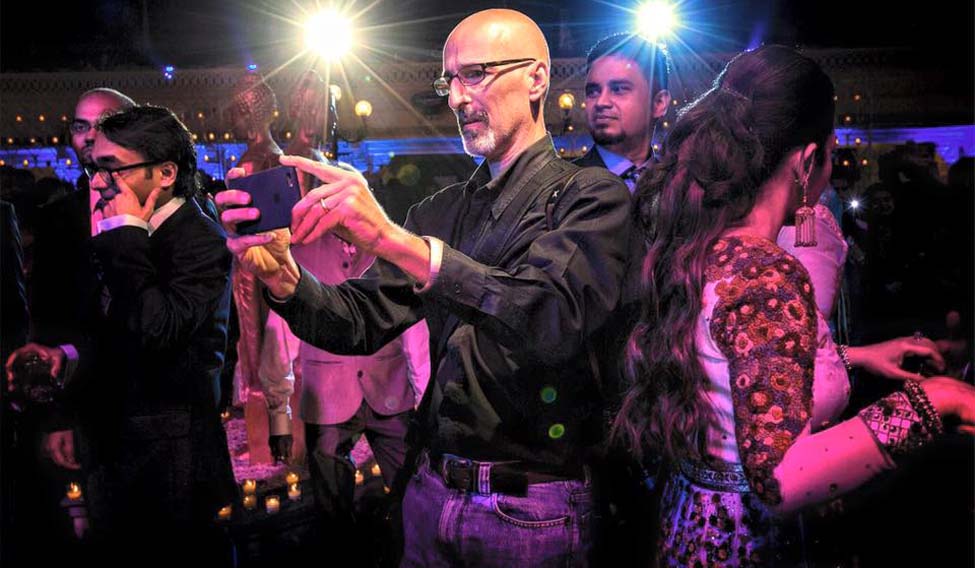
From Prime Minister Narendra Modi to a roadside vendor, from your nearby restaurant to the idiot box in your living room, everyone these days wants you to use the smart phone and perform digital transactions—both financial and social. Essentially, the ubiquitous smart phone is gradually shaping the way we eat, live, sleep, work, and socialise.\
Communication expert Parul Sharma is no different. Hooked on selfies, she, one day, instead of admiring her own reflection, flipped her phone camera and was immediately awestruck by the beauty across the world. She was so consumed that she even quit her cosy corporate job to pursue a new profession—mobile photography.
“I am passionate about photography and was impressed by the pictures I had taken initially… as were my friends and well-wishers. In fact, one of them forced me do an exhibition. The response has been amazing—45 frames captured on my hand phone were sold,” Sharma told THE WEEK, while exhibiting her photographs at The Lodhi, a luxury hotel in the national capital.
Sharma is not an exception. Blame it on the growing dependence of people on their mobile phones and the virtual world, increased acceptance of unconventional art forms, or simply the people’s desire to satiate their creative urge, mobile photography is gradually emerging as an independent art form.
Mobile handsets are fast displacing common man’s dependence on professional photographers or complicated photography equipment to create moments and capture them.
For instance, fashion designer J.J. Valaya has started self-publishing a series of photo-travel books. “I photograph and edit on phone and it goes straight to the print,” says Valaya, who plans to come out with at least three such books every year. “The first one on Istanbul is already out, which will be followed by one on Goa.”
“Art exists everywhere, and candid photography is perhaps the most honest way of interpreting it,” he writes in the book titled The Little of Memories. “I have also realized that while my fine art photography offers me the supreme opprtuntiy to be storyteller, it also demands patience and time to be woven together into incredible shows (sometimes years!). I had to therefore find a medium that allows me to satiate my chronic desire to seize the spontaneity of the moment for my own pleasure, as also to, perhaps, celebrate all that exists around us.”
Terming it ‘phoneography’ he adds: “Phoneography is the answer to my stubborn restlessness; it joyously allows me the added luxury of poetically indulging in pure visual nirvana!”
Agrees Isreali-photographer Sephi Bergerson, who has won several international awards for his works and is based in India now.
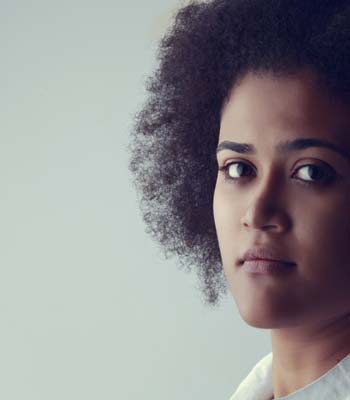 (File) Priyal Sokhiya
"You might not realize it yet, but this is as big, or even bigger than the invention of the digital camera," he says. In the pocket of your shirt or in the zipper of your bag lurks no less than the most inspiring and innovative imaging system in the history of photography. Under the innocent cover of your iPhone lies a powerful tool that is changing the way we work and think as photographers.
“For the first time, we have a camera, a darkroom and and an online research directory in one small device. We can now shoot and process our images in the field, free from the burden of running home to our computers. We can instantly examine what works (and what doesn’t) to make our captures match our vision, as well as share them with our subject on the spot, or upload to the social media channels or your favourite online portfolio,” wrote Sephi, who owns a boutique photo agency named Silky Photos, in his blog.
Sephi had recently shot an Indian wedding using his iPhone. While it may sound easy, in reality, it was quite a challenge. “Daytime pictures where fantastic, but the night still remained a bit tricky. The new iPhone 6s Plus camera is superb in terms of resolution and colour rendition, but low light photography was difficult—on the dance floor for example—as the ISO limit was not letting me shoot without having motion blur. I had a hand-held LED light to help me get proper exposure. This was not an issue while taking still images of decor at night. These pictures actually came out better than the ones shot on the DSLR. The built-in HDR in the new iPhone is nothing less than incredible.”
Mumbai-based professional photographer Priyal Sokhiya, who owns photo studio ‘A Thing of Beauty’, says that the trend of mobile photography is in a nascent stage in the country but with the growing awareness among people, mobile photography will flourish in the long-run. “Courtesy the internet and media boom, people now have access to information about new developments in the global art and photography arena, which has increased the acceptance for unusual art forms among people. This will fuel the trend.”
So, does that mean professional photography will soon breathe its last?
“All that has really changed is the number of photographers… individuals who have suddenly discovered the ease of taking pictures sans the burden of heavy equipment. It is my firm belief, that with this breed of teeming enthusiasts, photography is only going to throw up even more quality, simply because it was never only about equipment or technology in the first place. It was and will always be about content, composition and an eye to see what others miss!” says Valaya.
At the same time, Sokhiya points out that commercial viability is another reason that will maintain the relevance of professional photography in India. “Not everyone can consistenly make money via mobile photography unless you are a big name like Raghu Rai.”