



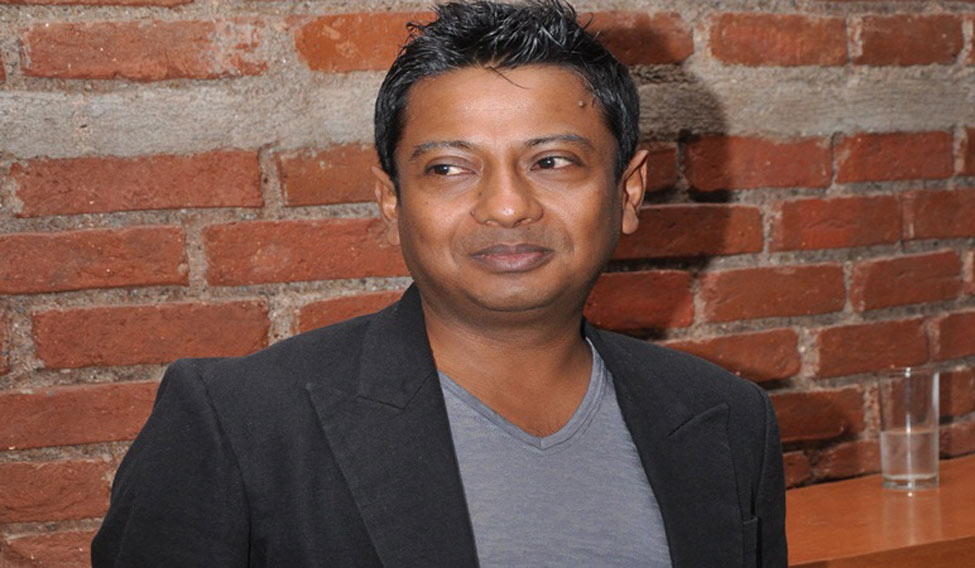
After moving global audience and garnering critical acclaim for bold films like My Brother Nikhil and Bas Ek Pal, and bagging two National Awards for I Am, Onir is back with his latest directorial venture, Shab, starring Raveena Tandon, Ashish Bisht and Arpita Chatterjee.
Scheduled for release on June 30, Shab, in Onir's words, is a city-centric film about dreams and desires, explored through relationships between the characters. In a candid conversation with THE WEEK, Onir speaks about his latest film, his brief sabbatical from directorial ventures, challenges he faces as a creative professional in today's society and more.
What is Shab all about?
Shab is set in Delhi. It is about dreams, desires and ambition that bring people to big cities. Some people realise their dreams, while some dreams get shattered. It is a film that talks about city dreams, but the journey is through relationships of different characters, who, at some point, lose their identity, their inner core to the city. The film traces their journey as they rediscover themselves.
Despite diverse themes, your films have always had a strong narrative around personal relationships? How is Shab going to be different?
Shab is not an emotional golmaal. The film grows and evolves in the directorial space. Also, I like relationships.
The reason the film is called 'Shab', which means night, is that when you step into the night, usually it is dark, you do not see anything. But then, your eyes get trained to the darkness. You start seeing shapes and these shapes start taking forms. Similarly, in the film, when you first see the characters they appear to be something, but through the journey of the film you start seeing their different shades.
This is my first script and in a way, it is really special. I was born and brought up in Bhutan. When I first came to Bombay, I came with dreams. I lived in my dream land where I only wanted to be a filmmaker and I am fortunate to be in that space today. So, a lot of the film, what the people go through, are bits of me. Shab reflects my journey and the journey of people who came to this city with me and after me, people who are coming now, their dreams and how the city changes it. For me, it is a very real film, and very personal also. I connect with each of the characters in different ways. Different realities I have experienced, directly and indirectly through other people, shape up the characters of the film.
How did you choose the cast?
Raveena (Tandon) was always there in my mind since I wrote Shab 17 years ago. In fact, Raveena and Sanjay Suri were instrumental in me starting to write the film and I wanted to cast them. But after so many years, things have changed. And when I went to Raveena with another role, she said that she has always been part of my film and will be. Sanjay has done a cameo in the film.
For the lead role, I needed someone who was sincere and had certain innocence and vulnerability to his face, something very essential for the character. I wanted to cast an unestablished actor because I wanted him to come without any baggage; just as a young boy coming to a city with dreams. Ashish (Bisht) has that face with vulnerability and innocence which is not easy to find. Actually, it took us two years of auditioning across cities to finally zero down on him. He went through workshops for nearly one and a half years before we informed him.
Arpita, who plays the coffee shop girl in the film, became part of the cast by chance. I had gone to meet her husband, Bengali actor Prosenjit (Chatterjee), for a film and saw her walking down the stairs and that was it.
It's been over five years since your last directorial venture, I Am. What kept you away for so long?
There were two things. One, I Am was a difficult project. It was crowd-funded and we did not get Censor Board clearance for the longest time. It was a bit of a setback that despite the film bagging two National Awards, it was so difficult to reach people.
Two, I was going through a phase where I had decided to produce films of a young director. I had been on the stage long enough and whatever knowledge and experience I had, I wanted to use it for somebody else's journey. So, we started producing a film called Chauranga, which was released in January last year. It was the first time that being a director, I was producing somebody else's film. I learnt many things from the experience. After the film premiered, I started my film, which was shot over a year to capture all four seasons through the year. So, I went to Delhi four times to shoot it. The entire process took time and I am happy that Shab is finally ready.
You also said that Shab is the most mainstream film you have ever made. Considering the kind of films you have made so far, and the widespread popularity they have garnered, how do you define mainstream?
Actually, this is a quote unquote 'mainstream'. Mostly, I am seen as an art filmmaker, and I feel I am not art house at all. I would see them as sensible Bollywood films. Most mainstreamers say that I do message-oriented films. I just tell stories and they happen to incorporate certain things. The message is a part of storytelling.
There is nothing called 'my type' of film. I want to do all kinds of genres that I feel I can handle. I will not do something regressive. I will never have an item number in my film, that is for sure. But there are ways people slot you. I do not want to be slotted, otherwise, as a director I will be dead if I keep making the same kind of films.
As somebody from a creative industry, how easy or difficult is it to bring up social issues on big screen without hurting public sentiments or bumping into censorship problems?
I think that is becoming increasingly difficult and scary, and you need to keep sensitivity in mind, even while you are writing, and that is worrisome. Especially I find it very insensitive that people can say anything they want on the internet space. So, why are films singled out. It is worrisome that as an artist, how come I cannot go to court saying that you are hurting my artistic sentiments. As long as art is not propagating any kind of hate, it should not have these kinds of barriers or chains.
On one hand we have films like PINK that received applause from public on social media. On the other hand, the same bunch of people prove sensitive and hyper reactive to a cause they do not resonate with. What's your take?
I am quite active on social media, but what surprises me is the amount of negativity and hate, particularly violent hate as in through words, present there. I have received such comments and messages. It is not a healthy thing that our society is not willing to accept differences in opinion, in belief, in anything that is not like theirs.