



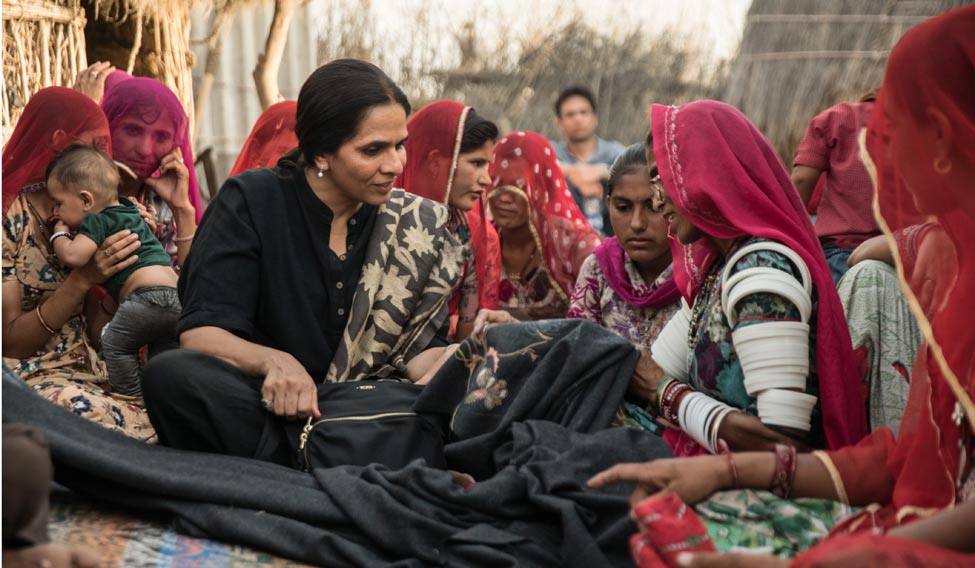
You have just bought that smart moto jacket, the cute sling bag or the hot red dress with the asymmetrical hemline. But, do you know where was it made, who made them? Who has sewn those embellishments carefully on to your jacket, who worked hard to make sure the hemline of your dress looked perfect? Imagine this—a 15-year-old girl working alongside her mothers and sisters in Bangladesh, cutting back on school hours to put in nearly 18 hours each day to make that purse you flaunted with your brand new top. How does that feel?
The fashion industry hasn't been transparent with its behind-the-scene components for the longest time. What goes behind making fashionable garments and accessories, the truth about sweatshops and factory hazards, have been hushed up over the years. It has only been over five or six years since consumers and designers have started talking about sustainable fashion—giving something back to the artists, embroidery workers, tailors and other labourers involved in the success of a label. Closer home, designers and most of us—the audience—started lauding the handloom workers since 2015 when Handloom Day was announced.
In 2013, when a fire broke out in Rana Plaza, a garment factory in Bangladesh, around 1,000 people were killed and thousands injured. The only silver lining, however, was that the fashion fraternity started discussing factory conditions, creating a revolution of sorts. Fashion Revolution, a organisation established three years ago, started the #whomademyclothes campaign around April 24, 2013, the anniversary of the Rana Plaza incident. The organisation, spearheaded by Carry Somers and Orsola de Castro, has been working towards making a difference through transparency and labour laws, fair pricing and creating awareness so that clothes are made in a clean and safe way.
Celebrities like Kalki Koechlin, Pallavi Sharda, Sayani Gupta, Gisele Bündchen and Emma Watson have been part of the revolution, by either wearing clothes made from sustainable materials or reaching out to the people behind their beautiful outfits.
“The global fashion industry is opaque, exploitative and environmentally damaging and desperately needs revolutionary change. So much is hidden within the fashion supply chain, largely due to its scale and complexity—we aim to change this. We want to see an increasing number of brands make their supply chains more transparent, because you can’t start to tackle social or environmental exploitation unless you can see it. Brands and retailers must start to take responsibility for the people and communities on which their business depends,” says Somers.
“We have begun to see governments and policymakers in the EU and beyond start to address transparency and sustainability over the past twelve months. We are certain this issue will remain on the policy agenda due to the launch of the European Commission’s Garment Initiative on which we are collaborating as a key stakeholder. The scope of this should also be extended to cover the entire garment, textile and fashion product value chain: from farmers to artisans and workers right through to end consumers,” she added.
Sarah Ditty, Head of Policy at Fashion Revolution, addressed the EU Parliament last month ahead of an important vote on a resolution, which was adopted on April 27. The resolution proposed that "the EU Commission should table a binding legislative proposal for a due diligence system, based on OECD guidelines; the EU should ensure that textile exporting countries with preferential access to the EU market comply with obligations and produce sustainable textiles, while member states should promote workers’ rights in their relations with partner countries; the 'social impact of production' should be visible on clothing labels and EU institutions should set a good example in their public procurement of textiles".
Somers says, “We have participated in high-level EU, G7 and UN events. We have co-organised events at the European Parliament and House of Lords and run Fashion Question Time in the Houses of Parliament every year. We have launched our first fanzine, which has been really successful. Through 72-pages of poetry, illustration, photography, graphic design and editorial, this collectible zine explores the hidden stories behind our clothing, what the price we pay for fashion means, and how our purchasing power can make a positive difference to workers and artisans in the fashion supply chain.
“Our aim is to provide insight into just how much or how little consumers know about the clothes they buy. We hope this encourages consumers to find out more about the stories behind their clothing, spurring them on to ask #whomademyclothes,” she adds.
Somers feels that fair pricing and living wages are two of the biggest challenges facing the garment and textiles industry today. Workers on the supply end of the value chain face systemically low wages and little social protection and lack of opportunities for collective bargaining to secure fairer wages. According to IndustriALL Global Union, over 90 per cent of workers in the global garment industry have no possibility to negotiate their wages and conditions. She also feels that the designers play a crucial role in addressing the myriad issues facing the fashion industry and that production begins at the design stage.
Karuna Languani, co-founder of Jodi Life, says, “We have a huge treasure trove of arts and crafts which can be made known globally in a cool, modern way. The Jodi Life's aim was to bring this about in an affordable way. But at the same time, since the craft cannot be priced cheaply, the garments have to be priced slightly higher. This is one of the ways fashion can be sustainable—pricing it right and using sustainable materials. And this is what we believe in, at The Jodi Life, too.”
Sustainable fashion, to designer Rocky S, "is a way of life that goes beyond what meets the eye". "It is about making more conscious choices at a design level in terms of picking materials and dyes that are not hazardous to the environment but long lasting, and with shoppers; in terms of understanding the origin of their clothes. There has to be commitment to ethical fashion and fair trade. The clothes we create and wear are a reflection of our personalities which is an extension of the causes we support and the ideas we promote. Endorsing fast fashion through unfair trade practices and unethical use of resources makes crafts disappear into the oblivion. Certain amount of time, material, resources and craft go into creating sustainable fashion and if any of these is compromised, it results in fashion that is not durable. The emergence of fast fashion has overthrown craftsmanship, thereby having most of our traditional crafts fade in the bargain. The emergence of quantity over quality has reduced the fashion standards thereby establishing a very low price for fast fashion clothing. These prices are established by ignoring the various aspects that go into determining a fair price i.e. mainly labour cost,” he says.
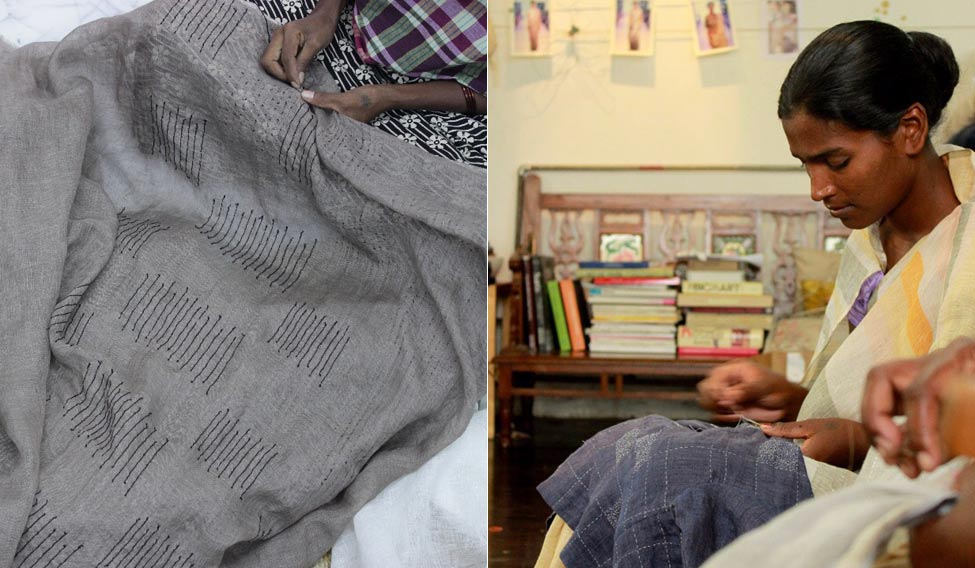
According to designer Anavila Mishra, known for her linen saris, “Sustainable fashion is a holistic approach towards fashion—from using the right textile, the right processes and having happy workers who create conscious clothing. I think it is as simple as creating and sharing value at every level of the process from the loom to the runways." On the ongoing fashion revolution, she says, “It is a wonderful way of giving credit where it is due. All the people who have created the product must feel that sense of pride in making a valuable piece. We see more and more designers taking their customers behind the scenes and through the process. This definitely adds value in building a stronger brand. In addition, there should be a system to have mandatory audits of the work place and factories.” She feels sustainability is the future. "It is a wonderful feeling to see the entire team—from weavers, dyers to tailors—grow with the brand and carry the pride that comes with following the right practices," she says.
“A lot of fast fashion houses aren’t conscious of the environmental impact to the planet. Through the excessive waste created and practices adopted to cut cost, there is an adverse impact on the environment and, thus, the shopper’s quality of life. It is also not substantial because of the cost to the maker’s life—displacement and physical ailments as a result of business practices are swept under the carpet,” says Anita Dongre, a vocal supporter of traditional textiles and sustainability. “Fashion needs to go back to its roots—crafts people. We need to make conscious choices in everything from the material we choose, waste disposal, consumption of electricity and where we choose to set up production units. With Anita Dongre Grassroot, we go back to the villages where life is led as nature intended—and this reflects in the clothes as well.”
While all this talk about giving back to the workers and sustainable fashion with minimum wastage, is definitely making some difference, it needs to be seen whether the movement can sustain itself and reach all nations, especially the developing economies where most manufacturing takes place. Stringent laws are needed to regularise pay for labourers, working hours and conditions. A symbiotic system needs to be devised where clean and safe fashion is easily available on a large scale.