



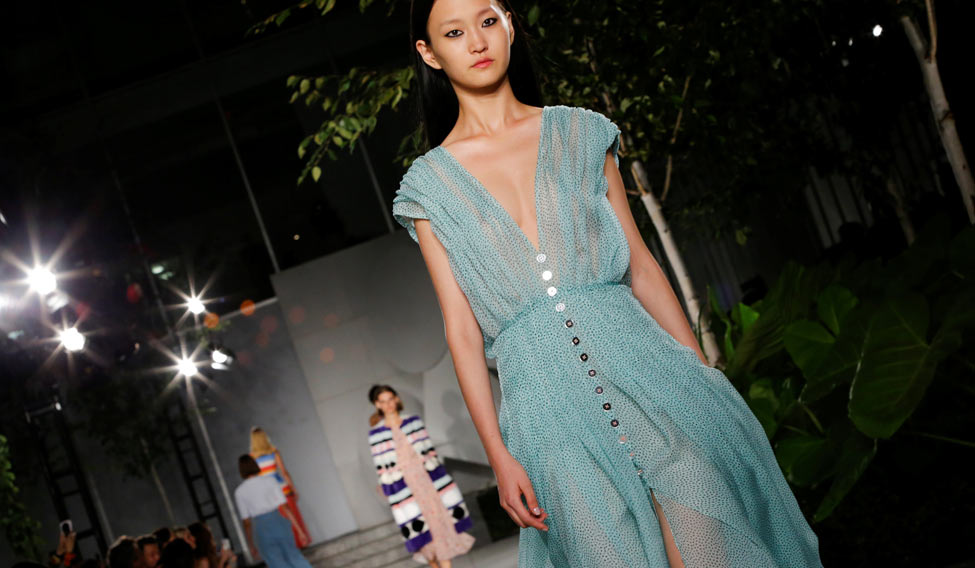
Tall, fair and skinny— this has been the normative definition of models all around the world. Size, skin-tone and height always mattered in the glamorous world of modelling and advertising. An industry that glorifies good looks, at one point, encouraged young girls to become thin akin to coat hangers by putting themselves through extreme diets, workouts and even surgery to achieve the perfect model look. Hollow cheeks, well-defined jawlines and a ribbed abdomen were once celebrated as opposed to fuller cheeks and figures that filled clothes.
On September 6, international fashion groups like LVMH and Kering banned underweight and underage models. The two groups include known labels like Christian Dior, Givenchy, Yves Saint Laurent and Gucci. The brands will commit to banning models below size 34 for women and size 44 for men. These are as per French measurements. Size 32 in France corresponds to size 6 in Britain and size zero in the United States. In 2015, France passed legislation outlawing ultra-thin models from working in the country’s fashion industry. Fashion agencies are fined up to 75,000 euros ($89,527.50) or imprisonment of up to six months if they breach the law. The latest charter by the two fashion groups also prohibits girls under 16 to pose as models.
We asked a few industry insiders about the move by the prominent fashion brands and the scenario in India. Designer Nikhil Thampi who debuted at Lakme Fashion Week in 2011 and is known for sassy pret wear, says, “Indian models have never been extremely thin. Since Indian couture wear has primarily been bridal, our industry has always preferred models with fuller bodies. The industry does not support extremely thin models. This decision has been part of the new wave in the western industry where designers like Christian Siriano have worked with plus-sized models. In India, too, I would say the trend is catching up, as Wendell Rodricks recently did a show with plus-sized models. But again, Wendell's collection usually features relaxed silhouettes. However, my clothes tend to be structured, fitted and involves a bit of skin show. Therefore, I work with models between sizes 8 and 12.”
The fashion industry has been under criticism for encouraging eating disorders. In 2010, Isabelle Caro, a former anorexic French model aged 28, died after posing for a photo campaign to raise awareness about anorexia. Divya Aggarwal, a model, who has walked for names like James Ferreira, Rocky S, Wendell Rodricks and so on, says, “I feel models should be chosen to meet the requirement of a brand rather than on a particular size parameter. Also, I feel that models should follow a certain diet or exercise routine not to become a certain size, but for their own satisfaction. Fitness is key. I switched from ramp to advertising because I felt that the ramp was all about the way you look and your attitude. It was not my cup of tea.”
Indian models have always been a tad curvy than their western counterparts, with an ample bust-line and curvier hips. This could have been one of the reasons why the Indian fashion industry put a ban on skinny or size zero models in 2007. This was to promote beauty and health, not starvation. Veteran designer duo, Abu Jani and Sandeep Khosla echo this thought. “Size zero is a trend which we have never encouraged. It is both dangerous and irresponsible to starve oneself to skin and bones. If you are naturally skinny, then so be it. But to punish yourself and become a coat hanger isn't our idea of beauty or style. For us it has always been about celebrating beauty. And that doesn't come in a dress size. For models whether they are ramp or editorial, we select those who possess a unique look, a sense of style and personality, who own the ramp and the image like it is their goddess-given right to do so. We also abhor the ageist nature of the beauty industry. Our shows and shoots celebrate women at every age. Our ramp is graced by women in 20s to 40s.”
Indian-British model Pritika Swarup, who has done campaigns for international brands like MAC, H&M and Abercrombie, says, “I've never been asked to be a certain size to work for a designer. Size matters, but in the sense that a model needs to be in good shape. My body type is naturally thin, just like many other models and that shouldn't be frowned upon either. I like to workout to maintain a healthy lifestyle not because I need to keep certain measurements. It is not a misconception that only models of a certain size are accepted in the industry, but that doesn't mean that models are expected to be super skinny — it just means we need to be fit. I believe the industry is slowly beginning to accept all types of models and, in turn, redefining the definition of beauty. In India, I feel designers are a little more lenient with the sizing of a model and accept various types of bodies, whereas abroad the requirements are more strict. However, I feel that progression is happening and the industry has become more diverse than ever before.”