



-
“Our meetings would go on till late evening; the next morning she would have on the fingertips all the news that could become issues of the day” - Nalin Kohli, BJP spokesperson
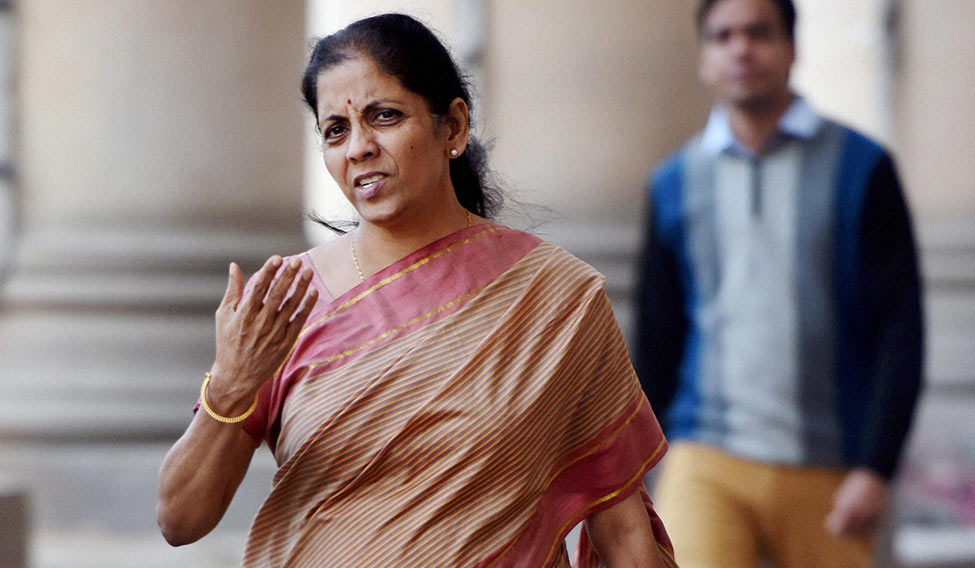
Nirmala Sitharaman had just finished defending the BJP when someone from a regional channel asked her to speak in Hindi. She did so, confidently. Soon, there were requests for encores in Tamil, Telugu and Kannada. Unruffled, she obliged. There was silence as the journalists in the packed auditorium at 11 Ashoka Road, Delhi witnessed her linguistic skills. This was some time during the last year of the UPA-II government.
Mastery over a clutch of languages, of course, does not make a defence minister. But, the fact remains that Prime Minister Narendra Modi and BJP president Amit Shah have seen in her the mettle required to clinch the deals the military needs.
Those who have seen Sitharaman rise from a humble background are not surprised. Away from the relative razzmatazz of Madras, Sitharaman graduated from Seethalakshmi Ramaswami College in Tiruchirapalli. It stands to reason that it was in the capital’s highly politicised yet academically respected Jawaharlal Nehru University that Sitharaman came into her own. Soon followed a job at a multinational company, work in the UK, marriage and motherhood. Then came the surprise—without an Akhil Bharatiya Vidyarthi Parishad background, she joined the BJP in 2006, when it was out of power. Her husband, Dr Parakala Prabhakar, is the communications adviser to Andhra Pradesh Chief Minister Chandrababu Naidu, and her father-in-law, Congressman Parakala Seshavatharam, has been a minister in the Andhra Pradesh government many times. Hard work, discipline, thorough preparation, along with forceful and effective position-taking, perhaps took Sitharaman, 58, to an office in South Block, in 11 years flat.
BJP spokesperson Nalin Kohli, who has worked closely with Sitharaman, said: “Nirmalaji was extremely meticulous. Our meetings would go on till late evening, and the next morning she would have on the fingertips all the news that could become issues of the day. This indicated that she worked all night. Kohli said he had heard people use the words “elegant” and “erudite” to describe her, and that she also came across as a complete family person, who took an interest in her daughter’s studies. There would be talk of food in those meetings, said Kohli, suggesting she was either a foodie or fond of cooking.
She was always a no-nonsense worker. She was so serious that cameramen often had to crack jokes to get her to smile. A BJP leader remarked, “You don’t bullshit with her. You cannot discuss anything unless you have also done your homework, for she will ask many questions to which she expects answers.”
Her hands-on approach was evident in September 2014, when she was to participate in the G20 finance ministers’ meet in Cairns, Australia. At Sydney, where she changed flights, her luggage went missing. She tweeted that her formal wear was in that suitcase, lamented that the situation was “precarious” and personally launched a hunt for the luggage. In the next tweet, she said, “But I can’t be going into areas where I am not allowed, even to search.”
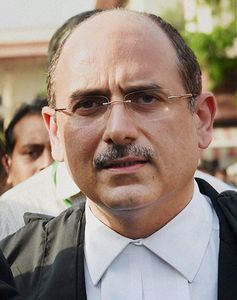 Nalin Kohli
However, there are many who feel that these qualities did not help her succeed as the commerce and industry minister. Though the Modi government eased 87 Foreign Direct Investment rules across 21 sectors, and claimed India had become “the topmost attractive destination for foreign investment”, there had been no visible success. The Make in India programme resulted in foreign manufacturers wanting to make India an assembling ground to export from. Major research and development did not find its way, and the “made in India” products had very little, if anything at all, by way of Indian components.
The fact that industry, particularly manufacturing, had not looked up, resulting in no growth in jobs, did not help. Nirmala had been a tough negotiator on the trade front, but confessed in an interview, “For me to have anything impactful on the ground, factors which are beyond me also come into play.” While the policy decisions were impacting production, productivity, export and earnings, they were pitted against, she said, “a global environment over which we have no control”.
While she does not need to show success in her previous charge in order to handle the defence portfolio, the challenges before Sitharaman are aplenty. She may have to thrash out the residual nitty-gritty of the One Rank One Pension, but the real focus would be on implementing the modernisation of the Army.
Finance Minister Arun Jaitley, who held the additional charge of defence, has groomed and guided her, both during her days as spokesperson as well as minister. It is quite likely that he will be her go-to person. Also, there has never been any question regarding Modi’s right to decide on any policy, in any ministry, giving him ample scope to help Sitharaman with crucial decisions concerning action, given China and Pakistan are always on the horizon.
Apparently, it was External Affairs Minister Sushma Swaraj who had spotted Sitharaman and had urged her to join the BJP. In the past three years, however, there were rumours that it would be Smriti Irani, the high profile and controversial textiles minister, who would grow in the party like Swaraj. But, Modi tends to spring surprises, and it is Sitharaman who has taken the prized slot in the “big four” berths.
Did Modi intend to distract the country with India’s first full-time woman defence minister and discuss gender parity as he projected a leader who is above board? Or, did he want to divert attention from the lack of talent that compelled him to bring in non-MPs like Hardeep Puri and Alphons Kannanthanam into his government?
“[For] somebody who has come from a small town, grown in the party with all the support of the leadership, [being] given such a responsibility makes you feel that cosmic grace is there. Otherwise, it is impossible,” Sitharaman said minutes after taking oath. But, one thing is for sure—she, and not cosmic grace, will run the ministry.