



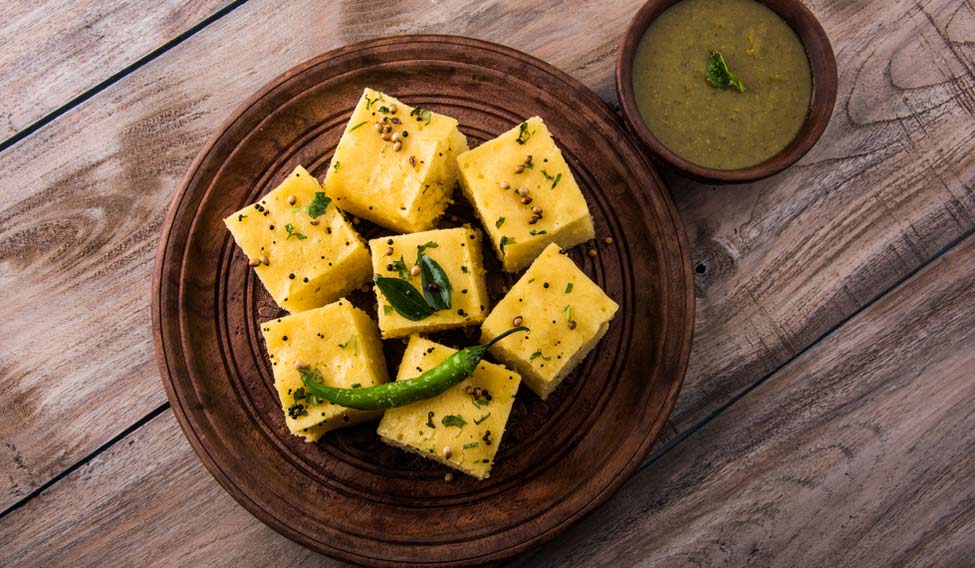
Gujarati food is known for subtle flavouring and mildly spiced foods. Be it the dhokla you eat as a snack or khatti meethi dal you savour for lunch with rice, each item is differently flavoured. Mainly vegetarian due to its influence from Jainism, some Gujarati communities do include seafood and meat in their diet.
Gujarati cuisine consists of flat breads like puri, chapati, bhakri roti (flatbread made from millet) and theplas (flat bread made from chickpea flour and wheat flour), savoury snacks like farsan and fafda made by deep frying chickpea flour, dal and a variety of vegetable dishes. The cuisine also includes meat preparations like chaap ne bataka roast (roasted lamb chops with potatoes), marghana mamna (chicken kofta curry) and jinghlanu shaak (shrimp curry).
Here is a list of essential items you must stock if you are fond of Gujarati cuisine.
Coriander: Fresh coriander leaves or the powdered form is used widely in Gujarati cuisine. The leaves are used to make a chutney to be had with dhokla (steamed cakes made from chickpea flour) and patra (chickpea flour rolled in colocassia leaves and tempered with mustard). A combination of coriander and coconut is usually used in preparations like undhiyo (seasonal vegetable dish) and vaal nu shaak (curried field beans).
Jeera: Jeera or cumin seeds are usually used to temper dishes like dal, and used in powder form in some vegetable preparations like potato and bhinda nu shaak (dry okra preparation). It is also used for tempering kichdi.
Chickpea flour: Chickpea flour or flour made from roasted Bengal gram is another common item you will find in a Gujarati pantry. A lot of dishes like khandvi (chickpea flour rolls), dhoklas and deep fried snacks like farsan and fafda have chickpea flour as an ingredient. In fact mohanthal, a sweet dish is also made from chickpea flour.
Jaggery: A lot of Gujarati preparations like dal and kadhi tend to be a bit sweet. They also tend to add jaggery to some vegetable dishes. Jaggery is sometimes also used to sweeten shrikhand.
Fenugreek: Fenugreek or seeds and leaves are used in different dishes like methi nu shaak (curried methi leaves), thepla and muthia (dumplings made with chickpea flour, wheat flour and methi leaves). The bitter leaves add a distinct taste to khakras (thin, dried flat breads made from different flours), too. The bitterness of methi is often balanced by adding jaggery or sugar to the dish.
Millets: Millets like jowar and bajra form an important part of this cuisine. Bajra and jowar rotis are especially famous in Saurashtra where it is eaten with spicy red chilli chutney and raw onions. This is a very common food during winters as the millets are known to nourish the body and provide it with warmth. The dish is particularly popular among farmers who carry it with them in the morning and have it as breakfast and lunch.