



A recent statement about the Kohinoor attributed to the solicitor-general has caused confusion among the people on the government’s stand. However, this confusion does not extend to the government. It is steadfast and clear on India’s unequivocal right to repatriate the diamond to its homeland, which is an obligation owed by the British in both law and history.
The diamond was found in Andhra Pradesh around the 13th century during the reign of the Hindu Kakatiya dynasty. However, historians from around the world trace the diamond as far back as 3000 BCE to the writings in the Mahabharat. It was only from the 14th century that it became subject to plunder, only to cement its place as an integral part of Indian culture to become a symbol of power associated with the Indian homeland.
The Kohinoor, dubbed as a 'gift' to the Empire by the British prime minister, is antithetical to the very legacy of the colonists. In fact, Maharaja Ranjit Singh, the true recipient of the gift, decided to pay homage to Kohinoor’s legacy and willed it to the Jagannath temple of Puri. The British, however, created a situation in 1839, so the will was never executed. It was as a consequence of the Second Anglo-Sikh War that created the Treaty of Lahore; Article III of this obnoxious treaty finally ceded the Kohinoor to the Crown.
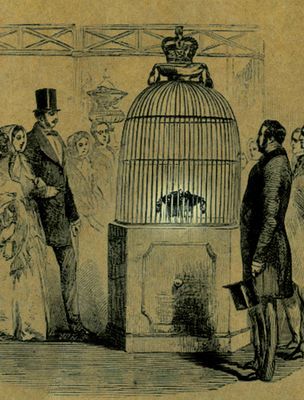 The Kohinoor was staged at Hyde Park in London in 1851 | Imaging: Bhaskaran
Therefore, it is clear that the diamond was definitely not a gift given out of free will. The proud creators of common law rules on consent would also understand that Duleep Singh, the youngest son of Ranjit Singh, was just 13 years old at the time of this transfer, nowhere near the age of maturity! It is in this lesson of history that we see that India’s claim is most appropriate as opposed to that of Pakistan and Bangladesh that are seeking to buy into Indian history as a matter of convenience.
Thus, we see history to be clearly on India’s side. As a logical consequence, we must find an answer to this opening up of a Pandora’s box of repatriations. First, law, especially that of an international nature, recognises the role equity plays as a general principle recognised by civilised nations. The rule of equity so recognised goes to what is just and not what is practicably doable. Following the theory of justice, an illegal act cannot be made just by the possibility that it will lead to more skeletons coming out of the Empire’s closet.
If British history itself is one of plunder and loot, it is the duty of the international jurisprudence to ensure that the same is corrected as early as possible.However, the question still remains as to where this corrective obligation comes from. The answer to that is found in the Hague Convention as well as the 1970 UNESCO Convention. A stark admission on the United Kingdom’s liability for return comes from their first reservation to the latter convention where they agreed to the return of “cultural objects unlawfully removed from the territory of a member state”. The convention considers it a legal obligation upon every state to protect cultural property from illicit transfer through recognition of the obligation on every state to respect their culture and that of all nations. Thus, the questions that need to be answered to cement India’s claim are: Is the Kohinoor India’s cultural property? Was it illicitly taken from us?
With respect to the first question, Article 1(b) of the convention gives credence to property related to history; Article 1(d) incorporates elements from historical monuments that were dismembered. The Kohinoor and its history as well as origin clearly satisfy the requirements of Article 1.
Article 11 of the UNESCO Convention codifies that a transfer of ownership of cultural property under compulsion resulting from the occupation of a country by a foreign power would de facto be recognised as illicit. Let India never lose sight of the realities of the plunder of our history, let India never be confused by loose narratives. It is after all India’s Kohinoor and let the world acknowledge the same!