



The raj dharma in our scriptures prescribes that “just as an agriculturist removes the weeds and preserves the paddy plants, a king must remove the enemies and protect the people”. This has become particularly relevant with regard to India’s relationship with China.
The Congress rule witnessed several instances in which India’s territorial integrity was challenged, such as the partition of Bengal, gifting Tibet and Kashmir to enemies and ceding large parts of the northeast to the Chinese. Their China policy has been extremely detrimental to India.
Twenty years ago, Vo Nguyen Giap, the Vietnamese general, said that “the Chinese dragon is about to fly; when it flies it always scorches the neighbourhood. To prevent this the Japanese Samurai must get hold of its snout. The Vietnamese people will catch the dragon’s legs, but the Indian elephant must hold on to its tail.” The general predicted that Beijing would become expansionist. From the Congress’s China policy, it does not seem like they learnt from history.
After the humiliating defeat in 1962, India abstained from interacting with China until 1977. Any interaction worth its name started only after the death of Indira Gandhi, with Rajiv Gandhi at the helm. Most prime ministers ever since, including Atal Bihari Vajpayee, took a cautious approach in handling Sino-Indian affairs. Interestingly, Rajiv Gandhi’s flawed China policies and eagerness to facilitate China were observed during the UPA rule. Despite India and China signing the Most Favoured Nation agreement, trade was as low as $2.92 billion till 2003. But in 2011-12, India’s trade with China reached $75.6 billion. From 2005 till the end of the UPA rule, trading between India and China had been increasing, but so did the incursions. During this period, China would buy iron ore and other commodities at low prices from India, use them to make value added goods and sell them to India at higher prices. This was reminiscent of British colonisation.
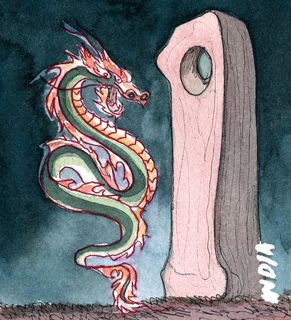 Illustration: Bhaskaran
China was systematically killing Indian manufacturing sector during the UPA tenure. China has a fixed currency. Theirs is not a market economy like ours. Land and labour are not issues in China. When the government decides to build a plant, Chinese peasants have to forego their land. Whereas, entrepreneurs in India have the ghost of Singur haunting them. We have taxes on goods manufactured locally, but none on products imported from China. This is why certain Indian private companies recommended 25 per cent anti-dumping duty on Chinese products.
Indian power companies, including government agencies, placed huge orders for power plant equipment with China, ignoring better, cheaper and easy-maintenance turbines produced by PSU’s like BHEL. China should not have been allowed to grow at the cost of Indian companies, but the UPA did not stop it.
The UPA created conditions which encouraged Chinese imports of non-essential goods. We imported small items like kites, earthen pots and electrical home fittings. By doing so, we showed little concern for poor artisans and SMEs.
The UPA’s China policy did nothing to prevent incursions. Daulat Beg Oldie, Chumar, City Zap, Ladakh and other border regions suffered incursions.
Today, China’s friendly relationship with Pakistan is a cause for concern. China shares its borders with 14 countries; India must try and befriend them all. The NDA government under Prime Minister Narendra Modi has done well to not repeat the mistakes made by the UPA, and must continue to do so. It must work to put an end to territory incursion and strive to increase India’s soft power in Asia and the world, to keep China in check.
forthwriteml@gmail.com