



-
The Nawab of Junagarh, an ardent dog lover, spent Rs 20–$30 lakh on wedding celebrations after his two favourite dogs mated!
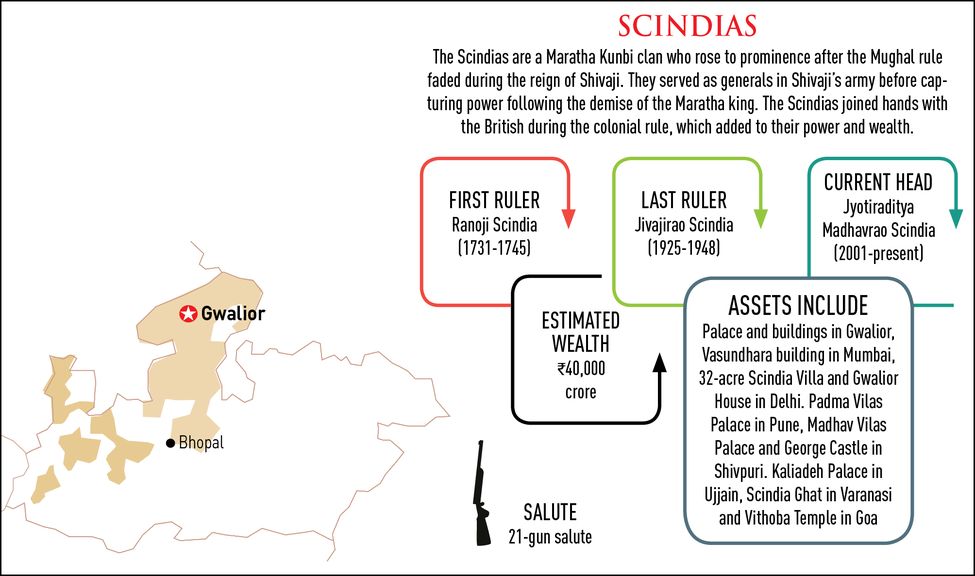
The Scindias were the trusted generals of the Peshwas of the Maratha Empire in the 18th century. Mahadaji—the son of Ranoji, the first Scindia—played a key role in resurrecting the Maratha reign in north India and restoring the Mughal rule in Delhi. As a token of gratitude, Emperor Shah Alam nominated Mahadaji as the deputy of Hindustan. But he quietly handed over the honour to the Peshwa, his original master.
About 300 hundred years down the line, the current titular head of the Scindia family, Jyotiraditya, is deputy leader of the Congress in the Lok Sabha. One of his aunts, Vasundhara Raje, is the BJP's chief minister in Rajasthan, and another one, Yashodhara Raje, is a minister in Madhya Pradesh.
Jyotiraditya's grandmother Vijaya Raje was a founding member of the BJP. She sold the family’s 20-acre Samudra Mahal property in Worli, Mumbai, to pay off the debts accumulated by Helicopter Services Pvt Ltd Company. The company landed in red because the Jana Sangh and BJP leaders who flew in the machines at whim never paid the bill, according to a biographer of her son Madhavrao.
Vijaya Raje’s generosity to the Jana Sangh and the RSS was a bone of contention between the mother and the son. And, in 1977, he switched sides to the Congress. He became a trusted lieutenant of Rajiv Gandhi by 1984. His son, Jyotiraditya, is a close associate of Rajiv’s son, Congress vice president Rahul Gandhi.
“I am not very comfortable with the royal form of address,” said Jyotiraditya. “My ancestors were rulers of Gwalior. I am Jyotiraditya Scindia, member of Parliament, who has studied in public schools and Harvard and Stanford. Please keep me out from this royal identity.”
The ladies in the family, however, are proud of their royal past. Yahsodhara Raje makes it a point to tell people that she should be addressed as Shrimant, a royal address which has long been associated with Maratha rulers. She even got a special order passed from the government a few years ago to get herself addressed as Shrimant in official correspondence.
The Scindias, however, have generally been known to keep their feet on the ground. “Unlike some princes who claim descent from the sun and the moon, I am proud of the fact that we have risen from being sons of the soil, peasants really, just ordinary Maratha farmers who rose on their own sweat and blood,” Madhavrao told a biographer in 1984, the year he defeated BJP stalwart Atal Bihari Vajpayee in the Gwalior Lok Sabha constituency.
“Madhavrao Scindia was a true maharaja, in the sense that he had received privy purse from the government. Jyotiraditya is very different. He is thousand times more a commoner than his father,” said journalist Rakesh Pathak.
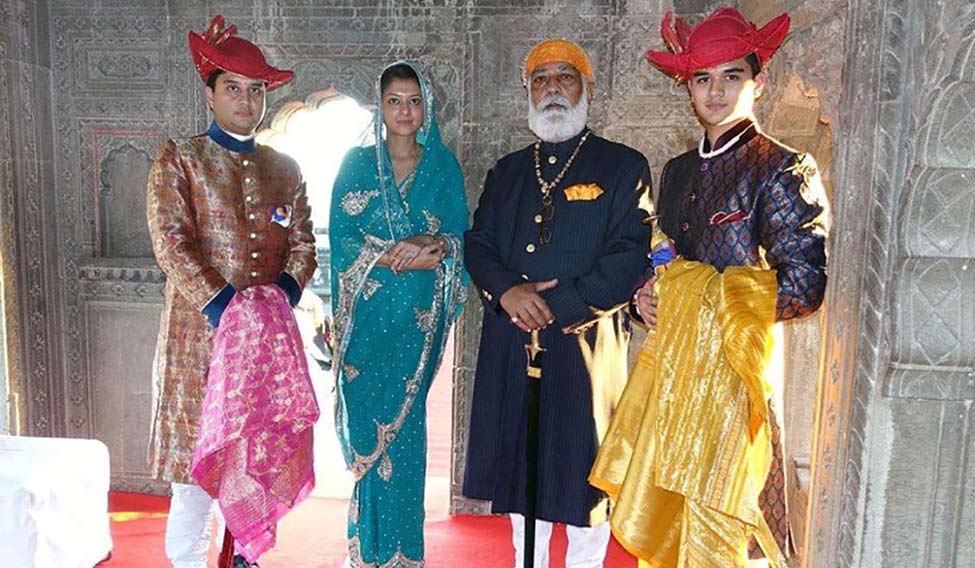 Decked up: Jyotiraditya Scindia with family at a royal wedding.
The Scindias reinvented themselves to democratic norms post independence. No Scindia has ever lost an election on home turf. After independence, prime minister Jawaharlal Nehru figured out their influence in Gwalior. The last maharaja of Gwalior, Jivajirao Scindia, was the governor of Madhya Bharat state from 1947 to 1956 when it was merged with the newly created Madhya Pradesh. In an attempt to check the growth of the Hindu Mahasabha in the region, Nehru persuaded Jivajirao’s wife, Vijaya Raje, to contest to the Lok Sabha from Gwalior on a Congress ticket. She won in 1962.
Later, she quit the Congress and, in 1967, toppled the Dwarka Prasad Mishra government in Madhya Pradesh to form the first non-Congress government in the state.
It was Shindes who became Scindias, because the British had difficulty pronouncing the surname. The Peshwa entrusted one of his military commander, Ranojirao Scindia, with the reins of the Malwa region. It was the foundation of one of the biggest dynasties in central India. When the British expanded their boundaries, the Scindias diplomatically switched sides. As a result, the state became an island of development in central India.
In 1872, Gwalior donated Rs 7.5 million for the construction of the Agra-Gwalior portion of the Great Indian Peninsular Railway. It also funded the Indore-Nimach section of the Rajputana-Malwa railway. Gwalior had not just railways, but also a number of dams and educational institutions for girls. In the 1930s, Jivajirao Scindia persuaded the Birlas to start textile mills in Gwalior and Nagda. “Democratic norms are not new to this family. Even before independence, Gwalior was given an elected municipality by the Scindias,” said Keshav Pandey, secretary of Lok Hitkari Trust in Gwalior.
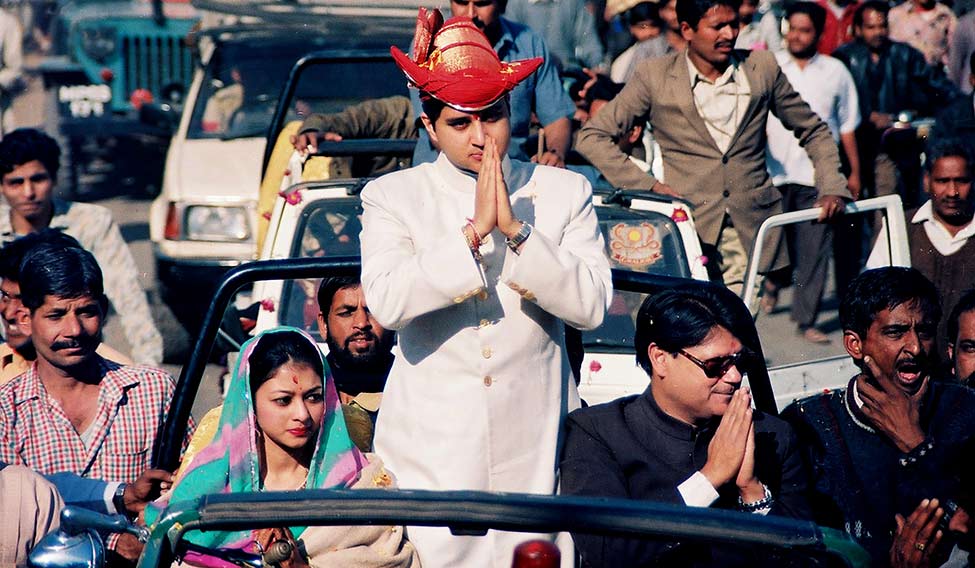
The Scindias were quick to come to terms with democracy. Madhavrao was a member of the Lok Sabha nine times. Jyotitaditya is in his fourth term. “I believe in democratic values and serving my people through the job which I am entrusted with,” he said.
The relationship between Jyotiraditya and his aunts, Vasundhara Raje and Yashodhara Raje, has not been very warm. The family is locked in fight over property which started when Vijaya Raje and Madhavrao were alive. Vijaya Raje willed her properties to her three daughters, and Madhavrao even had to pay a nominal rent to live in the Jai Vilas Palace. The European-style palace, designed by Sir Michael Filose and built in 1874 on in 28 acres, is a blend of Tuscan, Italian-Doric and Corinthian architecture.
In the beginning of his political career, Madhavrao was with the Jana Sangh, the BJP’s predecessor. He quit the party in 1977, after a quarrel with his mother. “Most of the problems between the son and mother were because of a courtier, Sardar Angre,” said Shivshankar Pateria, a former BJP leader. Angre was the eyes and ears of the Rajmata.
The battle among the family members became so bitter that in 1990, Jyotiraditya filed a petition in court prohibiting his father and grandmother from selling the ancestral properties. Many cases pertaining to several properties are still pending in various courts. A rough estimate says Scindias own properties worth Rs 40,000 crore all over the country. Properties under litigation are the palace and buildings in Gwalior, the Vasundhara building on Mumbai’s Peddar Road, the 32-acre Scindia Villa in Sarojini Nagar in Delhi and the Padma Vilas Palace in Pune. The family owns the Madhav Vilas Palace and George Castle in Shivpuri, Kaliadeh Palace in Ujjain, Gwalior House in Delhi, the Scindia Ghat in Varanasi and Vithoba Temple in Goa. It is said that the Scindias own shares in nearly 100 companies.
Jyotiraditya is not much bothered about what the family owns. He, however, makes it a point not to miss ceremonial functions and pujas during Dusshera and Diwali in Gwalior. He visits the city and stays at the Rani Mahal wing of the Jai Vilas Palace when he is in Gwalior. “He works for more than 18 hours a day,” said Pandey. “He is tech-savvy and takes full advantage of it to keep in touch with his people.”
Jyotiraditya keeps reminding people that he is an ordinary man. A month ago, he sat on a dharna in Bhopal for 72 hours. In the middle of the night, he came out of his makeshift resting place, and people were stunned to see the Gwalior maharaja in a worn-out T shirt.