



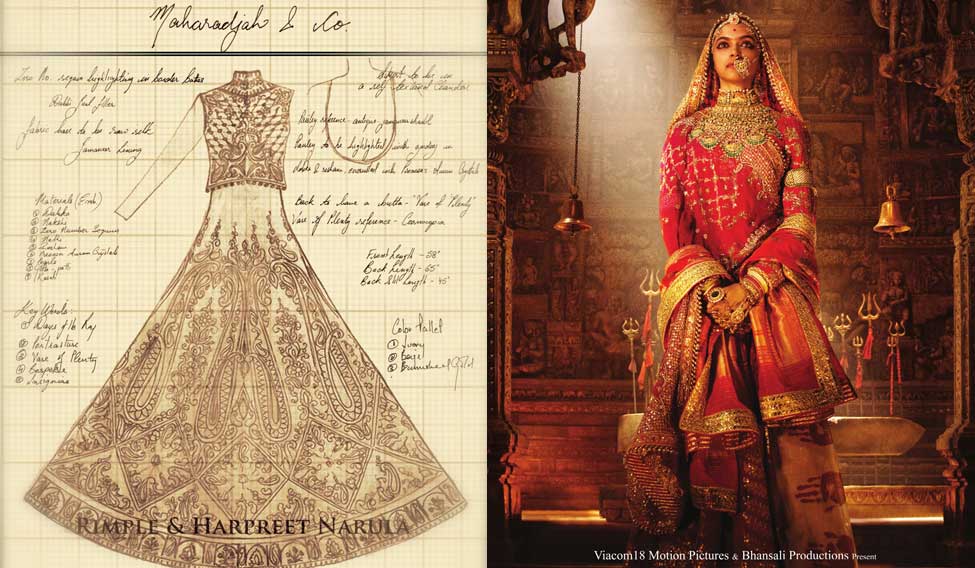
One of the most awaited movies of the year, Padmavati was recently in the spotlight when its characters' looks were released. Director Sanjay Leela Bhansali's Rs 160 crore movie has been the talk of the town ever since its inception. Right from speculations about casting and getting in trouble with right-wing party workers, the project garnered a lot of attention―some of it unwanted. When such a film becomes your very first Bollywood assignment, experiences and lessons learnt are many. Costume designers, Rimple and Harpreet Narula get candid about what went into designing the period costumes and what happened when valuable artifacts were destroyed due to vandalism.
“We want to thank God and Bhansali sir for giving us an opportunity to work on a project of this scale,” says an exhilarated Rimple Narula, who has been answering calls congratulating her on the beautifully done looks from the movie. “The experience was completely surreal. Bhansali has a keen eye for detail and, hence, it was a great learning experience,” she adds. It sure was challenging as the director was hard to please. Various looks were tried for more than two months before it was finalised. Known for luxury bridal wear, the husband-wife designer duo were in familiar territory when it came to opulent costumes.
“The costumes had to come from a pure zone as there isn't much reference available for the period we were working with—11th and 12th century. There was a lot of research involved, with extensive and repeated visits to various museums including the Calico Museum of textiles in Ahmedabad that luckily had a few swatches of clothing from the era. Several historical books were consulted too. The Royalty are very particular about the colours they want to wear. For example, colours like navy blue and black are considered to be unlucky whereas lotus pink, burnt orange and blood red are considered auspicious and, hence, find a way into bridal outfits,” she explains.
The brief for Deepika Padukone's costumes was a transitional look from a Sinhalese princess to a Rajput queen. “The changes had to match the narrative,” says Rimple. “Some of the looks for the Sinhalese princess phase was inspired from South India as the jewellery and costumes are similar.” however, putting together Ranveer singh's look, who plays Alauddin Khilji, was another challenge as costumes in the undivided northwest frontier of India had influences from Turkish and Moroccan cultures.
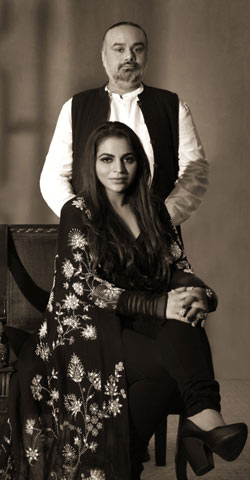 Designer Rimple and Harpreet Narula
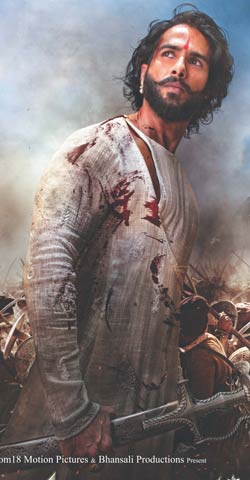
“This is because they are conquerors and have been travelling constantly,” says Rimple. So, it isn't a simple pathani suit, but pajama salwars and kurtas. And, of course, a headgear. “We immersed ourselves in the history of that particular period during the initial sessions, in which Bhansali took us through the script and the characterisation. We went through books such as The Wonder That Was India Volume 1 by Arthur Llewellyn Basham that documents India before the Sultanate rule and Volume 2 by S.A.A. Rizvi that covers the Islamic period. Other books by noted historians such as Ramesh Chandra Majumdar, John Keay and the writings of the 16th century historian Abd-ul-Qadir Bada'uni were also used for reference as well to get the styling right for both the male characters. We have used robust, earthy, luxe-kitsch elements layered over a mostly warm-earthy color palette for Shahid's Ratan Singh while there is a definite nod to Khilji's Afghan origins in the detailing of Ranveer's costumes. Nearly all fabrics used for the costumes are organic.”
Handwoven cottons and silks like chanderi, kota and muslin that has even been sourced from the flea market has been used. A lot of gota patti work and zardozi embroidery has gone into Deepika's lehengas. The jewellery features kundan work. Shahid's costumes too include organic fabrics like cotton and mul. Block-printed pagdis, simple angrakhas and kalidaars and embroided jooties is what you will see,” Rimple says.
“The set being vandalised twice definitely was a set back in our work. But thankfully, we had a few buffer pieces and fabrics ready as Bhansali had explained to us the concept of continuity and we had readied a few duplicates accordingly. Some antiques that were destroyed were irreplaceable and so, we had to make do with replicas,” she explains. Mostly all the armour and protection gear featured in the movie is made from metal as Rajasthan is known for its use of metal armoury.
“All three actors are thorough professionals. When it comes to getting into the costumes and perfecting the look, they were very cooperative. They were very patient through the fittings. Each time they got ready for the shot, you felt it is going to be an iconic look,” says Rimple. The experience of working with someone like Sanjay Leela Bhansali, that too on a grand scale as this, is the highlight of the project, she adds.