



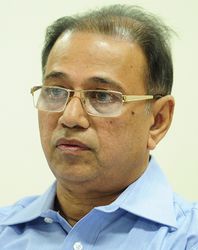
The Supreme Court has stayed a decision of the Madurai bench of the Madras High Court to summon a former judge of the apex court on the charge that he had accepted an award from an animal rights organisation after having given a judgment banning the controversial jallikattu in Tamil Nadu. The bench wanted Justice K.S. Radhakrishnan, who had retired by the time he received the Man of the Year from PETA, to answer the demand of a petitioner that he return the award and that the government should not give him any further post-retirement employment. Justice Radhakrishnan heads a Supreme Court-mandated committee to suggest ways of ensuring road safety across the country and has given important recommendations.
In his appeal, Radhakrishnan has argued that he enjoys protection for the judgments he delivered as a judge of the High Court and Supreme Court, given by the Constitution and other laws. He argues that he has become a private citizen who could accept post-retirement jobs and awards. The admirers of the judge, who gave landmark judgments like sending Sahara chief Subroto Roy to jail for non-payment of money to the company’s depositors through SEBI, feel that he has been targeted by those who wanted to permanently besmirch the Supreme Court order finding valid legal and scientific reasons for banning jallikattu. The judgment was overturned by the Tamil Nadu government through a new law, but legal challenges are bound to come up.
The issue has once again raised questions on what retired judges of the Supreme Court and High Courts can and cannot do. While those who serve on the apex court cannot practise in the court, retired High Court judges can practise in the Supreme Court.
Many judges are selected by the Supreme Court itself or the government to head important tribunals as in the case of retired chief justice R.M. Lodha. The Supreme Court gives them special assignments to monitor progress of implementation of court orders. Lodha publicly oversaw the revamp of the Board of Control for Cricket in India and is now overseeing the reform of medical admission system. There have been several instances of former judges of superior courts opting for electoral or nominated offices—M. Hidayatullah as vice president of India; Baharul Islam and Ranganath Misra as Rajya Sabha members; Vijay Bahuguna as chief minister of Uttarakhand. Some have tried and lost, like V.R. Krishna Iyer for president’s job. Subba Rao failed to become vice president. Fathima Beevi and P. Sathasivam are former judges of the Supreme Court who have become governors. Specific posts in government like chairmanship of National Human Rights Commission and Lokpal are reserved for retired chief justices. Retired judges too go to private sector, taking up chamber consultancy or arbitration proceedings. Justice Radhakrishnan’s case may not give any significant new guidelines on this issue.
sachi@theweek.in