



The Municipal Corporation of Greater Mumbai, popularly known as Brihanmumbai Municipal Corporation (BMC), is India’s richest municipal body. Its 2016-17 budget had a size of more than Rs 37,000 crore—more than that of some of India’s smaller states put together—and its fixed deposits amount to Rs 43,123 crore.
The Shiv Sena-BJP alliance has been in power in this mammoth civic body for the past 20 years. However, this year, the two parties will be fighting each other in the polls scheduled for February 21.
The spilt was caused by a series of events following the 2014 Maharashtra assembly elections. The BJP won 16 seats in the assembly against the Shiv Sena’s 14. The BJP started playing big brother and eventually demanded 115 seats in the upcoming local body elections. This was refused by the Shiv Sena, and its MP Sanjay Raut, said: “This is a municipal corporation election and the seat sharing can happen on the basis of seats won in the previous elections. So, we offered 60 seats to BJP. That, too, because Uddhavji [Sena chief Uddhav Thackeray] is large-hearted.”
For the past few months, BJP MP Kirit Somaiya had been saying a mafia was controlling BMC’s road construction, solid waste management, water supply, school uniforms and milk supply. “We will fight against this mafia that was allowed to operate under the Shiv Sena,” he said. Congress MLA Nitesh Rane said, “What were Somaiya and other BJP leaders doing when these mafias were looting BMC? I have been exposing and fighting these elements for the last five years. Why did the BJP keep mum then? We hold both the Shiv Sena and the BJP responsible for the corruption and failure of governance.”
Solid waste management has been a big problem in Mumbai. “BMC gave a ‘contract’ to United Phosphorus Ltd for an annual fee of Rs 5,000 crore for 25 years, with a fixed hike every year. The company was supposed to produce fertilisers and electricity from solid waste, but didn’t do anything,” said Bala Nandgaonkar, a Maharashtra Navnirman Sena (MNS) leader and former MLA. He said the contractor merely dumped the waste at Deonar ground.
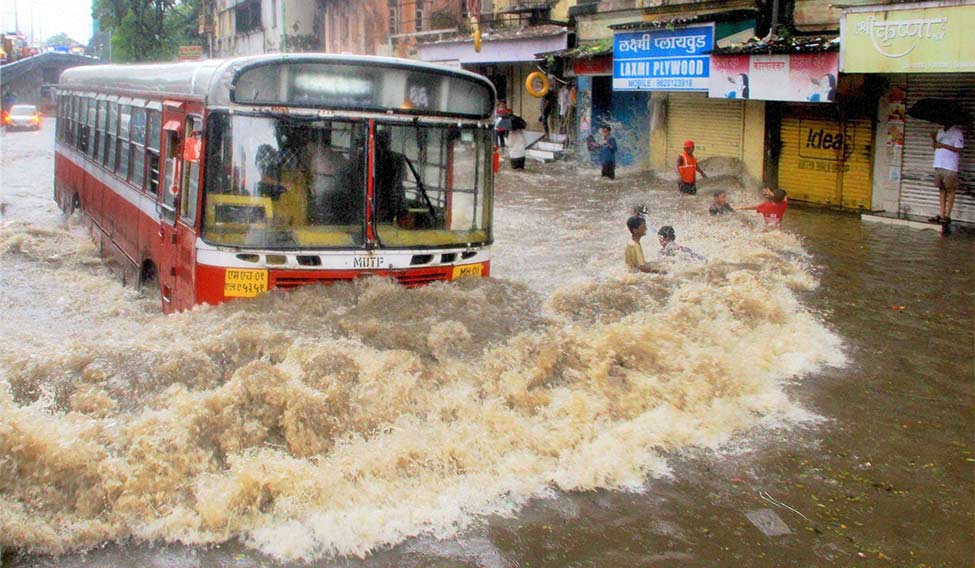
Water logging during monsoon has also been a chronic problem in Mumbai. This became a big issue after the flood in 2005. “Over Rs 4,000 crore has been spent to clean nullahs and de-silt the Meethi river in Mumbai. But, huge corruption has happened in that, too,” said Nandgaonkar. He said the commissioner had found GPS devices meant for dumper trucks that transported mud from the river had instead been mounted on motorcycles by contractors. “Most of the Rs 392 crore spent in one year on the Meethi was looted by the corrupt nexus of officials and political leaders,” said Rane. “Almost Rs 200 crore has been spent on the penguins that BMC imported, just to satisfy [Sena leader] Aditya Thackeray’s whims.”
Harshal Pradhan, Shiv Sena’s media coordinator and Uddhav’s confidant, said the allegations by Somaiya and company were baseless. “Uddhavaji has already appealed to the Shiv Sainiks to fight this battle so fiercely that there will be no need for any alliance to retain our saffron flag on BMC,” he said.
Shiv Sena’s manifesto has promised waiver of property tax for houses up to 500sqft, free bus service for students, preservation of green belt zone in the Aarey colony area and houses for BMC’s sanitation workers, who number over 12,000. Octroi duty comes to about 60 per cent of BMC’s total revenue; rest comes mostly from property tax. Senior journalist Pandurang Mhaske said, “Octroi will be gone once GST is introduced. Sixty per cent of the area is slums, which do not have any property tax. And only 18 to 20 per cent of the properties in Mumbai are above 500sqft. How will the Shiv Sena govern BMC if they lose so much revenue?”
Nandgaonkar said that such impractical poll promises will bring BMC to bankruptcy. “The BMC won’t even be able to pay its salaries,” he said. Defending the manifesto and taking a dig at the BJP, Uddhav said, “We are not saying that we will build a flyover or an airport on Mars.” He also talked about the “secret designs” of the BJP leaders to break Maharashtra by separating Vidarbha, and to weaken Mumbai financially.
The MNS had posed a challenge to the Shiv Sena during the 2012 elections, when it won in 28 wards. In the 2009 assembly polls, its first, it won 13 seats but managed just one seat in 2014. The All India Majlis-e-Ittehadul Muslimeen (MIM) is another important party in the BMC elections. It won two assembly constituencies in Mumbai in 2014 and damaged the Congress in many constituencies. The split of the Sena-BJP alliance means it will be a fierce fight to gain control of BMC.
A minor opportunity
Nizamuddin Rayeen, president of the minority cell of the Congress, joined the MIM soon after a few Samajwadi Party and Congress councillors joined it in January. Waris Pathan, MIM legislator from Byculla, said, “We will be contesting in 59 wards dominated by voters from under-privileged and marginalised sections of society.” The party does not have any sitting councillors, but Pathan said they were approaching the elections meticulously. A team of experts from Hyderabad had done a door-to-door survey to understand the aspirations, problems and expectations of voters. “Our agenda will be to fulfil those aspirations,” said Pathan. He said the MIM was not a spoiler. “This is the beginning, and we want to emerge as an alternative. We will get 20 to 30 per cent of the votes.”
Asaduddin Owaisi, the firebrand leader of the MIM, has already addressed four public meetings in Mumbai. “Owaisiji will be addressing a total of 15 public meetings,” said Pathan. His party runs the Hyderabad municipal corporation, which Pathan said was rated the best in transparency, infrastructure and revenue planning. “The MIM will prove its mettle in BMC as well,” Pathan said.
Sachin Sawant, Congress spokesperson, said, “During the Bihar elections, voters proved that they realised the MIM’s role as a spoiler. The MIM and BJP work together with the intention of damage the Congress.” He said that minority and dalit votes would not split this time and the Congress tally would rise substantially from the 52 seats it had won in 2012.