


 Add as a preferred source on Google

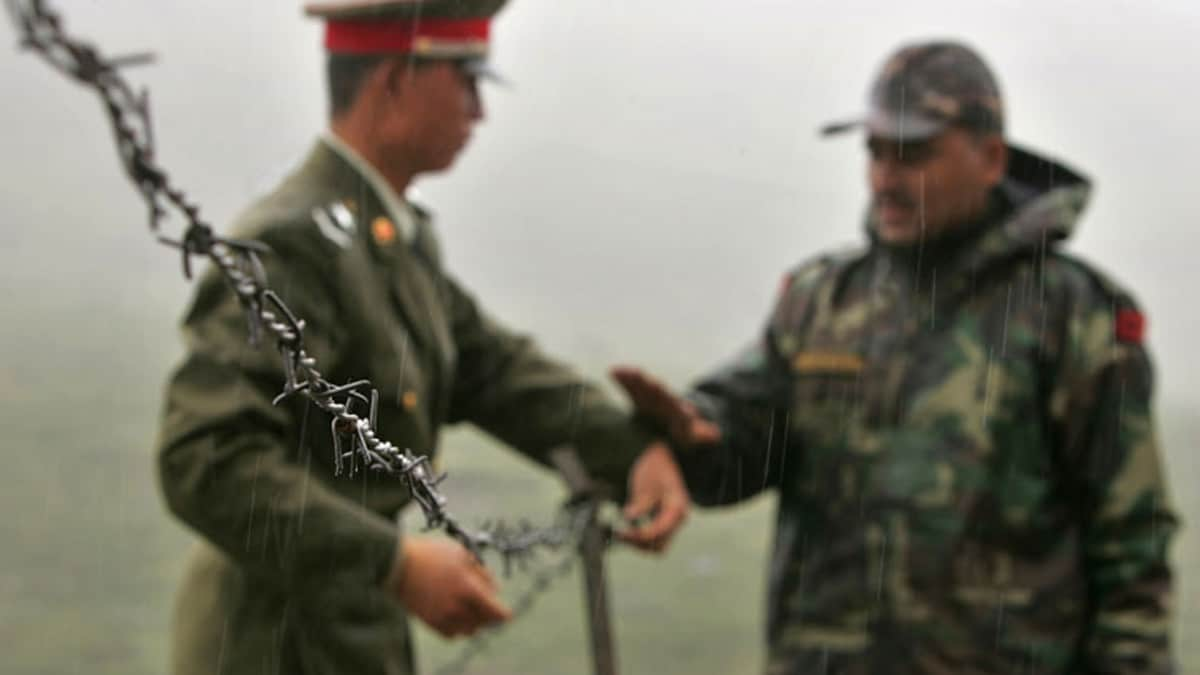
China is pursuing a multi-domain campaign to limit India's regional influence and preserve its strategic and industrial advantages, combining military pressure along the disputed border, deepening security cooperation with Pakistan, expanding its presence in the Indian Ocean and using economic coercion and cyber operations, among other things.
According to a recently released report by the US-China Economic and Security Review Commission (USCC), Beijing sees India as a “strategic challenge” that needs to be managed as New Delhi strengthens its military posture, builds security partnerships and tries to emerge as a manufacturing and technological alternative to China.
India's strategic location and large military limit Beijing's ability to expand its power on land and at sea, the report states. Its position along the Indian Ocean sea lanes also offers New Delhi an opportunity to monitor Chinese activity and potentially threaten critical trade and energy flows during a conflict.
A more capable India would require Beijing to devote resources and attention to a second front that the country might otherwise dedicate to the Western Pacific, giving the US greater flexibility elsewhere in the Indo-Pacific.
The report identifies several ways in which China is attempting to constrain India's rise.
Military pressure along the border
China continues to improve its military position along the Line of Actual Control (LAC), increasing its ability to rapidly escalate a future border crisis.
Beijing is expanding dual-use infrastructure, airfields, railways and logistics networks across the Tibetan Plateau and neighbouring provinces while conducting regular exercises through the People's Liberation Army's Western Theater Command and Tibet Military District.
These investments provide China with important advantages in mobilisation and sustainment, which, combined with its growing long-range missile and rocket artillery forces, would strengthen Beijing's position in a border contingency.
China's infrastructure buildup and pre-positioned forces require India to divert resources from economic development and naval modernisation simply to maintain the ability to respond quickly along the border, the report pointed out.
Although Prime Minister Narendra Modi and Chinese President Xi Jinping held dialogues in October 2024 and August 2025, resulting in border patrol agreements and moderate steps towards normalising relations, the underlying dispute remains unresolved.
India views stability at the border as a prerequisite for productive bilateral relations. China, however, aims to compartmentalise the border dispute, keeping other lines of cooperation open while strengthening its military positions and advancing its sovereignty claims.
China’s Arunachal Pradesh claims
China is also intensifying its sovereignty claims over Arunachal Pradesh, heightening concerns in India that a future confrontation at the border could escalate.
Beijing claims most of the state as part of what it calls "South Tibet" or Zangnan and rejects the McMahon Line, which India regards as the international boundary.
China has intensified efforts to legitimise those claims by constructing dual-use facilities near Tawang, publishing Mandarin names for locations inside the state and refusing to recognise the Indian citizenship of people from Arunachal Pradesh.
Together, these activities represent a broader effort to normalise China's territorial claims while strengthening its ability to support future military operations, the report observes.
The two-front threat
China's growing power and longstanding support for Pakistan have intensified India's fears of a coordinated two-front threat.
Beijing has deepened its ties with Islamabad to counterbalance India since the 1962 Sino-Indian War. Today, China and Pakistan are strong partners in economic, infrastructure and defence cooperation.
China is Pakistan's main defence supplier, accounting for 81 per cent of its arms imports between 2020 and 2024.
The May 2025 India-Pakistan conflict highlighted how China's military support for Pakistan has compounded India's strategic challenges. During the military stand-off, which followed India's launch of Operation Sindoor in response to a deadly terrorist attack in April, Pakistan reportedly used advanced weaponry procured from China.
Hackers also reportedly attempted large-scale cyberattacks against India's critical infrastructure, including government IT infrastructure, telecommunications and digital services.
China reportedly increased pressure on India by simultaneously deploying a survey vessel equipped with advanced sensors around the waters of India's exclusive economic zone, the US report noted.
After the conflict, Indian military officials pointed out that Pakistan may have received real-time satellite imagery or other intelligence support from Beijing, which China's ministry of foreign affairs neither confirmed nor overtly denied.
In May 2026, China's CCTV aired an interview with Zhang Heng, an engineer associated with the Aviation Industry Corporation of China, who confirmed that he and other Chinese personnel provided onsite technical support in Pakistan during the May 2025 conflict.
These developments demonstrated how China's support for Pakistan can magnify India's security challenges across multiple domains.
Expanding presence in the Indian Ocean
China is systematically expanding its commercial and military presence across the Indian Ocean to reduce its vulnerability to potential disruptions at critical maritime chokepoints while eroding India's longstanding strategic advantages in the region.
About 80 per cent of China's oil imports cross the Indian Ocean and pass through the Strait of Malacca before reaching Chinese ports. This dependence supports Beijing's concerns that its trade and energy flows could be disrupted during a crisis.
To address this vulnerability, China has spent the past two decades building commercial infrastructure, logistical networks and military capabilities to secure its maritime supply lines and sustain a long-term naval presence in the region.
Economic coercion
The report also highlights China's use of economic coercion, not simply to influence India's behaviour but to constrain its emergence as a manufacturing and technological competitor.
Beijing's primary method leverages India's dependence on Chinese industrial inputs, selectively tightening or relaxing the flow of goods, technology and expertise.
Some measures are punitive, imposing costs in response to Indian actions that China opposes.
India's enormous domestic market, workforce, engineering talent and growing industrial base give it the potential to become a major alternative manufacturing location and a deeper source of supply in strategic industries.
Greater Indian capacity could provide alternatives to Chinese production and help diversify critical supply chains. Beijing views that prospect as a strategic challenge.
Cyberattacks and other threats
Apart from conventional military competition, China employs cyber operations, information campaigns and other activities to exert pressure on India and shape its information environment, particularly during periods of heightened tensions, the report stated.
Several studies cited in the report indicate that China is now the primary source of cyberattacks against India, a trend that accelerated after the 2020 Galwan Valley clashes.
These activities allow Beijing to complicate India's security environment across multiple domains below the threshold of armed conflict.