


 Add as a preferred source on Google

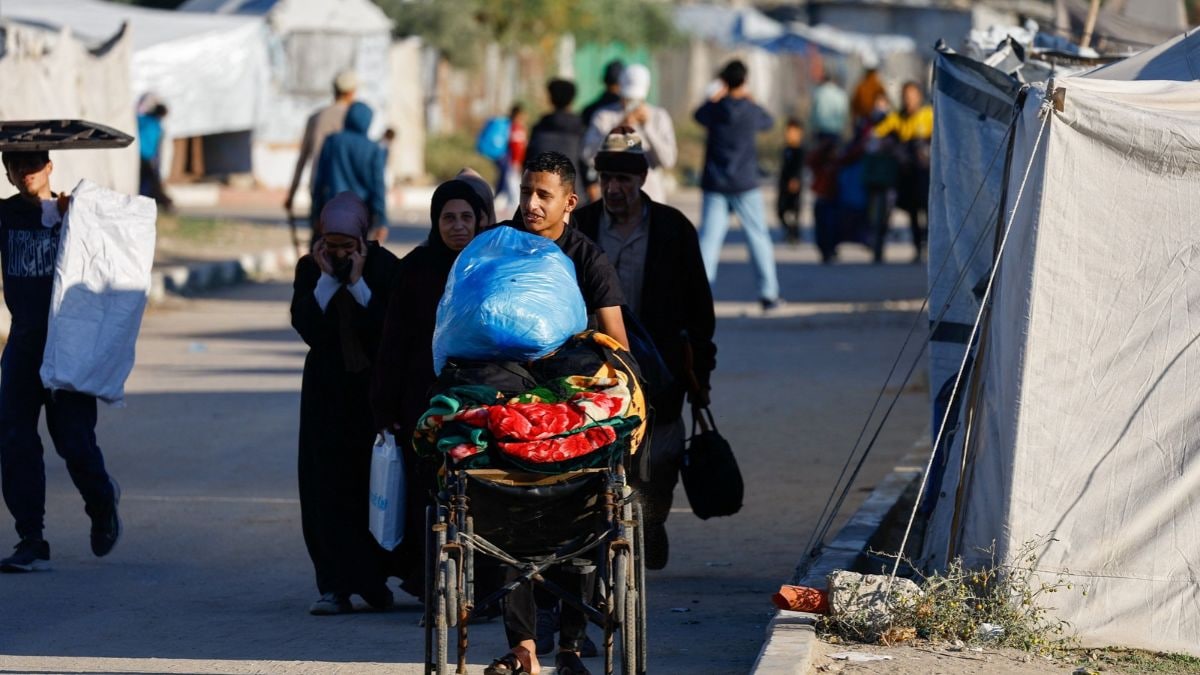
Israeli tanks, troops and armoured bulldozers moved west of the Yellow Line in central Gaza yesterday, marking the first major ground incursion since the ceasefire of October 2025. The advance reached areas outside direct Israeli control. Artillery and drones accompanied the attack. Thousands of Gazans, already worn down by war, were once again on the move. Observers worry that a truce that had stalled for months could be close to unravelling.
Drawn under the October 2025 agreement, the Yellow Line separated territory held by the Israeli military from land where Palestinian civilians could live and move freely. At the outset, Israeli troops held about 53 per cent of the Strip. Over the months that followed, that kept on increasing, until Israeli forces controlled somewhere between 60 and 70 per cent. During the latest push, Israeli forces advanced roughly 200 to 400 metres past the line, from the east and under artillery cover, into al-Mughraqa, towards the Wadi Gaza bridge and the Nuseirat and Bureij refugee camps.
Israel described the operation as narrow and preventive. The Israel Defence Forces and the Shin Bet said the aim was to find and destroy a tunnel network west of the line, which they called an imminent danger to soldiers stationed along the perimeter. The army repeated that it retains full freedom of action across the Strip, and said Washington had been briefed before the troops crossed. The campaign is expected to last several days, with the stated purpose of removing militant infrastructure and preventing surprise raids across the line.
COGAT, the Israeli civilian coordination body, told residents north of Nuseirat and Bureij to keep away from the operational zones, and closed the Salah al-Din road to civilian vehicles. For families on the edge of central Gaza, the warnings arrived at about the same time the tanks appeared. Many had been displaced repeatedly across three years of war and were living in thin nylon tents. They left on foot or on donkey carts, under gunfire and shelling, and left behind blankets, clothing and cooking gear.
Drone strikes and artillery fire hit several crowded areas through the afternoon. Hospital officials said at least three Palestinians were killed and several wounded in al-Mughraqa, Deir al-Balah and Gaza City. Doctors treated serious trauma cases, and the health ministry spoke of rising casualties. The Israeli military said it struck only armed men who threatened its soldiers.
Since October 2025, Israeli operations have killed more than 1,600 Palestinians, while Palestinian armed groups have killed seven Israeli soldiers and one civilian over the same period. The ceasefire, in other words, has always been under threat.
Defence Minister Israel Katz has added to the controversy, threatening that if fighting widens across other fronts, Israel is ready to take more Gaza territory, remove its residents permanently and fold the captured buffer zones into its security perimeter.
Hamas called the assault a flagrant violation of the truce. It said that evacuation orders issued under fire amounted to a war crime, designed to push Palestinians into ever smaller spaces, and it held both Israel and Washington responsible for the suffering of civilians. It appealed to mediators to step in. Palestinian officials and some observers also drew attention to Israeli domestic politics. Prime Minister Benjamin Netanyahu faces a determined challenge from opposition leader Gadi Eisenkot, who is trying to assemble a governing coalition. Critics argue that a show of force beyond the line suits a leader who trades on security, at a moment when coalition talks are tense and his position is exposed.
The larger setting is a diplomatic vacuum. The Board of Peace, backed by the United States, recently warned the United Nations Security Council that the 13-month-old agreement faced imminent collapse. Reconstruction, an international stabilisation force and troop withdrawals have all stalled. Israel has blocked aid, building equipment and the arrival of technocratic administrators, and has rejected Hamas's disarmament proposals, insisting on complete demilitarisation before any withdrawal. It also accuses Hamas of rearming and extending its militant infrastructure. Neither side, it seems, is willing to move first, and the tenuous ceasefire appears to be facing a real threat of collapse.
