



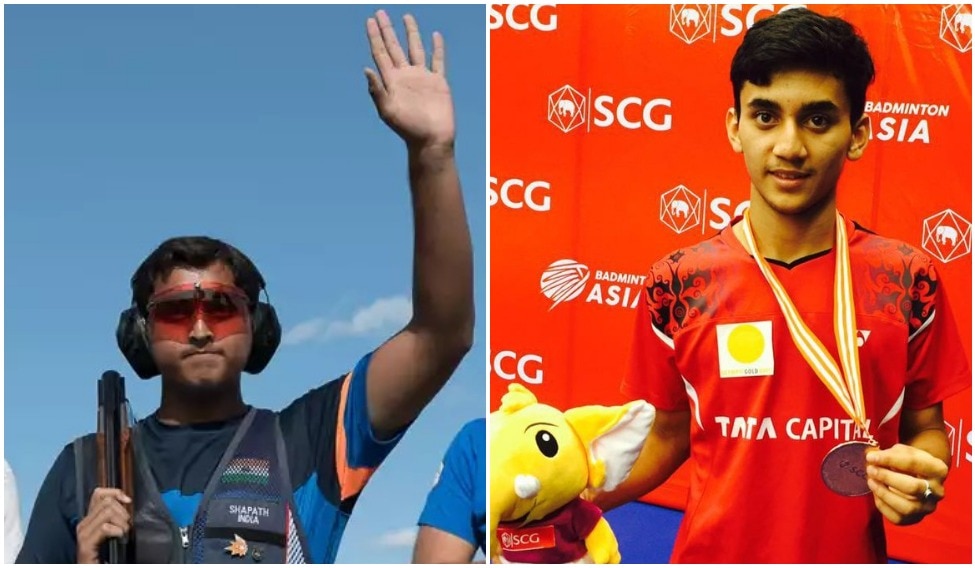
Badminton and shooting have nothing in common other than the fact that both are sports disciplines. Yet, there is a lot in common between two disciples of these sports—Shapath Bharadwaj and Lakshya Sen. Both teenagers are junior world champions. Both are described by their peers and coaches as intelligent, mature and committed. Both are considered prodigious talent. Both have generated a buzz of excitement that one feels when one comes across a special talent.
 Shapath Bharadwaj
Shapath Bharadwaj, double trap shooting
He is 15. A boy among the men, Bharadwaj has created quite a stir in the shotgun shooting community at home. In 2016, he became the youngest shotgun shooter to find a place in the senior Indian team. This year, in May, he announced his arrival on the big stage by making it to the finals in his first ISSF World Cup in Cyprus. He finished a creditable sixth.
On August 20, in Porpetto, Italy, he added another feather in his cap. He won the bronze in the ISSF Junior World Cup in the shotgun category. Olympian Ronjan Sodhi describes Bharadwaj best: “There is no dearth of talent in our country. He is a cut above the rest.”
The boy from Meerut, Uttar Pradesh, is on the fast track. India is no stranger to prodigies in shooting—Jaspal Rana and Abhinav Bindra are two such names. Bharadwaj wants to emulate them. But the dreams of becoming a top shooter representing his country, would have been a mere dream, if not for his interest and the urge to compete. It all started when a small Bharadwaj would accompany his elder brother Shrey to a nearby shooting range at Pilhara in Meerut. He would often borrow guns to participate.
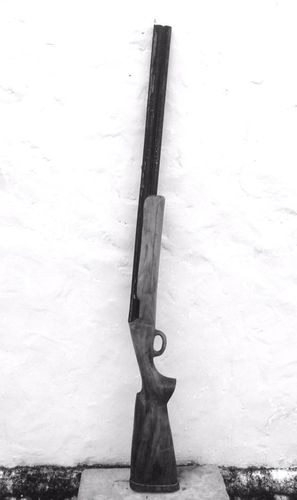 Shapath's wooden rifle
Once, he landed at a shotgun competition organised by Sodhi and Sandhu without a gun, because the person who had promised to lend him one, backed out. Sodhi lent him his gun and from there started Bharadwaj’s story of a shooting star. “From September 2014, Bharadwaj started his proper training for double trap. It has been three years, during which he has picked up everything.”
Sodhi minces no words while pronouncing the young gun as special. “From whatever I have seen in trap and double trap, he is a special talent. I haven’t seen anyone like him at his age performing so well at international level. He has a very sound head on his shoulders. He is dedicated and focused. His technique is good, too,” he says.
Sodhi, Asian Games and ISSF World Cup gold medallist, is now mentoring Bharadwaj. He put him in touch with fellow shotgun shooter Yoginder Pal Singh who is now the youngster’s full time coach. His father S. Raju is the Meerut correspondent for a leading national daily. He is extremely grateful to Sodhi and Singh for taking charge of his son’s shooting ambitions. “Mr Y.P. Singh has been coaching him for over two and a half years. He has not even charged a single penny from us. We are not able to pay his fees. We really appreciate what he is doing for our son.”
Says Sodhi, “It takes a lot of patience to work with youngsters. Yogi has it in him. Shapath is now hitting the next level “
After his recent performances at the international events, Bharadwaj has been taken into the Target Olympic Podium Scheme, which will go a long way in providing funds for coaching, equipment, training and exposure. “We have been blessed that way,” says the young shooter’s father. “So many people have come forward and helped. We didn’t have the means to fund his gun or competitions.”
Interestingly, the shooter who won the gold in the Cypus World Cup (Bharadwaj’s first senior men’s world cup) called Danielle Di Spignio of Italy, will now be Bharadwaj’s foreign coach.
Making the cut hasn’t come easily for Bharadwaj or his family. At 12, he won the Uttarakhand state championships without a gun. There is the famous story on how his father hit upon a plan to make Bharadwaj practise without a real gun. He got a dummy wooden gun made, and gave it to Bharadwaj to use it for target practice. “It took me more than one month to convince the carpenter to make a wooden gun. He was so scared that someone would find out that he was making a gun! We used it for dry practice without ammunition.”
Says Sodhi, “Bharadwaj is aware of his parent’s limitations.” He has not once protested against the demands of training or, for that matter, studying. He travels with his mother by road to reach the Karni Singh Shooting Range on Delhi-Faridabad border, sometimes twice, sometimes four times a week. That is about six hours travelling to and fro—100km each time. Sometimes, he even changes his clothes in the car itself and does his schoolwork, too, while travelling. When he doesn’t go for his shooting practice, he attends coaching classes to keep up with his studies. Evenings are spent in the gym and sessions with his mental trainer, off and on.
Having now made it to the senior national side, the focus for Bharadwaj will be to prepare for challenges like Commonwealth Games and Asian Games. However, double trap has not made the cut in Tokyo Olympics 2020, which means at some point of time, he will have to make the switch to trap to double trap. Sodhi shrugs off this switch as a non-issue. A lot of double trap shooters are already shooting trap. That will take a year to shift. His foreign coach Di Spignio had done the same.
 Lakshya Sen
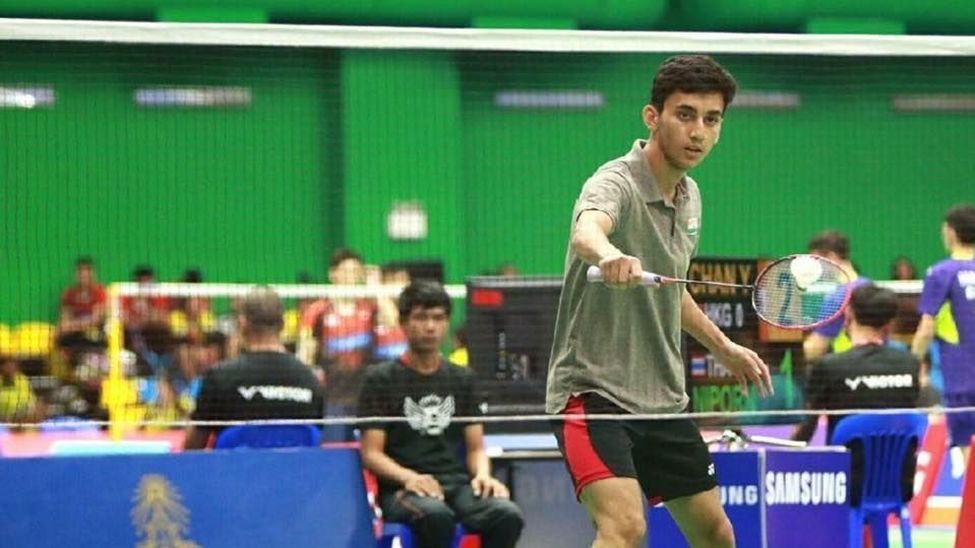
Lakshya Sen, badminton
The 16-year-old took to badminton like fish takes to water. He has been eating, sleeping, breathing badminton since he was nine. Therefore, if you ask him whether he misses home, his family, his mountainous hometown Almora in Uttarakhand, the answer wouldn’t be a forlorn one. His heart is where badminton is.
The badminton prodigy recently won the Bulgarian Open tournament—the second senior title for the junior world no. 1. The first was at the India International Series in 2016.
Coach Utsav Mishra who has watched and trained with Lakshya at Prakash Padukone Badminton Academy (PPBA), and travelled with him, says, “The credit for these results goes to his sincerity. He is a hard worker. The best part is that I have never seen such an intelligent performer on the court. He is very mature for his age.”
Badminton runs in his blood—his father D.K. Sen is a reputed badminton coach at SAI. His elder brother Chirag was enrolled in the Prakash Padukone Badminton Academy (PPBA) in Bengaluru. Lakshya, too, insisted he wanted to join. He reportedly even approached Vimal Kumar, Saina Nehwal's coach, during a tournament seeking his feedback on a match he played. But Kumar, who had noticed his special talent, thought he was too young to stay away from his family. Eventually, the little boy got his way and seven years ago, when he was only nine, he moved to Bengaluru.
Soon, exposure tours started on the junior circuits and results started coming in. Last year, when he became junior no. 1, he also simultaneously competed in the senior national championships. He ended as a runner-up and missed by a whisker the chance to repeat the feat of his mentor Prakash Padukone who had been crowned the junior and senior men’s national champion. But it was a memorable tournament nevertheless—en route to the finals of the senior nationals, Sen downed older and experienced players like H.S. Prannoy.
Playing seniors, rather players older than him, is nothing new for Sen. Right from his under-13 days, he has been competing against older players. In the finals of the senior championship, the 15-year-old lost to 24-year-old Sourabh Varma.
“His selection of shots, movements are all there. You discuss a plan, he executes it. What's lacking at the moment, which all coaches concur, is power. At 16, he is still growing.
“He needs to be more fit and powerful,” says Mishra.
He is not the first junior to show signs of promise at an early age. There is Siril Verma who is also graduating slowly to the senior level alongside Sen, who is rated highly by chief coach Pullela Gopichand.
There is no rush yet by his coaches to fast-track him to the senior level. He will travel for Vietnam Open tournament in September, and in October, he will compete in the junior World Cup.
Kumar is currently focusing on giving juniors like Lakshya exposure under exchange programmes with national academy boys in Malaysia, Indonesia and Denmark, rather than making him play in more domestic junior programmes. By 2018, the plan for Lakshya is to graduate to the Grand Prix and few Super Series events.
Coincidentally, Kumar’s other ward, former world number 1 Saina Nehwal, too, took the badminton world by storm at 16, when she became the under-19 national championship, won the Philippines Open (four star) tournament and was crowned the world junior champion.