


It was a misplaced decimal that made Popeye feel he is 'strong to the finish, 'cause I eats my spinach'.
Well so claims Samuel Arbesman, scientist, in his book 'The Half-life of Facts: Why Everything We Know Has an Expiration Date'. The mistake dates back to 1870 when, according to Arbesman, German chemist Erich von Wolf wrongly noted his findings on iron content in spinach. Erich von Wolf noted that there is 35 milligrams iron in 100g serving of Spinach, while, in reality, there is just 3.5 milligrams. Almost 50 years later this mathematical error resulted in cartoon character Popeye spreading the misconception that spinach makes his muscles big.
But the reality is that spinach roughly has as much iron content as any other leafy green vegetable. That said, spinach may not have enough Iron content to give Popeye big muscles, it now surely promises to give the sailor man better bone health.
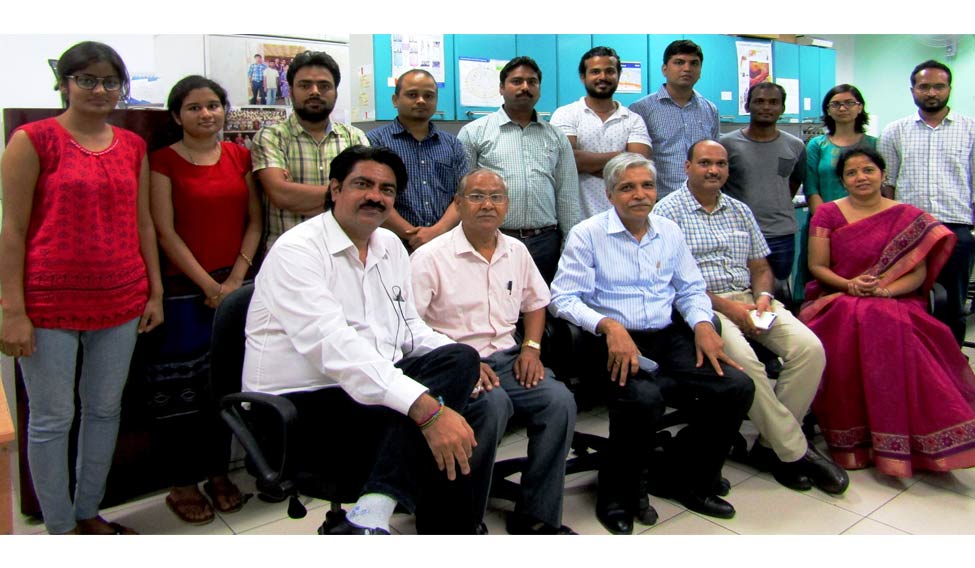
Thanks to a research on fracture healing, a team of scientists from the Central Drug Research Institute (CDRI), Lucknow, claims to have stumbled upon a potential nano-formulation from Spinach, to prevent and cure osteoarthritis.
It is estimated that by 2025, with around 60 million patients, India is will be the osteoarthritis capital of the world. The painful and debilitating condition, involving gradual wearing down of cartilage, is the world’s most common joint disease and has an estimated 242 million patients across the globe. So, considering the enormity of the situation and India’s share in the arthritis pie, discovery of this promising nano-formulation is nothing but a result of breakthrough research in the area of osteoarthritis.
So should osteoarthritis patients start consuming spinach? “Practically an osteoarthritis patient cannot consume enough spinach to improve his or her condition. That’s precisely the reason why we have developed a nano-formulation from the plant extract to reduce the dosage and increase the efficacy,” tells Dr Ritu Trivedi, Bone Biologist, and the team leader for this study at CDRI.
“This sounds like an encouraging piece of news. I will be very happy to see such a drug in India because we do have drugs that can control and relieve rheumatoid arthritis, but we do not have any drug that can control osteoarthritis,” says Dr Skand Shukla, a Lucknow-based popular rheumatologist and clinical immunologist.
Explaining this unmet need for medicines for osteoarthritis, Dr Ritu says, “All that is available for osteoarthritis is a wide spectrum of painkillers, which results in liver toxicity over prolonged consumption, and a couple of other symptomatic treatments. So, this drug has a lot of potential in improving the quality of life of osteoarthritis patients.”
Interestingly, the original research of Dr Trivedi did not focus on identifying a potential cure for osteoarthritis. “We originally focused on postmenopausal osteoporosis and fracture healing but during the course of experiments, we observed that a standardized nano-formulation of spinacea oleracea, commonly known as spinach, not only had the ability to form bone mass-it, also possessed an intrinsic ability to repair cartilage cells at the affected site. We then observed that spinacea oleracea repaired and cured the degenerated cartilage in rodents.”
To this, Dr Madhu Dikshit, Director, CDRI, added, “Results of our research suggest that our drug does not show any toxicity and is effective at lower doses with the nano-formulation. We have identified four bio-markers that possibly impart efficacy in repairing the cartilage at the knee joint.”
If all goes well, Dr Trivedi is hopeful of this drug being available in the market by 2018. She says, “We have already filed for the patent of this formulation and have licensed this drug to a pharmaceutical company on the 31st of July. Subject to positive results of the clinical trials, the drug should be available in the markets soon. I am hopeful of seeing the drug in the market by 2018.”
Expressing his excitement over the discovery, Dr DN Mani, a senior scientist at the Central Institute of Medicinal and Aromatic Plants, Lucknow, says, “Considering the fact that this drug will be sourced from a leafy vegetable like spinach, which is widely and easily cultivated in India, the discovery is very encouraging as far as affordability is concerned. Considering the volume of osteoarthritis patients in India, there is a huge market for such a drug as well. Now let us hope for good results from the clinical tests.” Dr Mani also holds a patent on a drug that treats rheumatoid arthritis.
So now when you know that spinach, no matter how unsavory it may be, holds the potential to prevent osteoarthritis, you better start relishing it.