



Jerusalem, Tel Aviv, the West Bank, Western Galilee and the Golan Heights
Who wants to end the US-Iran war? The popular belief is that the ball is in US President Donald Trump’s court. There is endless debate on whether Trump can break the deadlock with Iran’s supreme leader Mojtaba Khamenei, who continues to play hardball. Washington wants Tehran to surrender its stockpile of highly enriched uranium, severely restrict its enrichment activities, and curb its ballistic missile programme as part of a lasting agreement. Iran has resisted, leaving the prospects of a breakthrough uncertain.
With continued disruption to shipping through the Strait of Hormuz, the economic cost of the war is adding urgency to the negotiations. Secretary of State Marco Rubio has even signalled flexibility by proposing a phased framework sans a rigid deadline.
Yet there remains a fundamental flaw in the Trump plan to bring peace. Like most protracted conflicts, the US-Iran confrontation has ignited smaller fires along the borders of West Asian states already struggling to retain territory, preserve demographic balances, and maintain political stability. These tensions have intensified since Hamas launched its surprise attack on Israel on October 7, 2023.

The problem is twofold. First, the two countries seemingly fighting Iran together—the US and Israel—are no longer on the same page, even if Trump and Israeli Prime Minister Benjamin Netanyahu seem personally aligned. Political leaders can only partially control the institutions they command; history is replete with examples of militaries becoming more demanding than their civilian rulers.
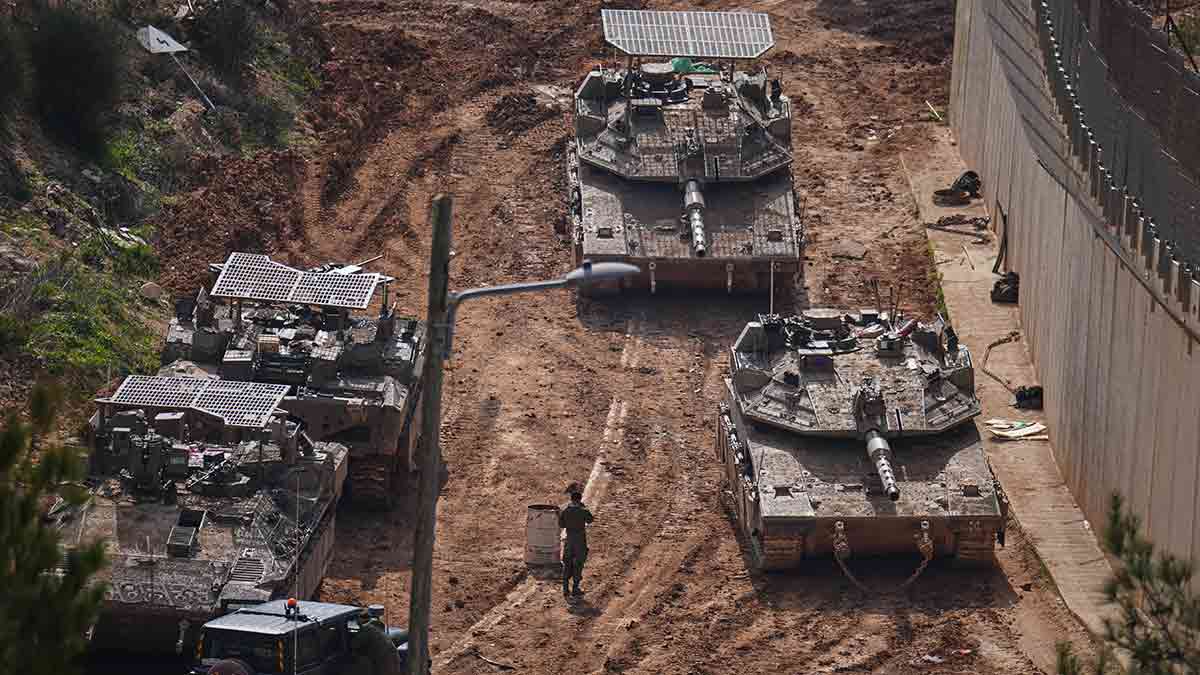
In Israel’s case, the war has reinforced a long-running battle on its northern frontier, where the Israel Defense Forces (IDF), backed by broad public support, remain locked in a war of attrition with Iranian-backed proxies led by Hezbollah in Lebanon—lighting the most volatile of the region’s fires, one largely immune to diplomatic intervention.
A ceasefire negotiated in Washington may determine the range, scale and duration of the wider conflict. But when the war truly ends is now contingent on two additional actors: the IDF and Hezbollah. The IDF might listen to Netanyahu, but it is unlikely to lower its guard until Hezbollah disarms, withdraws from Israel’s border, and ceases to threaten Israeli settlements beneath the Lebanese hills.
The second flaw in the Trump plan lies in the assumptions behind the recent Pentagon-mediated discussions with Lebanese and Israeli officials. The premise was straightforward: a ceasefire could hold if Tehran restrained its “non-state actors” and the IDF withdrew from southern Lebanon.
That assumption was tested immediately. Within 24 hours, the Hezbollah rejected the US-brokered ceasefire. Neither can the militarised Hezbollah be fully controlled by the civilian Lebanese government, nor can the IDF take its operational orders from Washington. What makes matters even more unpredictable is that the so-called Iranian proxy network—often referred to as the Axis of Resistance—is becoming increasingly fragmented and autonomous, capable of fighting multiple wars on its own terms, across its own front lines.
In Tel Aviv, Sagiv Asulin, a former Mossad official, told THE WEEK that the commander of the Quds Force of the Islamic Revolutionary Guard Corps, Qassem Soleimani, had spent years preparing a coordinated strike on Israel involving Hamas, Hezbollah and Iranian operatives across Iran, Lebanon, Syria, Iraq, Yemen, Gaza and the West Bank—a simultaneous seven-front campaign. That strategy, however, was derailed when Hamas leader Yahya Sinwar chose to move first on October 7, 2023—a tactical mistake that triggered a war. “At the end of the day, Sinwar made a decision to launch that attack,” Asulin said. “Nobody really got the memo that they were supposed to go together with him.”
The outcome was not favourable for the Axis. Instead of facing simultaneous attacks from every direction, the IDF was able to apply military pressure sequentially—first against Hamas in Gaza, then Hezbollah in Lebanon, and subsequently against Iranian-linked networks elsewhere in the region.
A number of senior leaders were killed, including Saeed Izadi, the Iranian commander who coordinated operations between Hamas, Hezbollah and Iran; Sinwar and his brother Mohammed Sinwar, and high-ranking Hamas leaders such as Ismail Haniyeh. Hezbollah chief Hassan Nasrallah, who was supposed to be part of the plan, was also killed, along with his successor. More recently, Israeli strikes have killed several Iranian commanders and senior figures linked to Tehran-backed groups, including Mohammed Odeh in Gaza—the new head of Hamas’s military wing and one of the architects of the October 7 attack.
Has the Hezbollah’s military capability been significantly degraded? The IDF believes so, particularly following the collapse of the Bashar al-Assad regime in Syria, which it argues disrupted critical Iranian supply routes into Lebanon and made it tough for Hezbollah to replenish its arsenal.
“[The regime change in Syria] cut off a lot of their ability to transfer weapons from Iran through Iraq and Syria and into Lebanon,” said a senior Israeli security official. But despite these setbacks, Hezbollah remains a threat along Israel’s northern frontier.
Another fire continues to burn in the Golan Heights. Though less visible, the IDF is taking no chances in the Israel-occupied Syrian territory and is actively working to prevent the emergence of another hostile front involving ISIS-linked elements in Syria.
The third fire has been burning even longer: Israeli military operations in the West Bank. Here, Israeli officials see little prospect of a cessation of hostilities anytime soon. Unlike Gaza or Lebanon, where military disengagement remains theoretically possible, withdrawal from the West Bank is not an option, making this perhaps the most enduring of all the region’s fires.
What Israel is preparing for, therefore, is not just the defence of all seven fronts, but also opening an eighth front: public perception. “It is an eight-front war,” Asulin says, revealing that Israel is treating public perception as a national security challenge requiring dedicated resources.
“We prepared for Iran and Hezbollah. We prepared for physical threats. But the front of public perception was never defined as an official threat,” he says. “It was like toxic gas slowly filling a room for years before a single spark ignited it. October 7 was that spark.”
In the Israeli military’s version of events, the immediate objective is to prevent any future iteration of a coordinated regional offensive. “If only we knew they had a plan,” says Lieutenant Ben Cohen, deputy international spokesperson for the IDF. “Now we have to make sure that the plan will never be able to exist.”
That is why, even as US-Iran talks progress, Israel’s objective is no longer simply to win or end the current war, but to prevent the emergence of the next one. To that end, this war seems to have only just begun.
THIRTY-SEVEN KILOMETRES FROM THE LITANI RIVER
A rocky hillside in Tefen, in Israel’s Western Galilee, stands at the crossroads of the region’s past and present. The surrounding landscape carries memories of decisive battles of 1948, when Israeli forces defeated units of the Arab Liberation Army, helping consolidate control over the region and shape what would become the modern map of northern Israel.
Nearly eight decades later, the same terrain has become part of another military confrontation. From the hilltop, green valleys stretch towards the Lebanon border. Red-roofed Israeli settlements dot the landscape below, while zigzagging walls cut across the ridge lines defining Lebanese and Israeli territory. Standing prominently across this elevated terrain are bomb shelters—a reminder that this is one of the most volatile sectors of the Israel-Lebanon conflict.
Israeli officers and soldiers—products of a system of compulsory military service—break the terrain down into kilometres, slopes and sightlines stretching all the way to the Litani River, some 37 kilometres away. They describe the river as a red line in the battle against Hezbollah, one that they threaten to cross if the group continues to fire rockets and missiles into Israeli territory.
“The hilltop at the border where Israeli homes were struck is just 10 kilometres from here,” says Sarit Zehavi, founder and president of the Alma Research and Education Centre in Tefen. “My 12-year-old daughter got injured while trying to make it to a bomb shelter on her way to school. My sons will have to serve in the army.”
Last week, the son of Zehavi’s cousin was killed—“at a [military] base behind the forested hill,” she says. In this backdrop, most Israeli officers do not know how Netanyahu can secure a lasting ceasefire.
Fears remain that Hezbollah is rebuilding its capabilities across the border in Lebanon. Israeli military officials argue that Hezbollah continues to function as a state within a state, retaining the ability to challenge both the Lebanese government and Israel. “We are targeting Hezbollah bases in Beirut, not Beirut itself. Our war on Hezbollah will only strengthen the Lebanese government,” Zehavi says.
But this strategy comes with complications, a lesson Israel learnt 26 years ago. Jonathan Elkhoury was nine years old when his mother woke him up in their village in southern Lebanon in 2000. Israel was withdrawing its forces, and fear was spreading among members of the South Lebanon Army (SLA) and their families. Elkhoury’s father served in the SLA, a Lebanese militia formed during the country’s civil war in the 1970s and 1980s and later operated in coordination with Israeli forces against armed groups active in the region.
“Hezbollah was already active in the region, but it gained greater influence after the withdrawal,” Elkhoury says. There were warnings that Hezbollah intended to target SLA families left behind. Thousands rushed to the Lebanese border seeking refuge. Israel eventually opened the border and allowed many to enter. Elkhoury’s father was among them.
But the exodus did not bring an end to the conflict. The 2006 war between Hezbollah and Israel triggered cross-border attacks and kidnappings. Hezbollah missiles rained down on northern Israel, including Haifa, where Elkhoury was living at the time. “The repeated escalations,” he says, “are part of a cycle of violence driven by armed groups and wider regional geopolitical alignments.”
Today, however, Elkhoury sees signs of change. After decades of recurring clashes, public protests and civil society campaigns have emerged against further escalation.
The political discourse in Lebanon, he says, has begun to evolve. Some Lebanese officials have begun drawing a distinction between the Lebanese state and the armed organisations operating within it. A public diplomacy adviser, Elkhoury says social media and modern communication have weakened many of the old barriers that once restricted contact between Lebanese citizens and Israelis, despite such engagement long being treated as a punishable offence in Lebanon.
He believes a lasting settlement may still be distant, though. “Lebanese state institutions, including the army, do bot have the capacity to disarm groups such as Hezbollah,” he says. “Any attempt to do so carry the risk of internal instability or even state collapse.”
INSIDE THE GOLAN HEIGHTS BUFFER ZONE
The fragility of military separation lines is equally evident on Israel’s border with Syria, where Hamas’s October 7 attack carries the echo of the 1973 Yom Kippur War.
Coming exactly 50 years after Egypt and Syria launched their surprise assault on Israel on October 6, 1973, the Hamas attack showed how contested territorial claims, demographic changes and security threats reverberate across Israel’s borders. Addressing one front while ignoring another may not bring success; instead, it risks triggering escalation on an otherwise dormant front.
Memories of how Israeli forces captured the Golan Heights during the Yom Kippur War are embedded in the landscape. Israeli bunker tunnels offer a glimpse into one of the region’s bloodiest conflicts, which ended with the 1974 disengagement agreement between Israel and Syria. But signs of conflict have not disappeared: occasional gunfire and distant detonations can still be heard, as Israeli drones maintain constant surveillance. Occasionally, observers from the United Nations Truce Supervision Organisation (UNTSO) visit the demilitarised buffer zone to ensure there is peace. The contrast across the ceasefire line is stark. On the Syrian side, there is widespread economic hardship as settlements have moved away from the borders, making the land appear barren. “You see the poverty… it’s like a 19th-century lifestyle,” says one visitor.
Across the line, in Israeli-occupied territory, the landscape appears comparatively developed and stable, with modern infrastructure visible from observation points. For Israel, the Syrian civil war made it clear that its primary interest lies in preventing Iranian military presence in Syria, including the construction of military facilities and covert support to armed groups. For Israeli forces, security concerns are now no longer limited to Iran and its proxies. Along this frontier, they are battling the ISIS, which has been targeting the Druze, an Arabic-speaking minority community spread across Syria, Lebanon and Israel.
Following the collapse of the Assad regime, the Druze community in Israel is worried about their Syrian brethren. As a result, many support Israeli operations against ISIS fighters and favour the creation of a demilitarised zone along the Golan Heights.
The risk of broader escalation remains real. A US department of defense report submitted to the US Congress early this year pointed to the presence of foreign fighters, including individuals linked to extremist groups, within the Syrian military. While the report noted that the extent of ISIS infiltration remains unclear, the Defense Intelligence Agency has reported that the ISIS’s Syrian branch remains among the most likely affiliates to attempt external terror attacks. Against this backdrop, Israel is not willing to take risks. It continues to carry out strikes against ISIS-linked compounds.
Akram Mansour, retired lieutenant colonel and director of the Druze community’s team of volunteers in Israel, says the challenge is huge. Mansour spends day and night at the volunteer-run coordination centre, responding to reports of violence against minority communities and organising humanitarian assistance across borders.
“We tried to make a plan,” he says. “But how can we help our brothers and sisters from Israel when there is no road between the two places?”
Every day, the centre receives hundreds of reports alleging mass violence, kidnappings and destruction of villages in southern Syria. “ISIS is worse than Hamas,” Mansour says, describing how minorities in Syria are facing systematic targeting and displacement. “We are all human beings… it doesn’t matter if I am minority or you are.”
‘NO LONGER MINORITY’—ISRAEL IN THE WEST BANK
From the hilltop settlement of Peduel in the West Bank, Israeli homes and Palestinian villages lie within sight of one another. For the Israeli military, the October 7 attack reinforced fears that similar violence could occur elsewhere if Israel relinquishes control over territory overlooking its population centres. As a result, reserve forces were deployed across the region to help communities.
“I served as a major in the paratroopers,” says Davidi Ben Zion, deputy head of the Samaria Regional Council, which oversees dozens of Israeli communities across the northern West Bank. “My soldiers and I came from our homes to save lives. We saw what happened there.”
Born in Kiryat Arba near Hebron, Ben Zion has lived in West Bank for more than two decades, witnessing its changing demographics. According to him, roughly seven lakh Jewish residents now live beyond the Green Line established after the 1948 Arab-Israel war. Zion believes the settler population will continue to rise significantly. “It’s going to be one million in five years,” he says.
An avid supporter of the settlement movement, he argues that former Israeli prime minister Ariel Sharon’s 2005 disengagement plan, which led to the dismantling of Israeli settlements in Gaza, cannot be replicated in the West Bank. “In Gaza there were fewer than 10,000 Jews. Here we are talking about 7,00,000,” he says. “No one can do the same thing here.”
For Israel, this geography is increasingly becoming central to its security arrangements as well. “You can see Tel Aviv, Ben Gurion Airport, Rishon LeZion, Ashkelon, Netanya and Hadera from here,” he says. “This is the centre of Israel.”
He defends the Israeli military operations in nearby Palestinian towns and villages, saying the attempt is to prevent militant attacks and disrupt the smuggling and manufacturing of weapons. “Every night, IDF soldiers enter Palestinian villages to make sure that no one is producing weapons, bombs or rockets,” he says.
Any future reassessment of Israeli settlements will be far more difficult here than Israel’s 2005 withdrawal from Gaza. This makes it necessary for Israeli military to put boots on the ground—effectively treating the area as a strategic asset and a symbol of Israel’s determination to remain in the region.
These conflicting regional aspirations add another layer of volatility to an already strained security landscape, as Washington, Tehran and Jerusalem advances its own vision of peace based on their strategic calculations. The question is no longer simply who wants to end the conflict, but whether the parties involved are prepared to do so—and at what cost?
WHY THIS WAR WORRIES INDIA
For India, the concern is no longer limited to disruptions in energy supplies and remittances. Competing blocs are now emerging as a strategic challenge for New Delhi on multiple fronts. Lebanon’s evolving regional position has once again provided an opening for Pakistan—the self styled mediator in US-Iran negotiations—to leverage the conflict and expand its diplomatic relevance in West Asia.
Pakistan and Lebanon already enjoy close ties. When the army chiefs of Lebanon and Pakistan met in Rawalpindi recently, Field Marshal Syed Asim Munir of Pakistan showed interest in expanding defence collaboration with the Lebanese armed forces. The entry of new state and non-state actors could further complicate an already volatile Middle East.
“With Hezbollah facing setbacks, the attempt will be to absorb the blows and continue functioning,” says Ratnadeep Chakraborty, author of The Evolution of Israel’s National Security Doctrine and doctoral researcher at Tel Aviv University. What cannot be ruled out, therefore, is the possibility of new militant and proxy affiliations between the two sides.
At the same time, Islamabad’s ambitions to establish its own quadrilateral defence alignment with Saudi Arabia, Egypt and Turkey could further reshape regional balances, prompting New Delhi to reassess its long-term partnerships with greater caution.
Parallel to this, the growing strategic realignment between Iran, Russia and China—reflected in military cooperation, including transfer of drone technologies and weapons systems—is adding another layer of complexity to an already fluid security environment.
As new alignments becomes more visible, continued efforts are also under way by Trump to broaden existing frameworks like the Abraham Accords. Having received considerable credit for brokering the accords in his first term, Trump is attempting to expand them by bringing a wider set of regional actors into the fold, including Pakistan, Turkey, Qatar and Saudi Arabia.
For Israel, the resilience of the Abraham Accords has been a silver lining amid the dark clouds of a prolonged war.
“If somebody had told me before October 7 that the Abraham Accords would survive a war of this magnitude, I would have said they were crazy,” says Fleur Hassan Nahoum, former deputy mayor of Jerusalem. She pointed out that countries that normalised ties with Israel, including Bahrain and Morocco, did not sever relations despite intense regional pressure. “The fact that nobody removed their ambassadors is a huge achievement,” Nahoum says. “Moreover, trade with the UAE has gone up every single year, including the years of war, by double digits—15, 20 percent. It is incredible.” Nahoum is also cofounder of the UAE-Israel Business Council and the Gulf-Israel Women’s Forum.
She attributes this durability to shared strategic interests. For similar reasons, India has drawn closer to Israel in the post-Operation Sindoor period, reflecting growing security calculations. As one Israeli official commented, “There are partners and there are friends. It is only friends who cover each other’s backs.”
But as challenges continue to grow, New Delhi is also trying to ensure frameworks like the I2U2 grouping—involving India, Israel, the UAE and the US—remain relevant. The original concept behind I2U2 was ambitious; Washington saw an opportunity to deepen engagement with New Delhi while creating alternatives to Chinese supply chains.
“It was going to be American and Emirati money, Israeli technology and Indian capacity,” Nahoum says. “In fact, in recent years, the I2U2 gradually evolved into the India-Middle East-Europe Economic Corridor.”
For India and Israel, it was an opportunity to combine the strengths of both the frameworks. “We don’t want to leave anybody out, but there is a special relationship that can be developed between India, Israel and the UAE,” she says.
But as the war drags on, its impact on business and daily life threatens to overtake the strategic benefits of togetherness. “There is worry because tourism has been hit and prices of essential commodities have risen. No one knows when the uncertainty on the borders will end,” says Reena Pushkarna, celebrity Indian chef in Israel who has hosted both Netanyahu and Prime Minister Narendra Modi.
Netanyahu faces elections in Israel this year, and the trajectory of the war against Iran’s proxies is expected to shape his domestic political fortunes. What has become increasingly clear is that the Israeli military—with its ranks filled by conscripted young men and women—appears determined to fight until it defeats the multidimensional threats along Israel’s border, regardless of Trump’s military and diplomatic manoeuvring with Iran.
Until then, New Delhi may likely wait and watch for the “new normal” to gradually take shape. The question that remains unanswered is: when will peace return? Neither the Gulf nor the rivers that feed into it can answer that yet. Amid competing versions and visions of peace, any declaration of lasting peace would be premature.
