



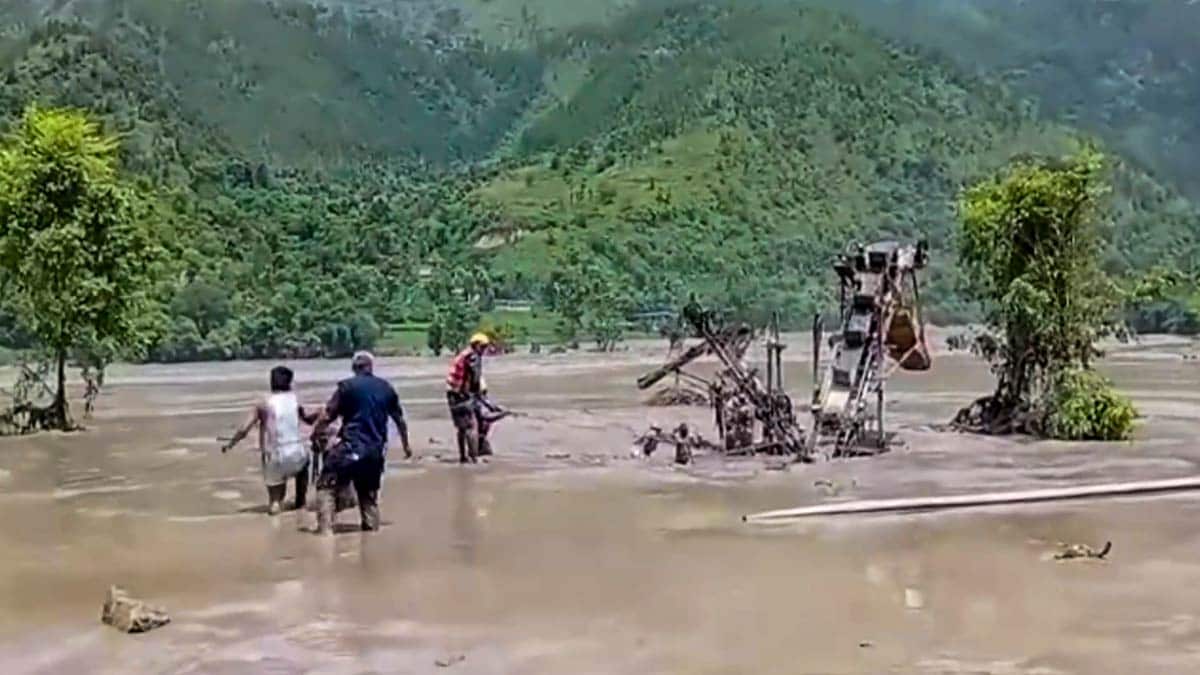
The water level in the Bhote Koshi River in Nepal’s Rasuwa district has risen further, hampering search and rescue operations following the devastating floods that struck parts of the country earlier this week and killed hundreds of people.
Nepal’s National Disaster Risk Reduction and Management Authority (NDRRMA) has urged personnel involved in search, rescue and relief operations in affected districts, including Rasuwa, Nuwakot, Dhading and Chitwan, as well as surrounding areas, to remain vigilant.
“Alert: The flow of the flood in the Bhote Koshi River in Rasuwa has reportedly increased further,” the NDRRMA said in a post on X.
The disaster management authority said it would continue to monitor the situation and provide further updates.
The Bhote Koshi River, which flows south from the Himalayan border region, carried massive volumes of water downstream into central Nepal during the flash floods on August 26.
Communities living along the Rasuwa riverbank, including those near the Nepal-China border, have been advised to closely monitor water levels and remain alert.
Meanwhile, the death toll from the flash floods, which caused widespread devastation across several districts and damaged roads, bridges, settlements and hydropower infrastructure, has risen to 734, while more than 2,500 people remain missing.
Bodies continue to be recovered as search and rescue operations press ahead amid renewed rainfall and rising water levels.
The catastrophe is believed to have been triggered by the collapse or avalanche of ice and rock near the Nepal-Tibet border.
Air and ground operations have so far evacuated more than 7,500 people to safety, including 279 workers who were stranded at various hydropower project sites.
As many as 18,708 personnel from the Nepali Army, Nepal Police and Armed Police Force have been deployed for rescue and relief operations. They are being supported by 16 military and private helicopters, which have conducted 236 rescue missions.
