



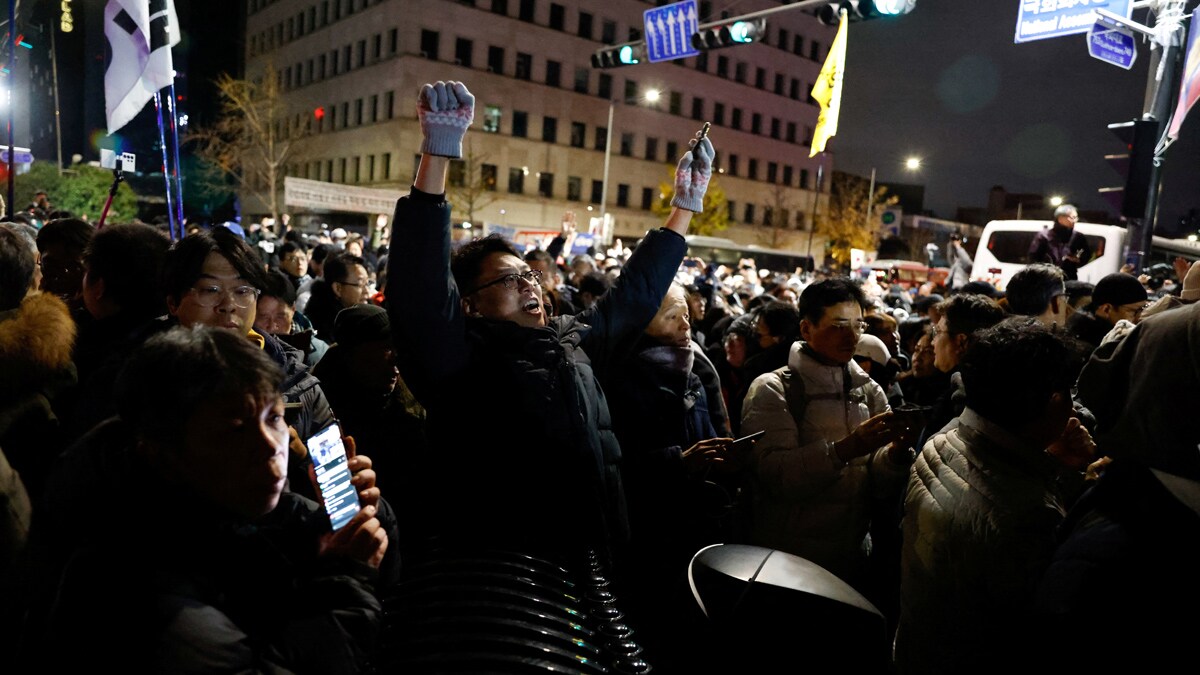
Protests erupted in South Korea after President Yoon Suk Yeol declared emergency martial law in the country. South Korea's parliament, where the opposition enjoys the majority, has voted to block the president's move.
A large crowd gathered outside the National Assembly in Seol and chanted "no to martial law", and "strike down dictatorship".
Reportedly, protesters clashed with the police outside the main parliament trying to open the closed gates.
It is the first time since 1980 that such a law has been declared in the country.
What happens under the declaration of martial law?
1. Ban on political activities, including activities in the parliament, local councils, political parties, rallies, protests and any other form of demonstrations. Any political associations are also banned.
2. Restriction on media: Print, radio, broadcast, internet and social media will all be monitored and controlled under the Martial Law Command.
3. Ban on protests and rallies: Ban will be imposed on strikes, and protests. Work stoppages and rally speeches will also be prohibited under the law.
4. Any acts of propaganda, misinformation, circulation of fake news, or public manipulation are prohibited and will be punishable.
5. Any anti-state forces and subversive forces will be dealt with harshly under the law
6. Anyone who violates the martial law shall be arrested without any warrant
7. People who violate the orders shall be subject to punishment under Article 14 of the Martial Law Act (Penalties).
8. All doctors, nurses and other medical personnel including trainees- both in service and retired must return to the medical field within 48 hours.
