


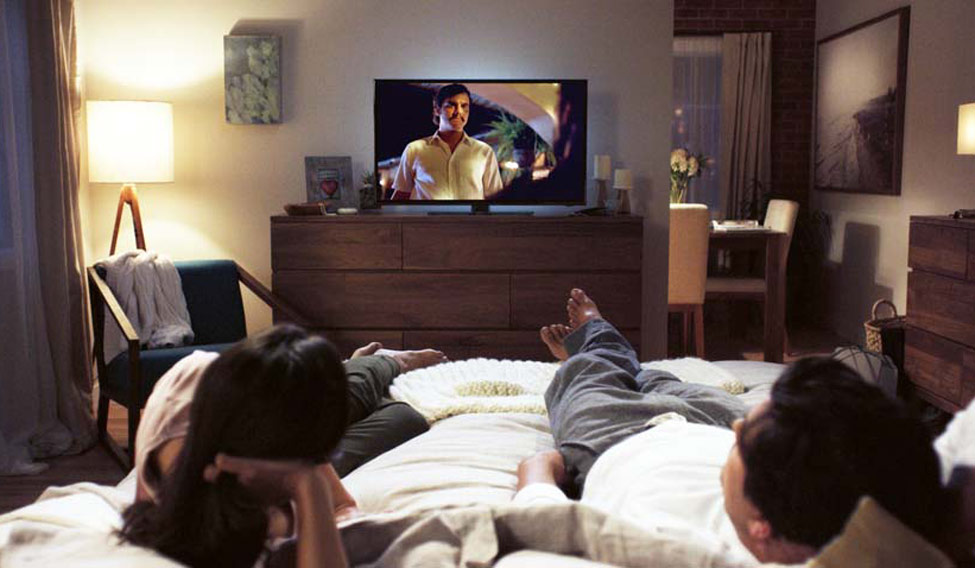
The entertainment industry in India was bookended by two significant events in 2016: the entry of Netflix in January and of Amazon Prime Video towards year end, making the country a hotbed of Video on Demand (VoD) services.
The entrance of these two global biggies signals a large-scale lurch away from the traditional tune-in, consume-what-you-are-fed model of conventional terrestrial, cable or satellite dish television, towards a new on-demand era of choice. And Internet is the key.
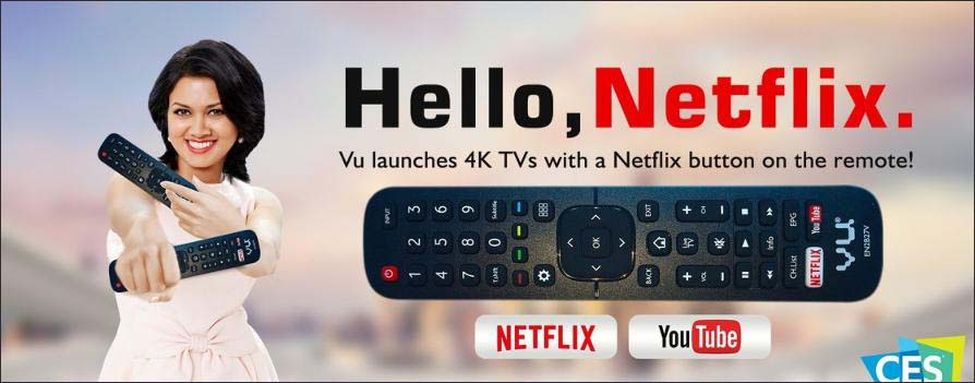
"With the help of the Internet, we are putting power in consumers’ hands to watch whenever, wherever and on whatever device," said Netflix CEO Reed Hastings. Transnational services like Netflix and Amazon Prime Video are available on any internet-connected device—PCs, tablets, smartphones, Smart TVs and game consoles. Canny Indian-origin players in the smart TV market like Vu Technologies, swiftly incorporated a dedicated button for Netflix as the service entered India.
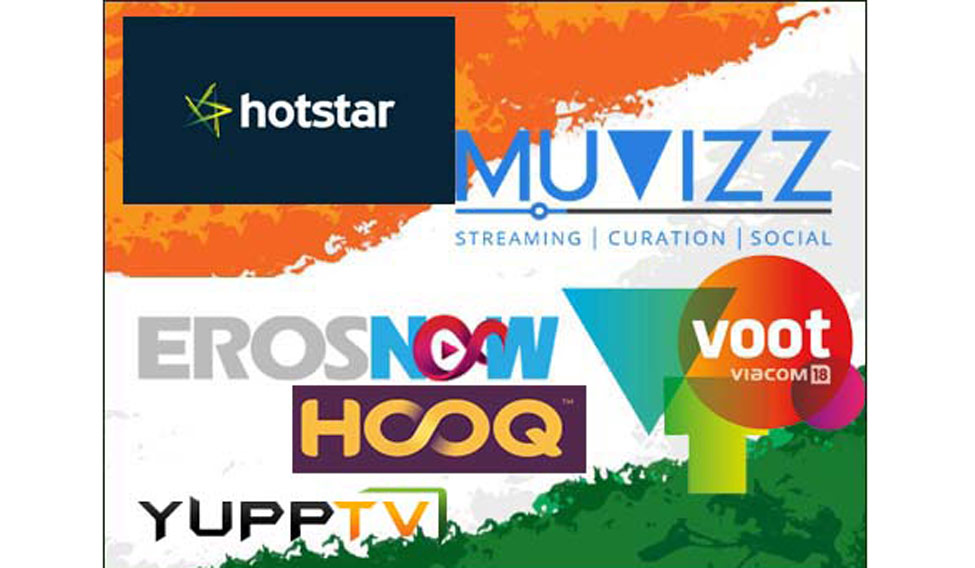
But India was already home to a dozen Over-the-Top (OTT) free and pay-by-view movie and TV services like Hotstar, Voot, SonyLiv, Muvizz, Blippar etc. Netflix and Amazon Prime Video are having to compete with local players, who have a hook into the Indian market like Eros Now which has cannily tied up with major mobile service providers; Hungama which boasts a repertoire across 10 Indian languages; Yupp TV the world's largest OTT provider in Indian languages; Spuul which comes from Singapore-based Indians and Hooq with a large catalogue including classic Doordarshan serials. These services are offered against monthly subscriptions which are the lowest in the world, starting at Rs 50 going up to a maximum of Rs 250. Their sharp nose for Indian tastes, and the fact that they cater to the language of your choice, ensures that they will not roll over and die simply because international players have entered the competition.
Most recently, mobile service providers like Reliance Jio, have entered the field with a huge library of shows and movies. Jio is free till March 31, so we don't know what the subscription rates will be, once it moves from free to fee. But chances are strong that Reliance will come up with compelling pricing to retain as many of the free Jio SIM owners as future customers. As a response to Jio's disruption, other mobile services like Airtel have announced their own 'offers you can't refuse' including free data and voice calls.
Smart TV
The result of all this competition for consumer clicks and eyeballs is a bonanza for buyers, and unprecedented access to movies, TV shows and serials that go beyond what has been available on TV and in theatres. Technology-wise, Video on Demand unless bundled by your cable or dish provider, requires a hardware or software video player. A Smart TV will do the job, that is, a TV set that can be connected to the Internet. This allows a seamless switch back and forth, from content available through cable, dish and Net. Clever software lets viewers split TV screens to watch a serial even as the news plays on a small window in the frame. Missed the latest episode of your favourite soap? No problem! It is available in the Internet avatar of the channel and can be played back at will, or all at once in what is being called binge viewing.
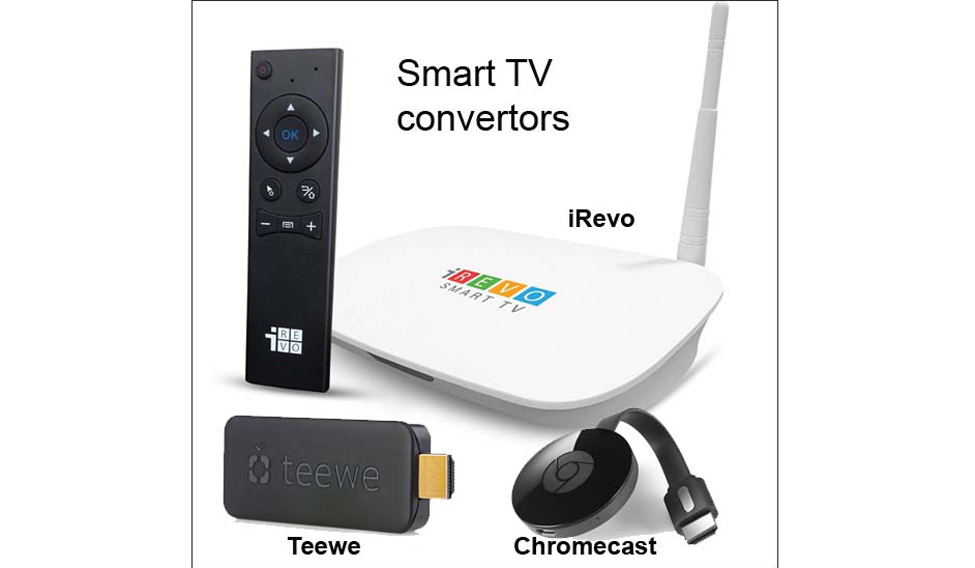
You own an older, non-smart TV? Again, no problem. Rs 2,000- 3,000 will buy a USB smart TV stick like Google Chromecast or an Indian equivalent like Teewe, which is in essence, a Wireless Network Adapter, latching on to your home WiFi hotspot to Internet-enable the TV. More elaborate smart TV connectors like iRevo which come with remote and air mouse cost around Rs 5,000.
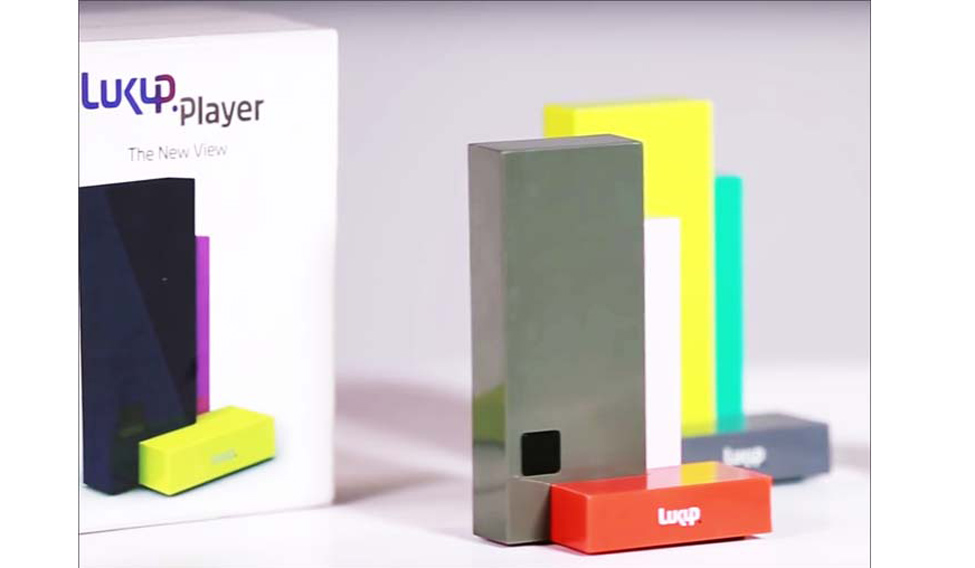
Smart TV viewing means you have to tie up with multiple providers: one for a home Internet connection, another for a satellite dish or cable connection, yet another for additional video-on-demand. Why not get all three with a single connection? This is the interesting proposition of Bengaluru startup, Lukup. After testing the waters for over a year in Karnataka, the Lukup player and the connected video services are available in three more cities today—Hyderabad, Mumbai and Pune. The combo router-media player costs around Rs 6,000, plus a monthly subscription starting at Rs 990. For this you get a bouquet of some 150 TV channels, an Internet connection with 30 GB of data per month and speeds of 4 MBPS to 20 MBPS plus 500 GB of cloud storage to record programmes.
Many of the Video on Demand services in India offer full HD (2K) or Ultra HD (4K) content, which is great if you have the TV screen to match it—36 inches or more. Indeed, for some time to come, owners of 4K TV may have to buy Video on Demand or Pay-per-view for 4K content, since native TV transmissions in this ultra high definition format are still very rare.
Video on mobile
But in India it is not 4K that makes for the biggest trend: The real Internet TV revolution will take place with content of lower resolution that people want to view on-the-go, on tablets and phones. YouTube, Facebook and WhatsApp, on one hand and the on-demand services of TV channels like Sony and Hotstar (of the Star TV channels) or Airtel's Wynk, are offering a lot of free content in manageably small chunks that work with smart phone Internet speeds of around 1 MBPS.
Video for mobiles is a huge trend that is driven by Indian demand. Indeed the global leader in video for hand phones, Vuclip, is fuelled by Indian innovation and boasts Hollywood and regional movies, TV shows and music videos in 20 different languages, from 160 top studios around the world.
Vuclip studies of global video consumption have shown that smartphones are the most preferred device for personal video consumption. Over 85 per cent viewers in India consume short form video content (run time of under ten minutes) on smartphones as against 71 per cent on laptops. Mobile network usage is significantly higher in India (65 per cent) and so is video on the go (56 per cent) compared to world-wide consumption.
Indians are as yet not ready to consume huge data on their phones, to view too many movies in full. But they are perfectly happy to have a Bollywood movie reduced to a condensed version—a series of highlight clips. "Kitne aadmi thhey", " Thera kya hoga Kaliya", "Mujhe Gabbar chahiye—zinda", "Yeh dosti", "Mehbooba"—that's it! You've got Sholay covered in five clips, ten minutes.
The result of these developments is becoming apparent: 2017 is turning out to be the year of the final PC-TV sangam, with consumers able to view the video content of their choice on TV or tablet or PC or phone, shifting at will, without paying multiple times. "Only Connect!", wrote E.M. Forster in another age in his book Howard's End. It was a prescient phrase. A century later, Indians are finding in it, the mantra that opens a new world of affordable, mobile and seamless 'time pass'.