



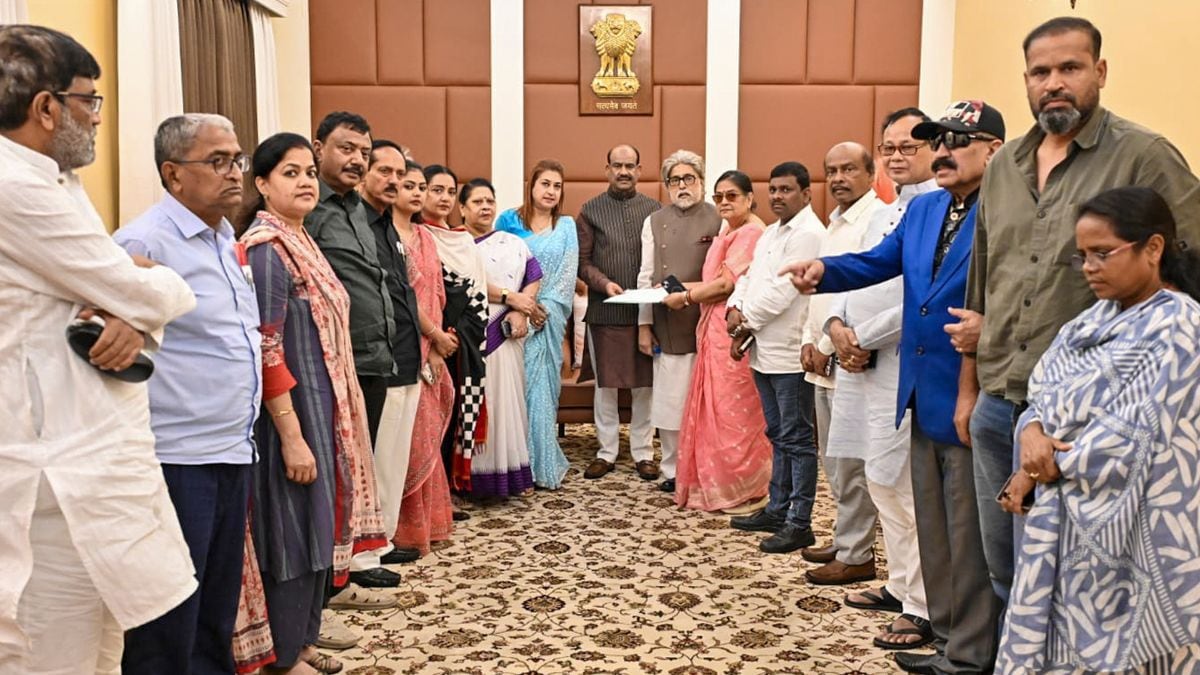
The spotlight is on the Nationalist Citizens Party of India (NCPI) after a rebel bloc of at least 20 Trinamool Congress (TMC) MPs announced on Sunday that they would be joining the obscure, Tripura-based outfit.
The bloc—which has MPs like Kakoli Ghosh Dastidar, Sudip Bandyopadhyay, and Satabdi Roy at the helm—conveyed its decision to Lok Sabha Speaker Om Birla on Sunday, and have also sought separate seating in the Parliament.
In the meantime, interviews with the NCPI's top brass have revealed some confusion, as the party prepares to welcome the rebel MPs based on the Speaker's decision.
Who is the party's president? Various members of the party's top ranks seem to have different answers for this.
Though Shweli Kundu identified herself as the "founding president" of the party, she told ANI that he had "already resigned" from the post.
"The new president of the party can provide more details ... In Tripura, we are with the NDA," she added, admitting that he did not know who the new president was.
Kundu, who is an advocate at the Calcutta High Court, pointed out that she had been too busy to handle the NCPI's activities and legal work, due to which she resigned.
Comments from Shantanu Dey, who described himself as the NCPI's "founder and National Organising Secretary", also indicate some degree of confusion.
Despite Kundu's resignation, Dey claimed that she was the party president, and has questioned why he was not informed about the rebel MPs joining the NCPI.
"I got to know about this from social media and news ... I welcome (the MPs) to hold talks with me ... I am hopeful that we will talk," he told ANI.
However, in yet another twist, Kundu has also claimed that Shantanu Dey is "neither the party founder nor the general secretary".
She went on to allege that he has not been a member of the party "after 2023", which has sparked confusion.
Why did the rebel bloc join the NCPI?
The Mamata Banerjee-led TMC had earlier pointed out a major problem with the rebel MPs' idea of forming a separate bloc in the Parliament.
Notably, while the number of MPs leaving the party—likely 22, as per Barasat MP Dastidar—was well past the two-thirds majority rule required to exit their own party without invoking the anti-defection law, there is "no legal provision" for staying as a separate group.
It is due to these legal complications that the rebel bloc decided to join this Bengali-centric party, instead of staying alone in the Parliament.
