



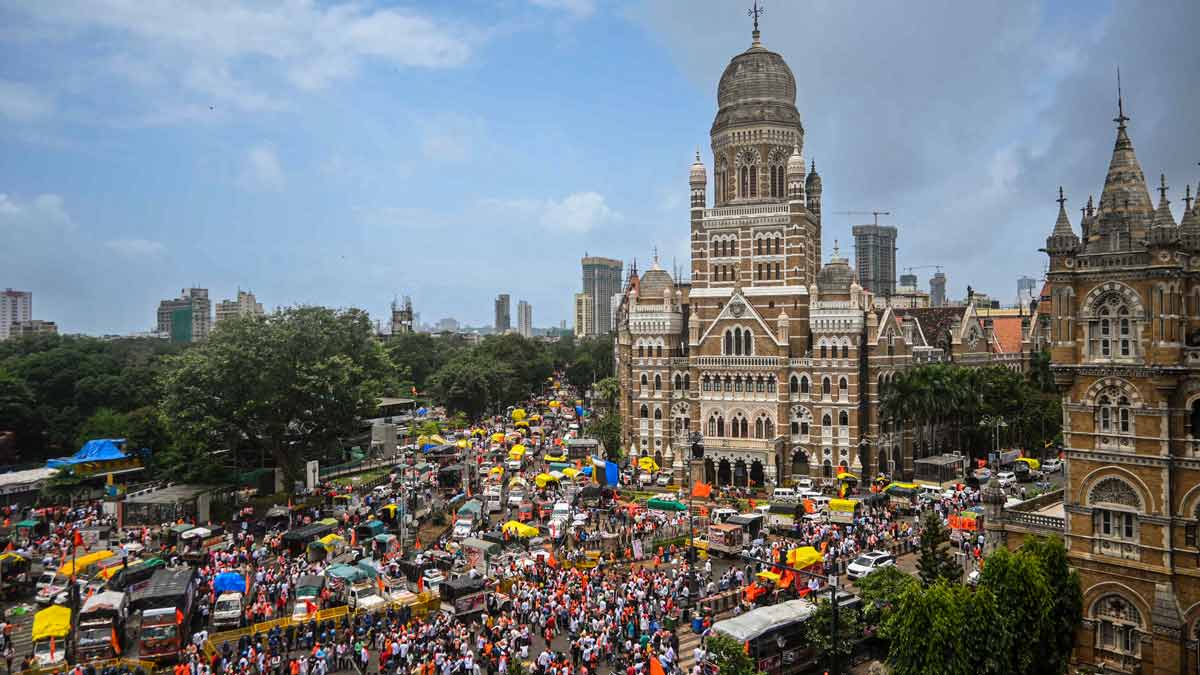
The Supreme Court has sounded an alarm for democracy at the grassroots, slamming the Maharashtra State Election Commission for inaction and incompetence in delaying civic polls. For years now, lakhs of urban residents from Mumbai to Nagpur have been living under state-appointed administrators instead of elected representatives.
On Tuesday, the top court reminded the poll body that local self-government is not a bureaucratic formality but the very pulse of democracy, setting a hard February 2026 deadline for polls overdue in Maharashtra’s biggest cities.
The order comes as a wake-up call not just for Maharashtra, but for urban governance across India, where civic elections are overdue in more than 61 per cent of urban local bodies.
“Elections cannot be put off indefinitely. Local self-government is the lifeline of grassroots democracy,” the Court observed, fixing a February 2026 deadline for holding elections to five major corporations - Mumbai, Pune, Nashik, Nagpur, and Thane. It also warned against seeking any further extension, saying the right to self-governance cannot be reduced to an administrative convenience.
A national problem
While the spotlight is on Maharashtra, the malaise runs deep across India. According to the available data, more than half of India’s 4,500-odd urban local bodies are functioning without elected councils. States such as Karnataka, Telangana, Gujarat, and even the National Capital Territory of Delhi have all seen long delays in municipal polls.
Bengaluru’s civic body, Bruhat Bengaluru Mahanagara Palike (BBMP), went nearly two years without elections before polls were finally conducted in 2022 following repeated court interventions. Hyderabad Municipal Corporation has faced similar delays, while elections in Ahmedabad and Surat have been pushed back multiple times.
Such gaps strike at the very heart of the 74th Constitutional Amendment, which sought to strengthen local self-governance in cities by giving elected councillors and mayors greater powers. Instead, urban governance remains heavily centralised, with state governments reluctant to cede authority or finances to municipal bodies.
Consequences of weak civic democracy
The consequences of this democratic deficit are stark. Without elected representatives, cities are being run by administrators who are accountable only to state governments, not residents. This undermines people’s participation in decision-making on crucial civic issues such as drainage, roads, solid waste management and urban planning.
The recent monsoon floods in Mumbai, Delhi and Bengaluru highlighted the fragility of urban infrastructure. In most cases, inadequate drainage and poor flood management were the direct result of years of underinvestment and neglect.
The way forward
Experts argue that beyond conducting elections, deeper reforms are necessary to empower urban local bodies. This includes devolving more functions, strengthening financial autonomy, and professionalising urban administration.
For now, the Supreme Court’s order has forced Maharashtra to commit to elections in its largest corporations by early next year. But unless states across India also act, millions of urban residents will continue to live in cities without local democracy.
