


 Add as a preferred source on Google

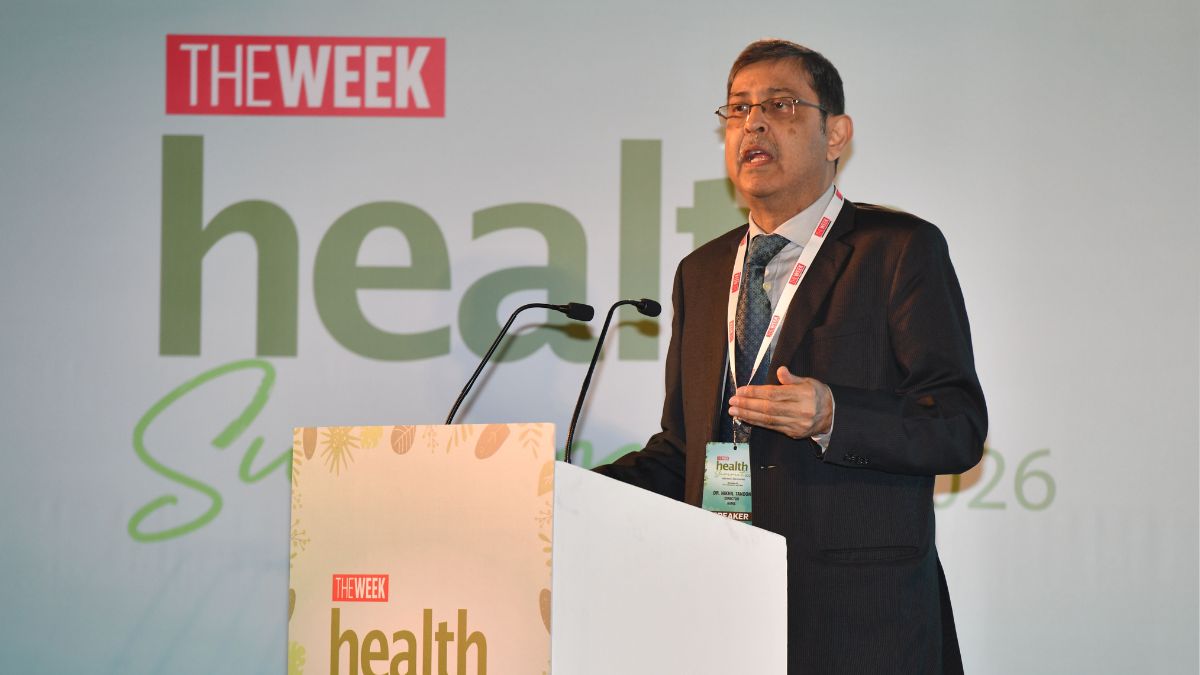
India's healthcare progress cannot be measured merely by the number of hospitals, sophisticated medical equipment or clinical breakthroughs. The real test of advancement is whether a patient, irrespective of geographical location or economic background, can access quality treatment at the right time, said Dr Nikhil Tandon, Director of AIIMS, New Delhi.
Delivering the special address on 'Taking Advanced Care Across India' at THE WEEK Health Summit 2026, themed 'India Heals, India Innovates', Tandon called for a fundamental shift in India's healthcare approach, arguing that medical excellence must go hand in hand with accessibility, affordability and empathy.
Highlighting AIIMS's clinical achievements, he said the institution caters to nearly five million outpatients annually, admits around 300,000 inpatients and performs approximately 150,000 surgical interventions. It also conducts nearly 200,000 laboratory investigations every day. Despite this enormous patient load, the institution continues to push the boundaries of medical science.
He cited India's first open foetal surgery, performed to repair a severe spinal defect in an unborn baby at 25 weeks of pregnancy, as an example of the country's growing clinical capabilities. The procedure was performed free of cost, demonstrating that advanced medical interventions need not remain beyond the reach of ordinary patients.
However, Tandon cautioned against equating advanced healthcare with expensive machines or imposing hospital infrastructure. "True advancement lies in moving high-precision, evidence-based healthcare upstream," he said, emphasising the importance of affordable screening, early diagnosis and timely intervention.
India, he observed, is in the midst of a profound epidemiological transition, with non-communicable diseases no longer confined to urban populations. Metabolic disorders are increasingly spreading to Tier-II cities and smaller towns, contributing to the growing burden of chronic kidney disease. Cancer, too, remains a major challenge, particularly because patients often approach tertiary hospitals at advanced stages of the disease.
He pointed out that when patients from remote districts reach AIIMS with Stage IV cancer, the problem is not merely the complexity of treatment but the delay in detection. Screening and early intervention, therefore, must become central to the country's healthcare strategy.
While the establishment of 22 AIIMS institutions has strengthened India's tertiary healthcare network, Tandon said expanding infrastructure alone would not solve the problem. Institutions must develop structured referral systems, allowing patients to receive primary and secondary care closer to home while accessing specialist expertise whenever required.
"How do we ensure that patients are treated not on the basis of their background or pin code?" was the larger question underlying his address.
He also stressed the need for capacity building beyond doctors and super-specialists. Nurses, primary healthcare workers and frontline medical personnel must receive greater training so that routine conditions can be managed locally and tertiary hospitals can concentrate on complex cases.
Technology, he said, could be a powerful enabler. Seamless longitudinal health records, digital connectivity and artificial intelligence-assisted screening could help primary healthcare workers identify conditions such as diabetic retinopathy much earlier. However, he cautioned that technology must undergo rigorous clinical validation before being deployed.
"Evidence and empathy" must remain non-negotiable principles in healthcare innovation. Technology should support doctors and give them more time to interact with patients rather than become a barrier between the two.
Affordability was another major concern. Despite initiatives such as Ayushman Bharat, out-of-pocket expenditure continues to impose a significant burden on Indian households. Tandon called for rationalising diagnostic and pharmaceutical costs, promoting generic medicines, standardising treatment protocols and eliminating unnecessary interventions.
He argued that prevention and advanced treatment should not be viewed as separate healthcare priorities. Prevention without access to advanced treatment leaves patients stranded, while advanced treatment without prevention and early detection overwhelms tertiary institutions.
Calling for coordinated action involving governments, hospitals, researchers, medical institutions and industry, Tandon urged stakeholders to assess every healthcare policy and innovation against one fundamental question: does it make care more accessible, affordable and equitable?
"At the centre of all our thoughts must be the patient," he said, adding that India's healthcare ambitions would succeed only when clinical excellence translates into meaningful outcomes for every citizen.
