


 Add as a preferred source on Google

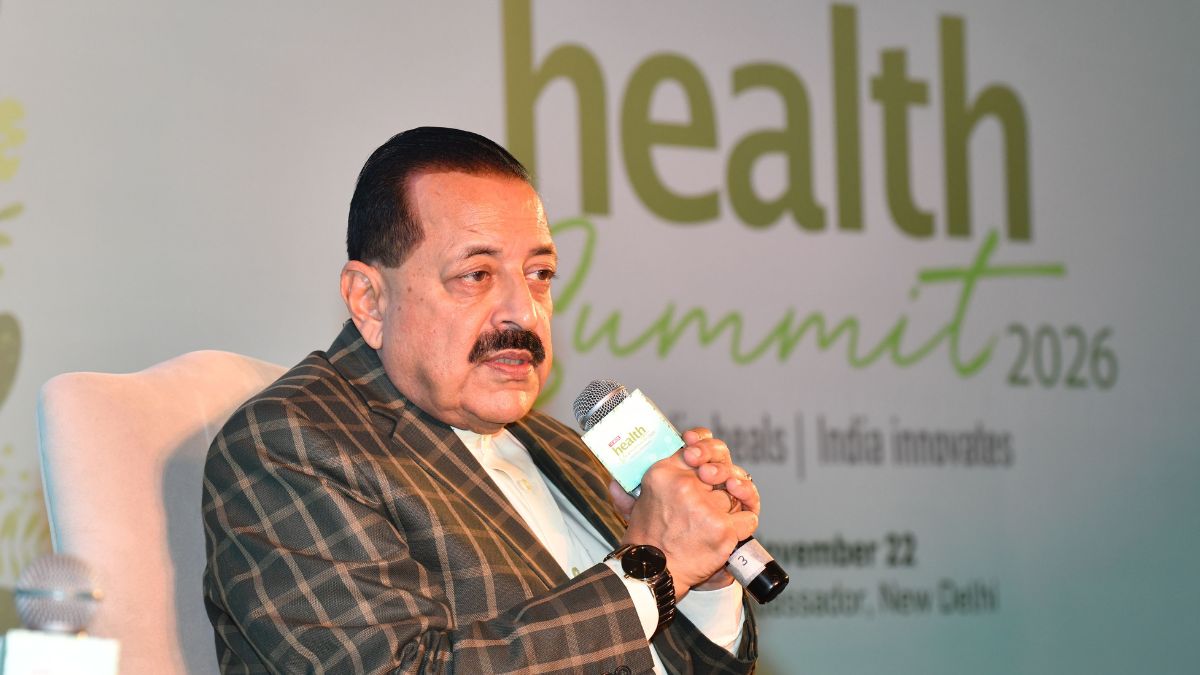
Preventive healthcare must become a national priority if India is to achieve its vision for 2047, Union Minister of State (Independent Charge) for Science and Technology Jitendra Singh said, warning that diseases traditionally associated with older age groups are increasingly affecting younger people.
Speaking at THE WEEK Health Summit 2026, themed 'India Heals, India Innovates', Singh said the changing disease profile made prevention a collective national responsibility and called for greater awareness about lifestyle-related disorders.
In a conversation with Stanley Thomas, Chief News Editor of THE WEEK, the minister said India was witnessing a significant transformation in its healthcare landscape and was fast emerging as a global player in health and medical innovation.
"Preventive healthcare is essential, and is our mission for 2047," Singh said, underlining the need to move beyond a healthcare approach that focuses primarily on treating diseases after they develop.
He pointed out that diseases were increasingly being diagnosed at younger ages, making early detection, awareness and prevention particularly important. The trend, he said, required a more comprehensive response involving individuals, healthcare institutions and the government.
Diabetes, in particular, has become a pan-India concern, Singh said, noting that even regions where the disease was once relatively uncommon were now witnessing a change in the pattern.
"Diabetes has become a pan-India issue," he observed, pointing out that hill states, which had earlier not even considered the disease a significant concern, were also experiencing this shift.
The changing geography of diabetes, he suggested, reflected the scale of the challenge facing the country's healthcare system. It also highlighted why preventive healthcare and public awareness could no longer remain confined to particular regions or population groups.
On India's progress in medical research and innovation, Singh said the country had made considerable strides in developing vaccines and improving access to medical interventions. He noted that India had come up with a series of vaccines and that people were now medically better placed to benefit from advances in science and technology.
However, he emphasised that scientific progress alone would not be sufficient to address the country's growing healthcare challenges.
The minister also spoke about the government's approach towards rare diseases, an area that has increasingly come into focus in India's public health discourse. He said the government was working on the issue and that there was now greater awareness of the challenges faced by patients and their families.
But tackling rare diseases would require participation beyond government institutions, he said.
"Unless society gets involved, we won't be able to do it," Singh said, stressing that healthcare challenges needed a collective response. He called for greater involvement of society in addressing issues that often receive limited attention because of their relatively smaller patient populations.
The minister also flagged the growing metabolic health crisis and the research underway to understand its underlying causes. He said scientists were exploring molecular-level approaches to finding cures, adding that metabolic disorders were interconnected and needed to be examined through a wider research framework.
Greater public awareness, he said, was essential to complement these scientific efforts.
Singh also cautioned people, particularly younger Indians, against consuming information indiscriminately. With health-related information increasingly available across platforms, he said individuals needed to be careful about what they read, watch and follow.
He underlined that younger people were particularly susceptible to misleading or unreliable information, making informed decision-making an important part of preventive healthcare.
