



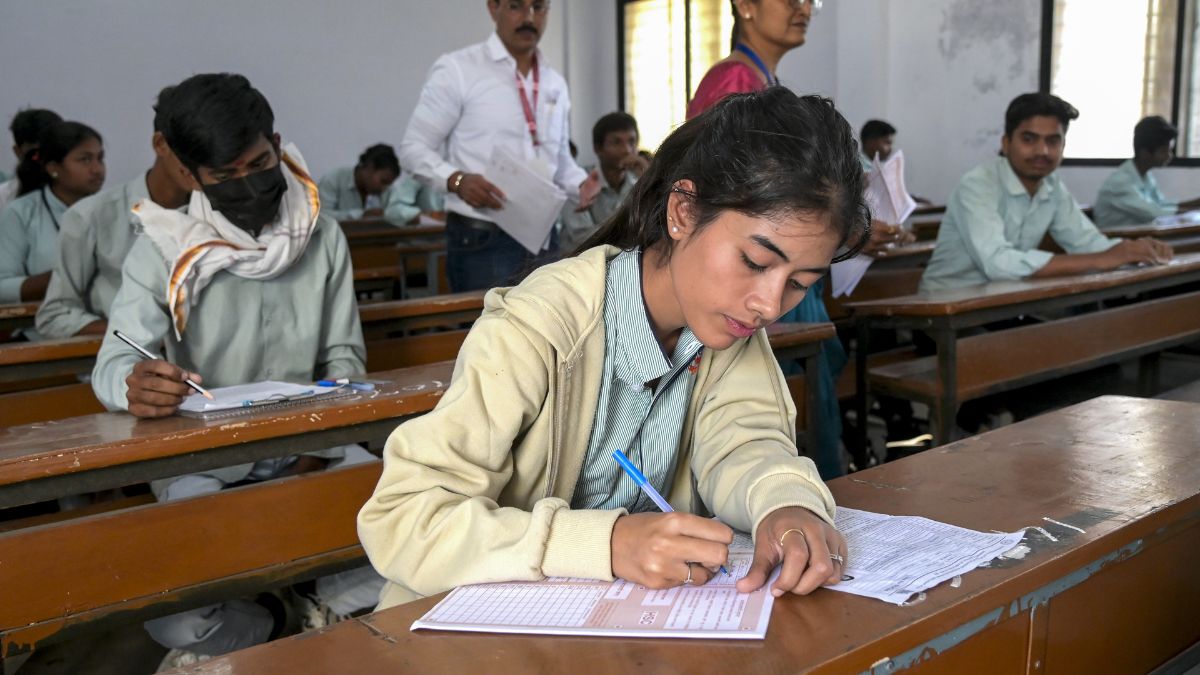
In Nagpur, a young girl left behind a note that has since travelled across social media and newspaper columns. She wrote that she lacked the courage to prepare for NEET again.
The words are haunting not merely because of what they reveal about one student’s despair, but because of what they tell us about the silent burdens carried by millions of young Indians. Behind every examination hall sits an invisible chamber of anxieties, expectations and fears. Most students emerge from it bruised but intact. Some, tragically, do not emerge at all.
India has long celebrated education as the great instrument of social mobility. Parents sacrifice for it, governments invest in it, and young people pin their aspirations upon it. In countless Indian households, education is more than a pathway to success; it is viewed as the only reliable escape from insecurity and deprivation. Yet an uncomfortable question confronts us today: what happens when the very system designed to nurture ambition begins to extinguish hope?
The latest data from the National Crime Records Bureau (NCRB) offers a sobering perspective. In 2024, 14,488 students died by suicide, accounting for 8.5 per cent of all suicides recorded in the country. Maharashtra, Tamil Nadu and Madhya Pradesh reported particularly high numbers.
Behind these figures lie stories that should disturb the nation's conscience. A Class IX student in Uttar Pradesh took his own life after being prevented from writing an examination over unpaid fees of ₹800. In Jaipur, a child barely nine years old has taken a similarly irreversible step. Reports continue to surface of students driven to desperation by ragging, harassment, humiliation, academic setbacks, family pressures and social isolation. Some are struggling students. Others are high achievers. Despair, it seems, is proving remarkably democratic.
It would be simplistic to attribute this crisis solely to examinations, though they remain a significant part of the story; the annual cycle surrounding NEET, JEE and other competitive tests has acquired an intensity that many young people experience as life-defining, where a single score can appear to determine an entire future in a society that treats educational attainment as the surest route to mobility and security, even as the examination hall often merely reflects deeper anxieties.
Student suicides, in reality, arise from a wider ecosystem of pressures extending far beyond academics, where economic uncertainty, parental expectations, social comparison, social media, adolescent struggles and institutional insensitivity. This intersect with experiences of teacher harassment, ragging, bullying, humiliation, financial hardship and social isolation, making the situation not merely an educational crisis but one of student well-being that exposes a society increasingly demanding of its young without adequately investing in their emotional resilience and psychological support.
The irony is striking. Students now have access to so much information, opportunity and technology, yet so many remain vulnerable to loneliness and self-doubt.
Social media, while connecting people across continents, has also become an unforgiving arena of comparison, where successes are amplified, disappointments are exposed and curated images of achievement can leave young people ill-equipped to cope with failure, uncertainty or setbacks.
Unboxing the mental health challenges
Compounding these challenges is a mental health landscape that remains inadequate. UNICEF’s 2024 Child and Adolescent Mental Health Service Mapping report found that nearly one in four school-going children and adolescents assessed in educational settings exhibited psychiatric disorders, while the National Mental Health Survey estimated that millions of adolescents require mental health intervention at any given time.
Yet most young Indians struggling with anxiety, depression, or emotional distress receive no professional help and often lack even the vocabulary to articulate what they are experiencing.
The educational system, regrettably, is often ill-equipped to bridge this gap, with institutions still judged primarily on academic outcomes rather than student well-being, counsellors remaining scarce, teachers receiving limited training in identifying psychological distress, and the system frequently responding to crises only after they occur, allowing warning signs to be missed and vulnerable students to fall through institutional cracks.
This is further compounded by controversies involving paper leaks, irregularities, cancellations and administrative confusion, which have deepened student anxieties, undermined faith in systems, and left many questioning whether years of preparation can be undone by factors beyond their control.
Educational institutions alone cannot bear responsibility for this crisis. Families, too, must reflect on a culture in which academic performance is often conflated with personal worth. Most parents act out of love and concern for their children's future, but the line between encouragement and excessive pressure can be thin, leaving many young people fearing that failure will diminish their value in the eyes of those they cherish most.
The deeper tragedy is that education was never meant to be reduced to a race for marks, admissions, or status. Its purpose is to nurture curiosity, confidence, character and the capacity to engage meaningfully with the world. Yet our educational discourse has become increasingly preoccupied with ranks and scores, often at the expense of the human beings behind them.
What can be done?
The student suicide crisis, therefore, demands more than administrative reform; it requires a rethinking of how we educate and support the young.
Expanding counselling services, training teachers to recognise distress, strengthening anti-ragging and grievance mechanisms, making examinations more transparent and humane, and encouraging parents to value emotional well-being alongside academic achievement are all essential. Above all, however, we must rediscover an idea of education that values students as individuals, not merely as performers.
Every student suicide is a future interrupted, a promise unrealised and a collective failure of care. The NCRB’s statistics should be read not as numbers in an annual report but as an urgent moral warning.
A society that asks its young to strive for excellence must also teach them that setbacks are survivable, dignity does not depend on marks, and life is always larger than an examination. No educational achievement, however prestigious, can justify a system in which thousands of young Indians conclude that they have run out of reasons to hope.
(The author is an author, policy analyst and columnist)
The opinions expressed in this article are those of the author and do not purport to reflect the opinions or views of THE WEEK.
