



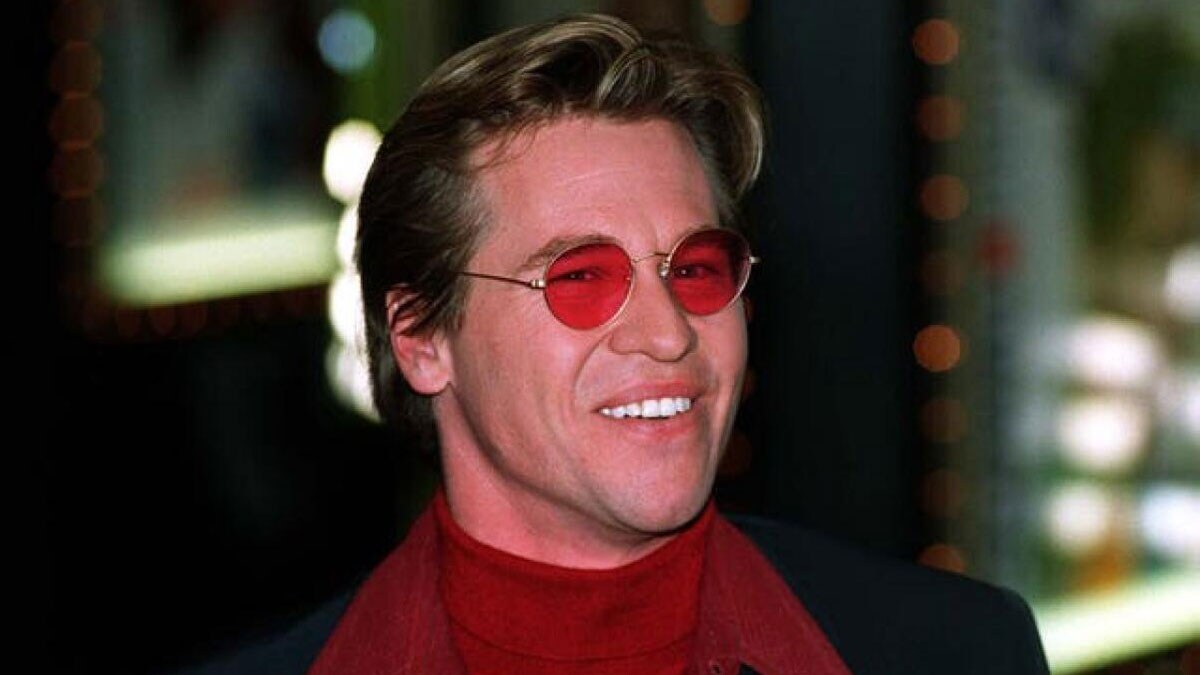
Actor Val Kilmer dreamed of the woman he would marry days before he met her. The day after his dream, he immediately wrote a poem called ‘We’ve Just Met but Marry Me Please.’ When he went to London soon after, he saw actor Joanne Whalley in a play. He found her fascinating and followed her to a pub. Two years later, the two starred together in the film Willow (1988) and ended up getting married.
Everyone knows about Kilmer’s prodigious talent onscreen—the way he could effortlessly transform into the tortured and troubled Bruce Wayne of Batman Forever, the brash and brawny ‘Iceman’ of Top Gun or the sensitive and sensual blind masseur of At First Sight. But not many know that Kilmer was also a playwright, painter and poet. While at The Juilliard School, a performing arts conservatory in New York, where he was the youngest student ever to get admitted to the drama department, he co-wrote the play How It All Began, based on the true story of a West German radical. He also wrote, produced and directed the one-man show, Citizen Twain. According to his website, he is also a prolific artist leaning towards enamel paint on metal. His art has been exhibited in galleries and pop-up shows around the US.
Kilmer is also a gifted poet. In 1987, Kilmer published his first collection of poetry called My Edens After Burns. The poems are by turns profound, philosophical and satirical. In one, titled ‘The Pfeiffer Howls At The Moon’, he wrote about former girlfriend and actor Michelle Pfeiffer. Many of his poems are inspired by his paramours—Cher, Cindy Crawford and Angelina Jolie.
Thirty-four years later, he published his second collection, Cowboy Poet Outlaw Madman. Many celebrities like Cher, Robert Downey Jr and Sean Penn endorsed it. “A true Renaissance man,” wrote Cher. “He is always creating, preparing, even though he’s unaware.” Penn said the poems displayed “effervescent talent” while Downey Jr described Kilmer as a “phoenix, rockstar, and hero”.
Upon his death from pneumonia at age 65 on April 1, actor Laurence Fuller wrote, “Saddened to hear of Val Kilmer passing today. It was an amazing experience to be a small part of this legacy; we adapted from his poems four cinematic poetry projects…. When we spoke about poetry, he quoted Voltaire: ‘Poetry is the music of the soul’. He expressed his love for the pieces and saw his poems this way. Few might know how instrumental poetry was to Val’s journey as an artist…. The world will remember him for his transformations and setting the screen ablaze with iconic characters. I’ll remember him for that too — for inspiring me as a young actor. But I’ll also remember him as a rebel poet and artist who had the courage to collaborate with me, to take risks in this new age and to see the value of art beyond his own celebrity. RIP to a true legend, good luck on your next voyage my friend.”
In 2017, Kilmer revealed he was recovering from throat cancer. He had to undergo a tracheostomy that damaged his voice. “It isn’t easy to talk and be understood,” he said in 2022. The New York Times described his voice after the procedure as “something between a squeak and a voiceless roar”. He might have lost the voice of an actor, but they couldn’t take from him the soul of a poet.
