



How US air defence protects the UAE, Kuwait, and other Gulf states from Iranian ballistic missiles EXPLAINED: Understanding multi-layered THAAD and Patriot IAMD
The United States maintains a multi-layered integrated air and missile defence (IAMD) architecture across its bases in the Middle East. These aerial defence systems have played a crucial role in limiting the casualties and damage caused by Iranian drone swarms and missile barrages ever since the conflict started.
ALSO READ | Fire at US Embassy compound in Riyadh as Iranian drones strike CIA Station
The US Central Command (CENTCOM) and reports from the Middle East Air Defence (MEAD) Combined Operations Cell show how Patriot PAC-3, THAAD, and NASAMS play a crucial role in protecting personnel and military assets across US bases in the UAE, Kuwait, and other GCC countries where US forces operate.
It is noteworthy that CENTCOM established a Combined Defence Operations Cell at Al-Udeid, Qatar, in order to integrate radars with those of 17 regional partners to create a "common air picture". The sole objective was to ensure Iranian launches are detected faster. Here is a closer look at the various constituents of this multi-layered system that is safeguarding the skies from Iranian projectiles and drones:
THAAD: The Al-Dhafra Air Base in the UAE is largely protected by THAAD, followed by some establishments in Saudi Arabia as well. The name THAAD (Terminal High Altitude Area Defence) comes from the way the air defence system operates—intercepting incoming ballistic missiles during their final phase of flight, which is called the "terminal phase." THAAD incorporates four main components: the interceptor, launch vehicle, radar, and fire control system. Each launcher carries up to eight interceptors, and a typical THAAD battery includes six launchers; each launcher takes up to 30 minutes to reload.
ALSO READ | Trump declares peace talks 'too late' as US-Israel-Iran conflict intensifies
It has the ability to intercept targets within (endoatmospheric) and outside (exoatmospheric) the atmosphere. THAAD can fend off short, medium, and intermediate-range ballistic missiles.
The standout feature of THAAD systems is that they do not carry warheads. Instead, the system relies on the kinetic energy of impact to destroy incoming rockets. THAAD radars are capable of detecting and tracking approaching missiles at ranges of 870 to 3,000 km. Apart from radar and radio facilities, each system consists of six truck-mounted launchers and 48 interceptors, and requires 95 soldiers to operate it.
PATRIOT: These are widely distributed across Kuwait's Ali Al-Salem Air Base, Qatar's Al-Udeid Air Base, Saudi Arabia's Prince Sultan Air Base, and Jordan's Muwaffaq Salti Air Base. These surface-to-air missile systems come in PAC-3 and PAC-3 MSE variants. According to the manufacturer, Lockheed Martin, the PAC-3 family of missiles defends against incoming threats using direct body-to-body contact that delivers exponentially more kinetic energy on the target than can be achieved with blast-fragmentation mechanisms.
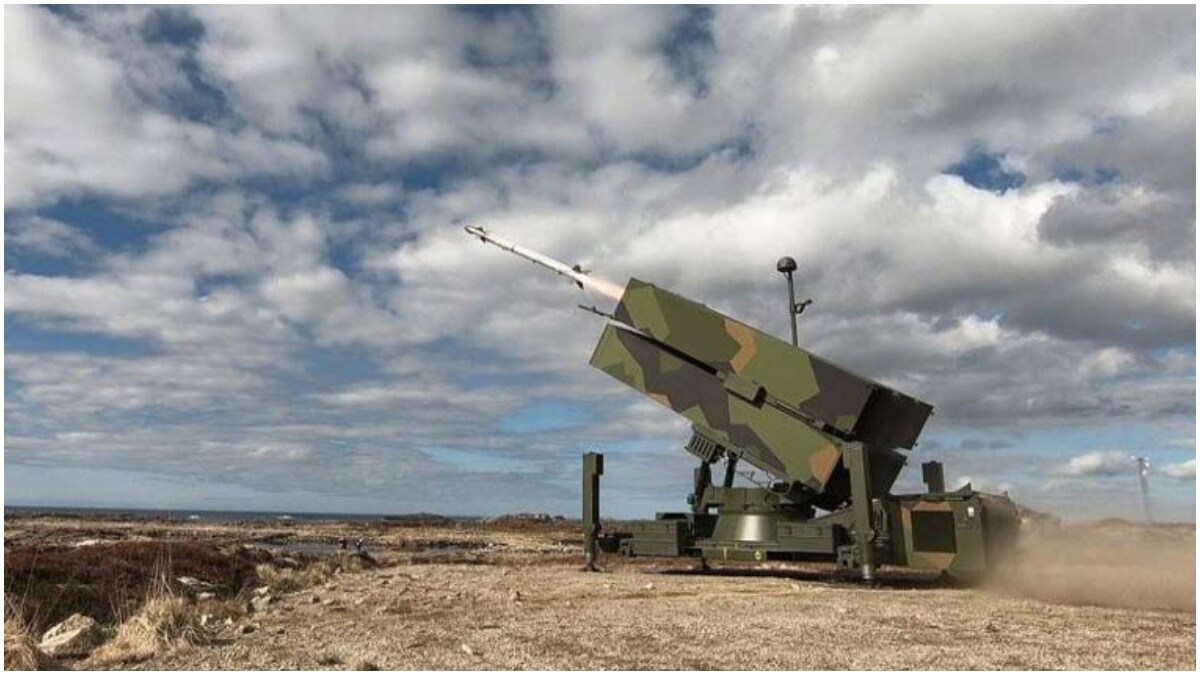
NASAMS: This is the acronym for the National Advanced Surface-to-Air Missile System, a mobile air defence system manufactured by Raytheon and Kongsberg, a Norwegian company. The AMRAAM missiles fired from the NASAMS are estimated to have a range of around 40 km and can reportedly bring down aircraft, drones, and cruise missiles.
The Counter Rocket, Artillery, and Mortar systems, popularly known as C-RAM, fall under the broader point-defence category and are capable of intercepting incoming rockets and mortars at very close range using the Land-based Phalanx Weapon System (LPWS). There is not enough information on whether these Gatling gun-based systems are being currently used in the conflict with Tehran.
