


 Add as a preferred source on Google

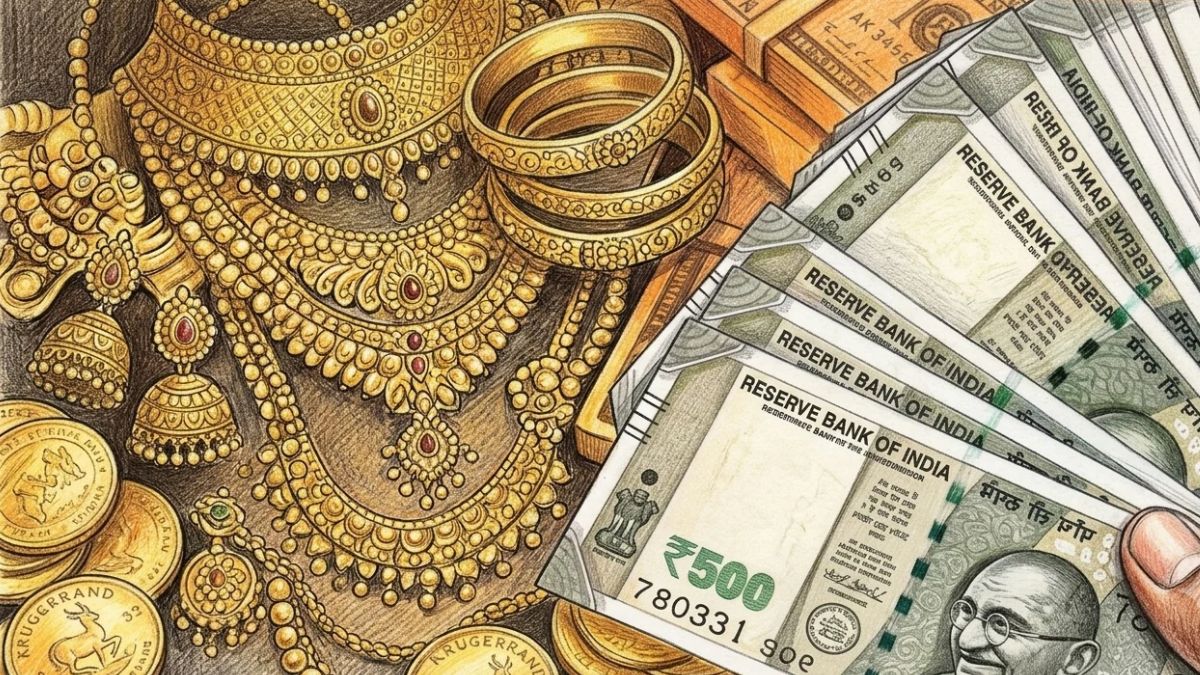
Walk into almost any bank branch in Keralam on a Monday morning and you will find a queue that never makes the news: people with small cloth pouches, waiting to pledge a chain, a pair of bangles, a child's anklet.
Gold loans are India's quietest form of debt. They need no salary slip and no guarantor, the money is often in your account within the hour, and nobody outside the family need ever know. That is exactly why they deserve more attention than they get.
For 13 years from 2009 to 2022, I worked as an officer of the State Bank of India. Gold loans were the product customers understood least and trusted most. The trust was usually justified; the understanding was not. Here is what I would want every borrower to know before the jewellery leaves the house.
Know how much the bank may lend
The Reserve Bank of India's directions on loans against gold, issued in June 2025 and binding on lenders from April 1 2026, set a ceiling on how much can be lent against the value of the gold—the loan-to-value ratio.
For loans up to ₹2.5 lakh, a lender may go up to 85 per cent of the value; between ₹2.5 lakh and ₹5 lakh, up to 80 per cent; and above ₹5 lakh, up to 75 per cent.
A generous-looking ceiling is not a reason to borrow up to it. The closer you go, the less room you have if gold prices fall or if interest keeps adding to what you owe.
Read the repayment type, not just the rate
Gold loans come in two broad shapes.
In an EMI loan you repay principal and interest every month. In a "bullet" loan you pay everything—principal and accumulated interest—at the end. RBI now caps bullet-repayment gold loans at twelve months.
Bullet loans feel painless because nothing leaves your account for a year. That is the trap: interest compounds quietly, and families who planned to repay "after the harvest" or "when the Gulf money comes" often find the final bill far larger than they imagined. If you choose a bullet loan, put the maturity date where the whole family can see it, and pay something every time money comes in.
Count the whole cost
The headline interest rate is only part of the price. Ask in writing about the processing fee, valuation charges, penal interest for late payment and any insurance bundled with the loan. Ask what happens on the day after maturity. A loan that looks two points cheaper can cost more once these are added.
Get the paperwork, and read it
Before you sign, ask for the loan agreement and the pledge receipt, and check that the receipt records the number of items, their description, the gross and net weight and the purity the lender has assessed.
These figures decide how much you can borrow, and they are your proof if anything goes wrong later. Photograph the jewellery yourself before handing it over.
Your gold must come back on time
The new directions also protect the borrower at the end of the loan. Once the loan is fully repaid, the lender must return the pledged gold within seven working days; if it fails to do so for reasons attributable to it, it must pay the borrower ₹5,000 for every day of delay. Few borrowers know this. Ask for the gold on the day you close the loan, and get the closure acknowledged in writing.
Never let a gold loan become an auction
When a gold loan is not repaid, the lender can auction the pledged gold after giving notice. For many families, the jewellery is not just collateral; it is a mother's wedding chain or a grandmother's gift.
If repayment is going to be difficult, go to the branch before the due date, not after the notice arrives. Ask whether you can pay part of the amount, or close the loan by selling a smaller piece yourself at market price. A lender has far more flexibility before an account turns overdue than after.
Silver now counts too
The RBI directions now allow loans against silver jewellery and coins as well, within limits. That will widen access for households that own more silver than gold—and widen the same risks. Every caution above applies.
Ask why you are borrowing
The most important question is not asked at the counter. Gold loans are excellent for short, clearly temporary needs: a hospital bill before the insurance claim is settled, seed and fertiliser a few weeks before the harvest is sold, a fee due before the salary arrives.
They are a poor way to pay for a wedding, a car, or another loan's instalment. When a gold loan is used to repay an earlier gold loan, the family is no longer borrowing; it is slowly selling its gold to the lender—at interest.
Repaying an older debt with a new pledge, rolling a bullet loan over year after year, borrowing to the ceiling because the ceiling is there: these patterns are common, and they are why I call gold loans the quiet debt.
They do not arrive with the drama of a credit-card bill or a bank notice. They simply sit, growing, in a locker that is no longer yours.
A five-point checklist before you pledge
1. How much do I really need, and when exactly will I repay it?
2. Is this an EMI loan or a bullet loan, and what is the total I will pay on the last day?
3. What are all the charges besides interest?
4. Does the pledge receipt record the correct weight and purity of every item?
5. Do I know the date by which my gold must be returned once I repay—and that the lender owes me compensation if it is late?
Gold has always been Indian families' private insurance. Used carefully, a gold loan keeps that insurance working. Used carelessly, it quietly turns the family's savings into the lender's security.
The difference is usually made not at the counter, but at the kitchen table, before anyone leaves the house.
(Rules cited: Reserve Bank of India directions on lending against gold and silver collateral, June 2025, applicable from 1 April 2026. Readers should confirm current terms with their lender.)
The writer is a former State Bank of India officer (2009–2022).