



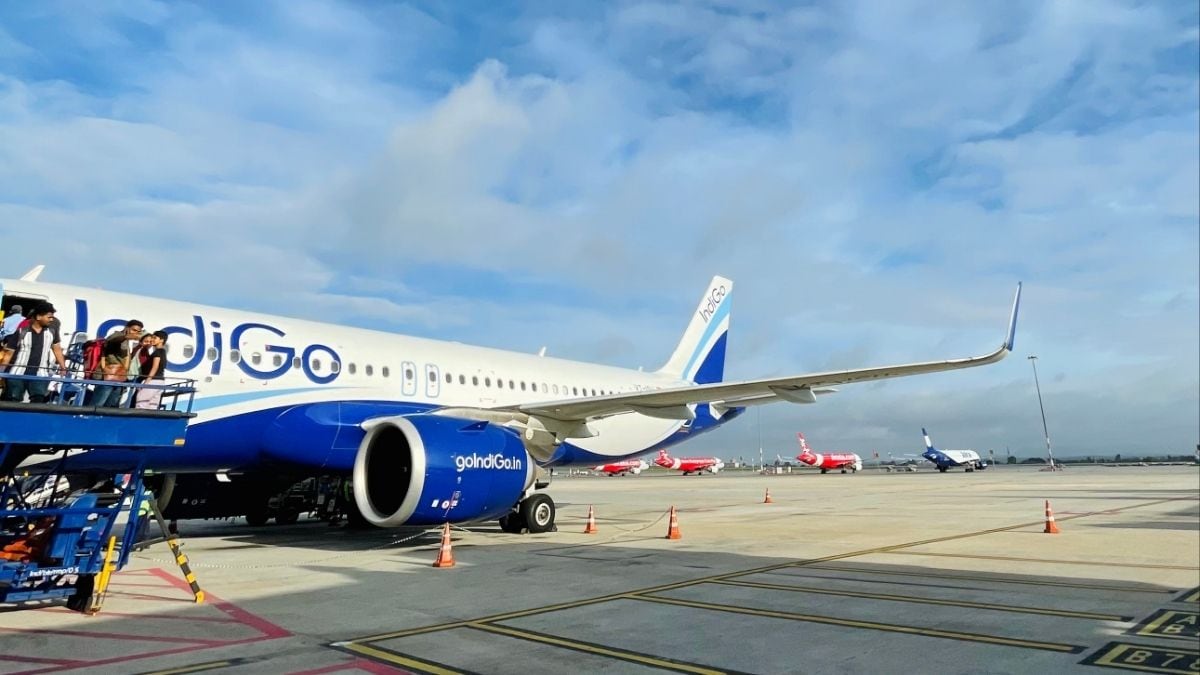
IndiGo CEO Willie Walsh recently stated that the airline industry situation is really challenging and that the biggest air carrier in the country will continue to navigate through challenges. But will IndiGo be able to plug the overall aviation sector’s bleed in passenger volumes?
Such an outlook-driven statement came on the heels of the parent company, InterGlobe Aviation, posting its consolidated quarterly results last week. IndiGo saw its Q2 capacity slump by 1 per cent, and passengers slump by 4.7 per cent. However, the airline’s yield—a marker of how much it earned for each unit of distance travelled by a paying passenger—rose more than 34 per cent to ₹6.3. Incidentally, it also trimmed its net loss to ₹18,791 million.
Much of this trend can also be seen on the ground, where passengers now face gruelling prices for basic direct flights. Earlier, you could fly from Kochi to Bengaluru for less than ₹2,000. Now, it has doubled (or even tripled in some cases).
As per the Directorate General of Civil Aviation (DGCA), IndiGo’s market share in September stands at 65.4 per cent and Air India at 26.8 per cent. The rest make up a mere 7.8 per cent, out of which Akasa Air alone commands 5.6 per cent.
Number of passengers carried by domestic airlines in September fell more than 6 per cent this year, DGCA data revealed. Compared to August, September saw 2.5 per cent less domestic air traffic.
Given that both IndiGo and Air India collectively operate more than 90 per cent of all domestic flights in India, the price hike is felt across the board. Some market watchers say this has forced many a regular passenger to look for alternate measures, and at times, alternate destinations.
Last year, an international return journey from Trivandrum to Colombo on SriLankan Airlines went as low as ₹14,000. Today, a one-way domestic flight from the same airport to Delhi stands at ₹14,000.
"Is this what happens when we have no choice?" lamented a 27-year-old startup founder, Ravikrishna M., from Chennai. He had just looked up a flight from the Tamil Nadu capital to Mumbai for a business trip, which now costs him close to ₹13,000 for a return journey. "I remember it being just ₹4,000 one way just months ago."
Many like Jose have stopped flying altogether. Others, like 34-year-old Josephine P from Panjim, Goa, who have the luxury of time, have shifted to trains. "For me, taking a first-class ticket in Rajdhani works out. Meals are included. I get to see a lot of India. And I get to be with my self, reflect, and indulge in a book," the artist who frequents Delhi said.
Goa to Delhi flights now average ₹9,000-10,000 one way. It takes north of 2.5 hours. Adding the travelling time to MOPA (North Goa airport), check-in, security, and then getting out of Delhi airport, Josephine Pinto says it takes her 6–7 hours.
In contrast, it takes her 26 hours from Madgaon to Delhi Hazrat Nizamuddin station on the 12431 Rajdhani Express, and her ticket costs just under ₹7,000. She uses that time to journal, and catch up on her reading.
The civil aviation ministry’s recent notification of the Bharatiya Vayuyan Niyam 2026 could bring more transparency to ticket pricing but it is yet to be seen whether this will pull down how much Indians have pay to fly domestically in the long term.
