



For all its symbolism of farmers who gave up their land for Noida airport construction becoming inaugural passengers, the prospects and plan for one of India’s most ambitious infrastructure projects actually depend on something else.
Not passengers primarily, but cargo movement.
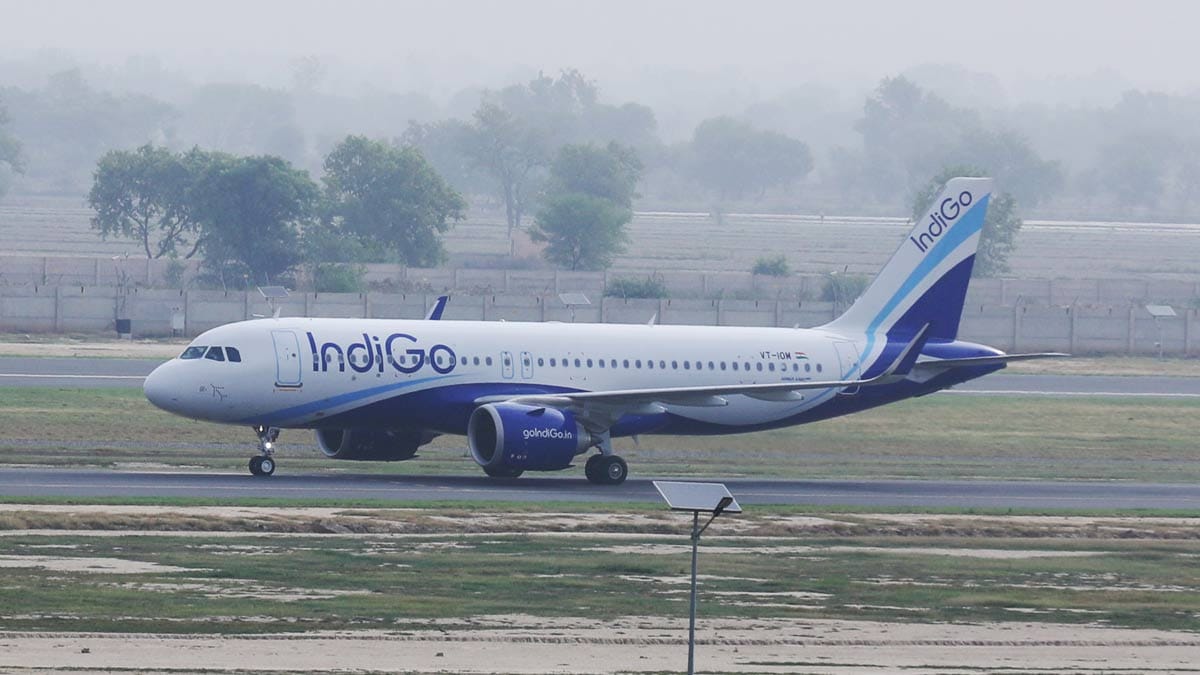
On Monday morning, India’s latest mega airport, the Noida International Airport (NIA) started operating in what was an erstwhile agrarian land off the expressway linking the national capital region (NCR) to Agra. The first to touch down was an Indigo flight (the Gurugram-based market leader had bagged the bragging rights of becoming the first operator here long before the construction was even over) from Lucknow, quickly followed by the return leg to the Uttar Pradesh capital, which logically, became the inaugural flight, with photo ops, symbolic gesture of the once-owners of the very land from which planes will now soar high flying out, and a flight that was sold out long previously (one suspects, with more than its share of influencers and content creators; brace for the updates!).
But for all the talk of NIA becoming the third airport option for the bustling NCR (Hindon in Ghaziabad could be called the second airport for Delhi, already in operation for a few years) that is soon to become the world’s biggest urban agglomeration, beating the likes of Jakarta and Tokyo, NIA officials are in no fool’s gold. Their planning right from the beginning was a symbiotic plan that aimed at the airport, as well as the whole region of western Uttar Pradesh, developing hand in hand.
“Uttar Pradesh is actively developing a robust business ecosystem around the…. Noida airport, strategically positioning it as a major industrial and commercial hub,” UP Industries, export and investment promotion minister Nand Gopal Gupta ‘Nandi’ had told this correspondent a while back when the airport was coming up.
“The development projects around Noida airport are expected to significantly boost employment and business activity in Uttar Pradesh,” he added.
The idea is simple: The airport catalyses the commercial and industrial development of the belt between Delhi and Agra, which in turn feeds the airport with higher business.
While the Noida-Greater Noida belt that comes first when one travels into Western UP from the national capital has been getting major investments, right from HCL to Samsung to numerous tech players, both established and starting up, the area has had its own challenges. Gurugram, on the other side of Delhi, was a much bigger magnet for businesses, and even high-net-worth individuals were shifting out of Delhi or looking to set up investment in the region. While Noida checked the boxes better than Gurugram when it came to civic planning and infrastructure, it always suffered in perception due to its perceived lack of law and order, the infamous UP brand of thuggery and politics going hand in hand. And of course, the fact that the region did not have air connectivity was an advantage that took Gurugram ahead by leaps and bounds.
Both situations seem to have been dealt with, seemingly. UP’s Yogi Adityanath dispensation, since 2017, has left no stone unturned in its efforts to attract investment and keep a check on the lawlessness felt in Western Uttar Pradesh, even if many will argue that it is still a work in progress. And the start of functioning of the airport from Monday takes care of the rest.
But an airport all dressed up but with not many fliers could still be a recipe for disaster — ask Adani’s Navi Mumbai airport which opened with much fanfare last year-end but has struggled with anything from mobile network connectivity (initially) to access to the remote airport, even as airline operators balked at adding more flights due to high cost and apparent inefficiencies.
Which is why NIA and UP authorities are not putting all their eggs in the passenger basket alone, even if there are impressive projections of 1.2 crore passengers in the first few years, jumping eventually to 12 crore when the airport reaches full capacity (from one runway and one terminal to four runways and five terminals)
A look at the many ambitious projects planned in and around the airport in particular and the larger Western UP region in general makes it clear — from a 200-plus acre electronics manufacturing hub near the airport to five other specialised industrial parks (from electric battery manufacturing to a medical devices park), and a multi-modal logistics hub and cargo complex, the idea is to develop Noida as a major hub for cargo and logistics, in turn supplementing the growth of the previously primarily agrarian region.
Not to forget the real estate boom that is already showing signs of a sustained run. “This rapid industrialisation will not only provide direct employment, but also create numerous indirect jobs in real estate, hospitality, retail and services,” said minister Nandi, adding, “As business activity flourishes, tax revenues and disposable incomes will rise, contributing to overall regional economic growth.”
