



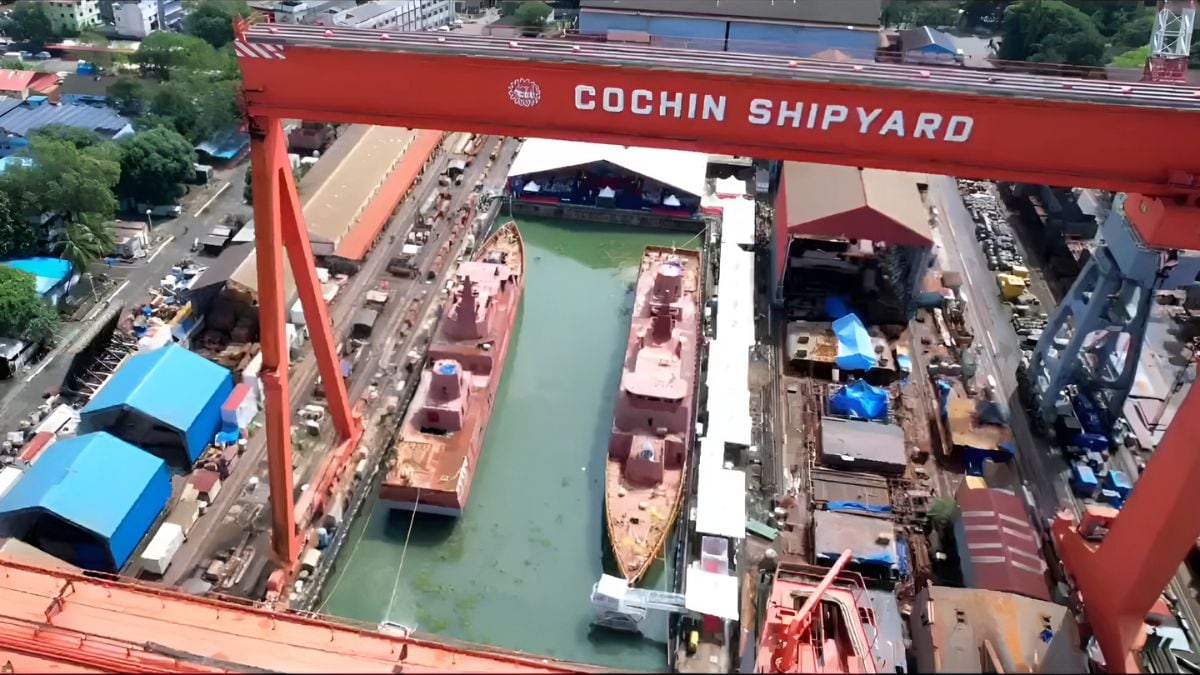
Cochin Shipyard Limited (CSL) has submitted bids to the Bharat Container Shipping Line (BCSL) consortium to build various types of vessels to meet India's needs over the next decade.
The BCSL, which is India's premier joint venture for a national container shipping line, is managed by a high-profile consortium of Indian maritime companies.
This includes the Shipping Corporation of India (SCI), Container Corporation of India (CONCOR), Jawaharlal Nehru Port Authority (JNPA), V.O. Chidambaranar Port Authority (VOCPA), Chennai Port Authority, and the Sagarmala Finance Corporation Limited (SMFCL).
Though CSL's bid also includes orders for non-container ships, such as tankers or tugboats, the bid was submitted to the BCSL consortium as the latter has become the key face of the shipping ministry's demand aggregation plans.
The idea has been around since the Centre launched a comprehensive package of Rs 69,725 crore for the allround development of India's maritime sector.
India will require approximately 430 ships over the next 10 years, involving an estimated investment of Rs 2 lakh crore, a Hindu BusinessLine report said, citing Jose V.J., Director (Finance) at CSL.
CSL's bid for domestic shipbuilding aims to build vessels of all kinds for this aggregated requirement—including container ships for the BCSL and tankers for oil companies/PSUs, such as the Indian Oil Corporation (IOC) and the Oil and Natural Gas Corporation (ONGC).
Clubbing ship requirements from various groups streamlines things for shipbuilders looking to respond to that demand.
It also creates a unified push for more Indian-owned vessels, which in turn reduces our reliance on foreign ships that import crude oil and other cargo.
How the bid will impact Cochin Shipyard
Jose added that the bid was a key part of CSL's Rs 6,000 crore capex plan, which it aims to convert into 12-15 per cent growth over the next fiscal, backed by strong demand.
The Kerala-based shipbuilder aims to boost its shipbuilding output to meet the demand with its 2024-built dry dock, an upcoming facility in Gujarat's Vadinar, and shipyards in Malpe, Mumbai, Kolkata, and the Andaman and Nicobar Islands.
CSL also plans to establish a steel block fabrication facility near International Container Transshipment Terminal, Vallarpadam in Kochi with an investment of around ₹3,700 crore.
The shipyard also has been planning to set up a new Block Fabrication Facility (BFF) near the Vallarpadam International Container Transshipment Terminal (ICTT).
To be built in two years under an investment of about Rs 4,000 crore, the new BFF will be capable of producing 1,20,000 metric tonnes (MT) of steel blocks per annum, in comparison to CSL's existing plant that churns out 20,000 MT per annum.
This will enable Cochin Shipyard to build larger vessels like Suezmax tankers, container ships, and Capesize bulk carriers from its newest dry dock.
Green Maritime Propulsion Private Limited, a June 11-incorporated joint venture (JV) between CSL and HBL Engineering Limited (HBL) will aid the development of marine batteries, Battery Management Systems (BMSs), electric motors, power electronics, and charging infrastructure, paving the way for the creation of next-generation electric and hybrid vessels.
Cochin Shipyard also plans to buy a 23 per cent stake in Dutch ship design and engineering company Conoship International B.V., which is expected to help it better utilise the benefits that come out of the JV with HBL, in a bid to not just meet India's shipbuilding needs, but also ensure that the ships being produced for these needs align with global standards.
