



The conflict between the United States and Iran has entered a dangerous new phase after a widely publicised interim ceasefire unravelled over a fundamental dispute about the future of traffic through the Strait of Hormuz. President Donald Trump dismissed the agreement as merely a “memorandum of understanding”, accusing Tehran of failing to honour its commitments and describing the breakdown as evidence that Iran had failed a crucial “test”.
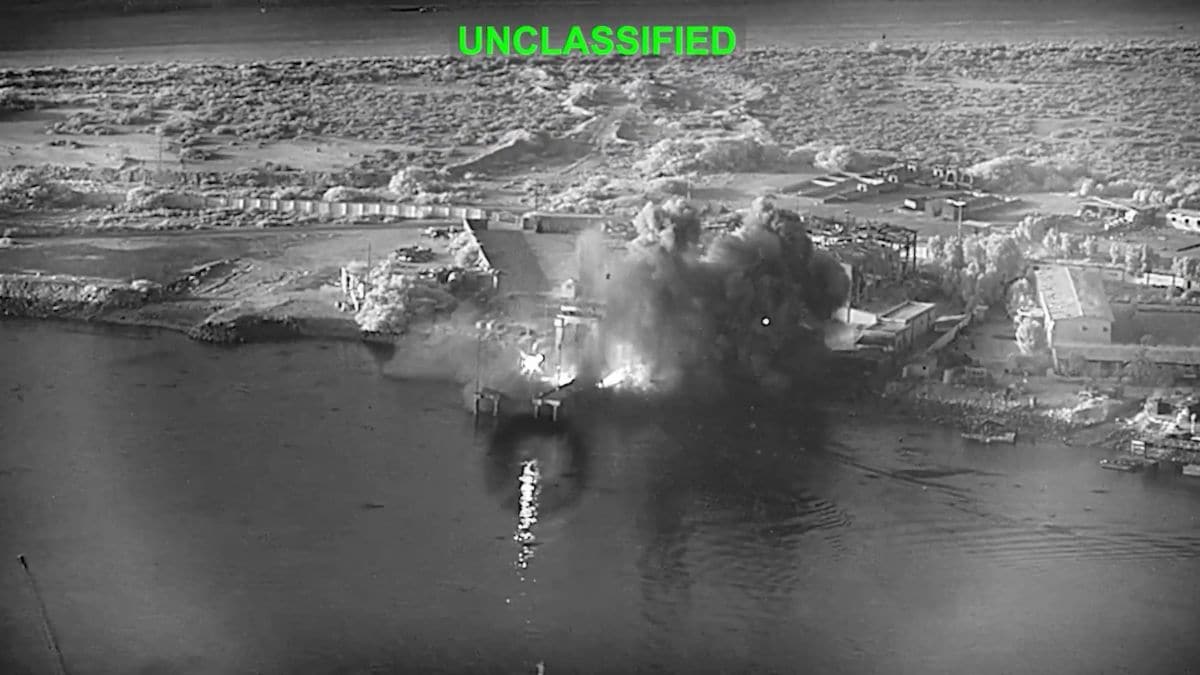
The US carried out a third consecutive night of strikes across Iran, hitting missile launch sites, coastal radar installations, air defences and small boats, with explosions reported in the port city of Bandar Abbas and on the islands of Kish, Qeshm and Abu Musa. Trump notified Congress that "limited" military action had resumed inside Iran, and went further still, threatening to bomb "Pickaxe Mountain," a deeply fortified facility near Iran's Natanz enrichment site in the Zagros Mountains. The US says it currently sees no activity there, and experts note the site, buried up to 2,000 feet beneath granite, is largely impervious even to America's most powerful bunker-busting bombs. Trump nonetheless suggested the military could still give it "a nice big fat shot right near the front door."
Iran struck back at US regional allies and against commercial shipping. The UAE Ministry of Defence said Iranian cruise missiles hit two oil tankers, the Mombasa and the Bahia, in Omani territorial waters within the Strait of Hormuz, killing one Indian crew member and injuring eight others. Iran also widened its targets to include US military facilities in Bahrain, Kuwait, Oman and Jordan's Prince Hassan airbase, and struck even Qatar, which had been mediating the ceasefire talks.
Alongside the strikes came the most disruptive shift of all. Declaring the US the "guardian of the Hormuz Strait," Trump ordered the reinstatement of a naval blockade on all vessels moving to or from Iranian ports, and demanded a 20 per cent toll on all cargo passing through the waterway, payable to the US for providing security. The scale of that burden is considerable: a tanker carrying a million barrels of crude at $100 a barrel will have to pay a toll of $20 million to Trump to cross the strait, a bill that only grows as rising danger pushes oil prices.
The policy goes against the administration's own earlier position. Only weeks before, Secretary of State Marco Rubio and the US Treasury had condemned similar Iranian threats to impose tolls as "maritime extortion," insisting no country has the right to charge fees on an international waterway. Iran's Foreign Minister, Abbas Araghchi, seized on the contradiction, agreeing with the underlying logic that whoever guarantees safe passage should be paid for it, but arguing that Iran, not the US, is the strait's rightful and "forever" guardian, and that 20 per cent was too steep a price regardless. Analysts have likened the result to two armed tollbooths facing each other, where neither a US escort nor an Iranian permit can guarantee safe passage from the other side.
The economic fallout was immediate. Crude oil prices jumped more than 9 per cent, their sharpest rise in a month, while US stock markets sold off broadly and traffic through the strait fell 52 per cent week on week. The shipping industry has been sharply critical: the International Maritime Organisation reaffirmed there is no legal basis for mandatory transit fees, and Chevron's Mike Wirth said the company would simply refuse to pay, warning of a dangerous precedent. DP World is reportedly already in talks to build new port facilities on the UAE's east coast so cargo can be trucked overland, bypassing the strait entirely.
The episode has left the Trump administration exposed on two fronts at once: at war with a limited, apparently ill-defined strategy and increasingly at odds with its own stated principles on maritime law. Congress had already voted under the War Powers Act to direct Trump to end the conflict, a directive he rejected. Analysts warn the administration lacks a clear endgame, risking a cycle in which continued escalation fuels global inflation and erodes US credibility as a guarantor of open waterways, without delivering any durable resolution, a cost that, much like the toll itself, is likely to keep rising the longer the standoff continues.
