



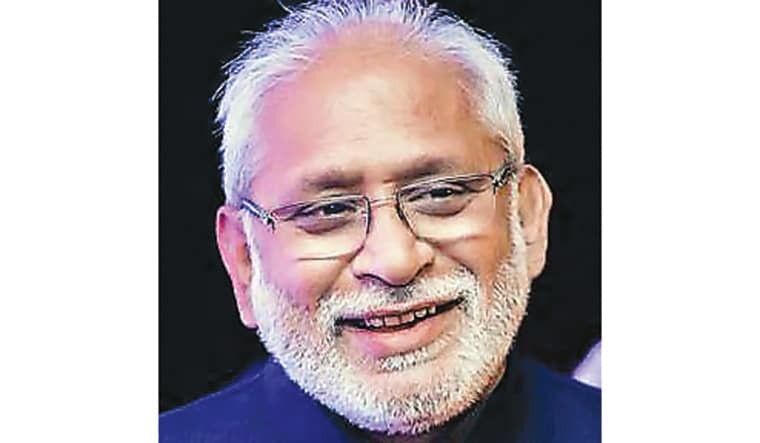
SUDHANSU MOHANTY, former controller general of Defence Accounts, was heading the finance wing of the ministry of defence (MoD) during the Rafale negotiations between October 2015 and May 2016. He had reservations about India going ahead with the Rafale deal without seeking a sovereign guarantee or bank guarantee from France. Edited excerpts from an interview:
Did India give away too much to France in the Rafale deal?
To my understanding, the Indo-French IGA (inter-governmental agreement) has no meaning without a sovereign guarantee. The ‘letter of comfort’ grants no comfort to protect Indian taxpayers’ money or India’s strategic interests. Actually, it is a direct contract between the Indian government and the private firm called Dassault Aviation, with a supportive document—the French prime minister’s ‘letter of comfort’.
Are you saying there were not enough protection clauses in the deal?
[When] any money... is released by the government of India to another party before the item is delivered to us, you are supposed to protect the money that has been advanced. By advance, I am not [only] talking about the initial advance or mobilisation advance that is given, but even the subsequent advances that are paid under the milestone or stage payments. [Those are] always protected through a bank guarantee. In case there is some problem in delivering the item, this irrevocable bank guarantee... can be encashed by the buyer.... It is there in the defence procurement procedure [DPP], plus in the general financial regulations of the ministry of finance. It means any advance given has to be protected through a bank guarantee.
So, IGA does not provide protection?
In IGAs, a sovereign guarantee is made available when you are buying something from a private party. In the case of Russia as well as the United States, IGAs are between two governments. In case of the US, we deal through foreign military sales route. With Russia, it is through Rosoboronexport, which is a government agency.... But, in this case, Dassault is a private company and not a government agency. To that extent, a sovereign guarantee or a bank guarantee is required. Bank guarantee is the first thing. But, when it is a government-to-government deal, and since we have diplomatic ties and friendly relations, there is no insistence on bank guarantee. But, a sovereign guarantee is required from that country.
What will happen if Dassault fails to fulfil its commitment?
We have no protection to deal with such a situation. That is the reason why we protect [the deals], because it is not anyone’s personal money. It is the taxpayers’ money. A company can afford to take the risk, but we cannot. That is why there are extra protection [clauses] while spending any money from the consolidated fund of India. So, if it is not there, then there will be litigations or arbitration and correspondence with them. In this case, [there is] no extra protection. In lieu of a sovereign guarantee, [there is] a letter of comfort from the French prime minister, who does not enjoy any executive power. In case of any conflict, the first thing that India would do is write to the prime minister of France and seek help from his office. If it does not work, there will be so many questions that will be raised.
What is the sanctity of the letter of comfort?
A letter of comfort is just like a sagai (engagement). Either party can break away and go in different ways. It cannot be legally enforceable. When you enter into wedlock, and if it is registered, there are legal dimensions. A letter of comfort is only morally binding, not legally binding. If the government changes, they might even ignore the letter of comfort. President Emmanuel Macron can afford to ignore the letter of comfort that was sent during François Hollande’s tenure. But, he cannot ignore a sovereign guarantee because it is an IGA.
As the financial adviser, did you object to the deal?
No financial adviser would ever approve such a deal. I will always ensure, if it is an IGA, that the other country is involved. And if we are not getting the bank guarantee, there should be some way that the country is involved. Because they are the ones who are signing the IGA. [I] will never pass such a deal. Interest of the nation should not be diluted.
What about the change in the benchmark price from €5.2 billion to €8.2 billion in deal?
I believe that the negotiating team had some reservations on the benchmark price, which was overruled by the ministry. As per the information available in the public domain, the Defence Acquisition Council, headed by the defence minister and consisting of all top MoD officials, did not recommend the case, and left it to the Cabinet Committee on Security to take a call.
