



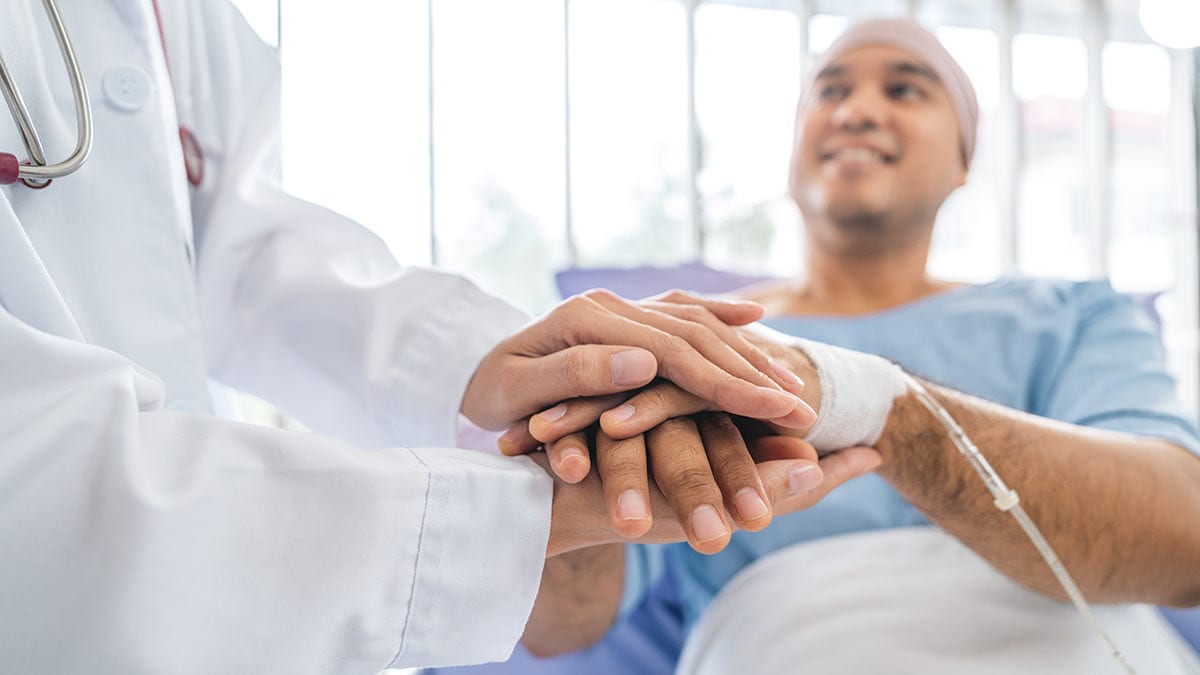
Fifteen years ago, when Ramesh underwent an autologous stem cell transplant for multiple myeloma at a hospital in Delhi, the unspoken expectation was modest: buy time. Myeloma, a cancer of plasma cells, was then widely regarded as incurable and relentlessly recurrent. A transplant could induce remission, perhaps extend life by a few years, but rarely did patients imagine attending their daughter’s wedding, retiring from work or becoming grandparents.

Today, Ramesh is 68. He travels independently for his follow-ups, takes maintenance medication, manages his diabetes, and speaks about his cancer in the past tense. “It has become part of my life story,” he says, “not my whole life.”
His story—once exceptional—is no longer rare.
A landmark study from the All India Institute of Medical Sciences (AIIMS), recently published in The Lancet Regional Health-Southeast Asia, offers the most comprehensive Indian evidence yet that long-term survival in multiple myeloma is not only possible—it is increasingly measurable.
The analysis examined 438 consecutive transplant-eligible myeloma patients treated between 1995 and 2019. What it found challenges old assumptions: nearly 22 per cent of patients were alive ten years or more after transplant. In oncology terms, this is not a statistical footnote. It is a paradigm shift.
ONE IN FIVE
The AIIMS data reveal that 96 of 438 patients—21.9 per cent—survived at least 120 months after autologous stem cell transplantation. These long-term survivors were not merely alive; their median overall survival reached 264 months, or 22 years. Median progression-free survival—the time before disease returned—was 158 months, exceeding 13 years.
For context, global registry data historically placed medium overall survival after transplant at around eight to 10 years. That Indian patients, in a real-world, resource-variable setting, are crossing the decade mark in such numbers signals a profound evolution in care.
It also reframes a long-standing question in myeloma: is myeloma still a fatal disease defined by short remissions, or is it slowly becoming a chronic condition for a meaningful subset of patients?
THE BIOLOGY OF SURVIVAL
Not all myeloma behaves the same, and the AIIMS study underscores this with unusual clarity. Patients who crossed the ten-year threshold shared distinct clinical and biological characteristics at diagnosis.
They were more likely to have early stage disease (stage I), higher blood albumin levels, better kidney function, healthier platelet counts, and a lower burden of malignant plasma cells in the bone marrow. In contrast, patients who relapsed early—within two years of transplant—more often presented with advanced-stage disease, renal impairment, extramedullary spread, high-risk cytogenetics and lower albumin levels.
In simple terms, biology matters. Patients with lower disease burden at the outset appear to have a survival advantage that compounds over time. But biology alone does not explain the full story.
TIMING IS DESTINY
One of the study’s most striking findings is the importance of when the transplant is performed. Among long-term survivors, nearly three-quarters underwent transplant within 12 months of diagnosis and almost 90 per cent did so during their first remission. Patients who relapsed early were more likely to have delayed transplant or to undergo the procedure after salvage therapy.
The implication is clear: in transplant-eligible patients, waiting may carry consequences. Early consolidation, when disease burden is lowest and chemotherapy sensitivity highest, appears to significantly influence long-term trajectory. Equally important is what happens after transplant. The depth of response emerged as a decisive factor: 80 per cent of long-term survivors achieved complete remission after transplant. When complete and very good partial responses were combined, the proportion rose to nearly 95 per cent.
THE QUIET POWER OF MAINTENANCE
If transplant is the turning point, maintenance therapy appears to be the sustaining force. More than 93 per cent of long-term survivors received post-transplant maintenance therapy, compared with just over half of those who relapsed early. Whether with thalidomide, lenalidomide, bortezomib, or earlier agents like interferon, maintenance significantly improved progression-free and overall survival.
In resource-sensitive settings, maintenance has sometimes been debated because of cost and toxicity. This study strengthens the counterargument: sustained therapy after transplant is not optional—it is foundational.
THE PATIENTS WHO STILL FAIL
Despite encouraging survival curves, not all outcomes are improving equally. About 12 per cent patients relapsed within two years of transplant and died early.
These individuals frequently had high-risk cytogenetic abnormalities, extramedullary disease, renal dysfunction, and elevated β2-microglobulin levels at diagnosis.
For such patients, conventional transplant strategies may be insufficient. International trials are now exploring more aggressive induction regimens, tandem transplants, and dual maintenance strategies incorporating monoclonal antibodies.
The challenge ahead is not merely to celebrate long-term survivors but to identify high-risk patients earlier and tailor more intensive strategies for them.
When myeloma is no longer the only threat
Longer survivals bring new risks. The AIIMS cohort documented second primary malignancies and deaths unrelated to myeloma, including cardiovascular disease, stroke, infections and other chronic conditions.
This marks a transition. Myeloma is no longer, for many, an acute and uniformly fatal illness. It is a chronic disease intersecting with diabetes, hypertension, obesity and ageing itself.
Survivorship care must therefore evolve. Vaccination schedules, cardiovascular monitoring, bone health, infection prophylaxis, mental health support, and screening for second cancers must become integrated components of post-transplant follow-up. Oncology can no longer function in isolation from primary care and lifestyle medicine.
A NEW CHAPTER IN INDIAN ONCOLOGY
The AIIMS data span nearly 25 years—a period that saw the introduction of proteasome inhibitors, immunomodulatory drugs, monoclonal antibodies and structured maintenance protocols. The survival gains reflect these advances, but also something more: India’s capacity to deliver complex oncology care at scale in a real-world environment.
This was not a clinical trial population. It included patients with co-morbidities, varied socioeconomic backgrounds, and resource constraints. Yet, nearly one in five crossed the ten-year mark. Importantly, the survival curves do not plateau. Relapse risk persists, even after long remissions. Myeloma remains incurable in a strict sense—but the boundaries of survival are expanding.
The central message is not that transplant cures myeloma. It is that timing, depth of response, maintenance therapy, and risk stratification together can produce durable remissions that rival outcomes in high-income countries. For patients like Ramesh, that translates into birthdays attended, careers resumed, and a future once thought impossible.
India’s oncology landscape has often been described as catching up to global standards. But studies like this suggest a more nuanced reality. By adapting evidence to context, prioritising early transplant pathways, and sustaining long-term therapy despite financial constraints, Indian centres are generating data that matter not only locally but globally.
The story of multiple myeloma in India is no longer one of limited survival. It is one of strategic timing, biological insight and expanding horizons. India is not just catching up—it is defining real-world myeloma care.
Menon is VP at TrialX/Applied Informatics Inc. She produces and hosts CureTalks, an international online talk show on cancer research and health care.
