



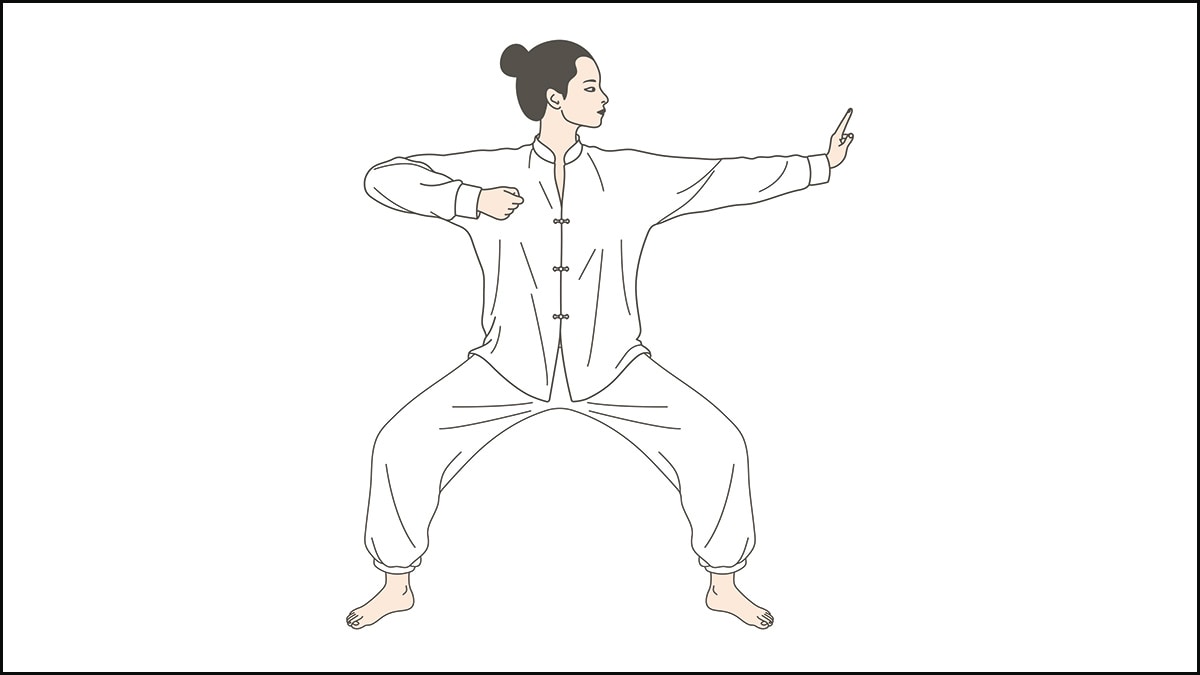
General Yue Fei, the legendary Chinese general of the 12th-century Song Dynasty, remains a celebrated cultural hero in China. According to Chinese folklore, while searching for a highly efficient and easy-to-learn physical training regimen to keep his soldiers healthy, strong and flexible for battle, Yue Fei adopted a unique exercise system known as baduanjin—also called the eight brocade exercise, eight section brocades or eight-treasured exercises.
Developed from the philosophy of I Ching, with its core emphasis on the balance of “yin and yang”, the routine was believed to be remarkably effective in preventing illness and building stamina among his troops. Over time, Yue Fei’s soldiers became legendary for their victories, and the exercises gradually spread from the battlefield to the general public.
The term “baduanjin” is believed to have first appeared in written records during the Song Dynasty, particularly in texts from the Southern Song period. References in Hong Mai’s writings and the Daoist text Dao Shu (The Pivot of the Way) describe exercises resembling the eight-section health routine later known as baduanjin. However, its origins may date back even earlier. In 1973, archaeologists unearthed a silk painting called the Daoyin Tu from the Mawangdui Han Tombs, dating to around 168 BCE. Some of the postures depicted in the painting closely resemble movements found in modern baduanjin.
Interestingly, a new quantitative clinical study suggests that this ancient regimen—rooted in the concept of yin and yang—can lower blood pressure just as effectively as standard aerobic exercise.
Baduanjin includes both sitting and standing forms. In 2013, China’s General Administration of Sport standardised a new version of the standing routine, helping popularise it as a community health exercise. The regimen includes simple movements such as raising the hands overhead to regulate internal organs, drawing a bow like an archer, lifting one arm to support the spleen and stomach, turning the head backwards to ease strain, bending and swinging the body to reduce stress, touching the feet to strengthen the kidneys, punching to build strength, and raising the heels to improve overall health. The routine takes only 10 to 15 minutes, requires no equipment and needs minimal space.
Earlier studies had suggested that regular practise of baduanjin could improve both physical and mental wellbeing. Researchers linked the exercise to benefits for the nervous system, osteoarthritis, stroke recovery and bone health. Because of its slow, gentle movements, it is often recommended for older adults.
Now, a new study involving 216 adults has provided evidence for both the short-term and long-term benefits of baduanjin for people with high-normal blood pressure. Participants were divided into three groups for a one-year intervention. One group practised baduanjin for five days a week. Another followed a brisk walking routine, considered a standard aerobic exercise. The third group continued with self-directed exercise and their usual lifestyle.
After 12 weeks, the baduanjin group showed a significantly greater reduction in 24-hour systolic blood pressure compared with the self-directed exercise group. At the end of one year, however, there was no significant difference between the baduanjin and the brisk walking groups. Both proved highly effective in lowering blood pressure.
