


One of the warmest memories that ‘grandma’s home’ can evoke is that of a hot meal, cooked lovingly. I remember watching my grandmother supervising all the whole masalas being laid out to be ground for the meal of the day. She would ensure that everything, right down to the last clove of garlic and single black peppercorn, was in the right measure. The rhythmic grinding on the stone mixer had to be at just the right pace for the right texture of ground masala. It was this attention to detail that made every meal memorable.
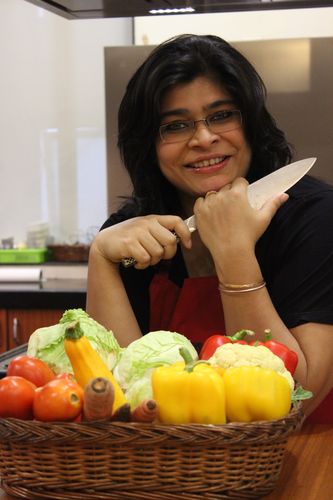 Rushina Munshaw-Ghildiyal
Considering the diversity of India, our culinary heritage is one that is as layered, in terms of its influences, as it is diverse, going by geographical and social habits. Culinary traditions were passed down orally and, today, are slowly running the risk of dying out. With convenience dictating what we cook and eat these days, the importance of preserving our culinary heritage could not be more pronounced. The good news is that it is being done in a multitude of ways and by a tribe of food professionals who, hopefully, will only increase.
One of the main things to affect our food culture is perhaps international influences as well as the fact that convenience determines what we cook and eat today. While Indians by and large still eat a lot of home-cooked, traditional meals, the thought process behind the use of particular ingredients and seasonality as well as certain techniques of cooking are lost.
There is unanimous thought among food professionals that despite the commercialisation of food, a ‘return to your roots’ phenomenon is currently underway. “As children, we were given haldi doodh (turmeric milk) to keep sniffles at bay and so having the west tell us now that a turmeric latte is good for you seems to be a conclusion drawn rather late,” says Rushina Munshaw-Ghildiyal, columnist, food historian and teacher and author of A Pinch of This, A Handful of That. Her focus is on the preservation of Uttaranchali (Garhwal and Kumaon) and Gujarati cuisines in particular. Rushina has initiated the concept of showcasing culinary legacies at her cooking studio where experts in a cuisine are invited to cook up a meal and demonstrate recipes. Her cookbook club is also a hit where homage is paid to culinary legends and their work, as well as new books.
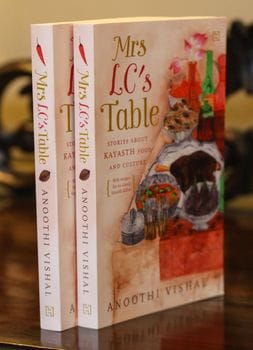
“A lot of people, some not even Indian, have led to our food becoming very clichéd with its concept of curry or butter chicken. There is obviously a need to research and understand the complexity of Indian cuisine and authenticity as well and, to place it in a cultural context,” says Anoothi Vishal, the author of Mrs LC’s Table on the culinary world of the Kayasth community. The book is based on memories of her grandmother’s heavily laden table and traces the lineage of Kayasth food as we know it today. Anoothi regularly curates Kayasth meals across the country.
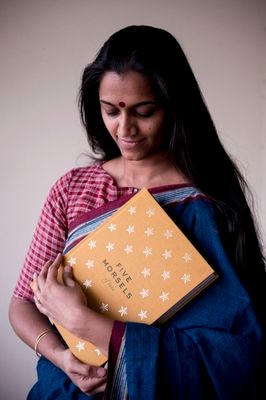 Archana Pidathala
“Preserving traditional cuisines and recipes is like conserving the root stock or the gene pool,” says Sangeeta Khanna, a nutrition coach, F&B consultant, writer and blogger. Her work concentrates on preserving Banarasi cuisine. She is currently chronicling recipes for a book on the subject, though her work has been on a blog for over a decade now. She also curates Banarasi cuisine festivals.
Documenting for the generations ahead
Documenting the food culture of various communities is a way to remind us and the generations ahead of our strong culinary heritage. Food can be the best connect and perhaps even the most wonderful way of preserving memories!
“For me, the need to document came from the realisation that the passing away of my grandmother meant that we were never going to taste her cooking again. I never learnt anything from her. I just spent time around her and it’s those memories that linger,” says Archana Pidathala, author of Five Morsels of Love, a book that chronicles the cuisine of Rayalaseema, Andhra Pradesh, and is based on her grandmother G. Nirmala Reddy’s cooking and work.
The diversity in our country ensures that every household has a unique approach to food and there, within the family itself, a micro-culinary heritage is born. “While my parents are essentially Punjabi and I grew up in Delhi, a lot of my childhood food memories are with my granny who was from Jhang, a province in Pakistan,” says Monika Manchanda, food consultant, writer, baker and trainer, who is collecting heritage recipes from her own varied background. “In my house, south Indian food is influenced both by Andhra and Tamil flavours since my in-laws came from a border village of the two states. And now that we are living in Bengaluru, there are certain influences from there seeping into my dishes. If no one chronicles these, down the line it will all be lost.”
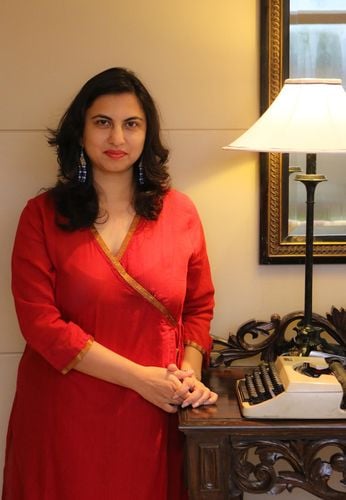 Anoothi VIshal
Grandma’s stories are perhaps the most cherished of memories for children. Anoothi’s grandmother used to tell her the recipe for gajar ka halwa as a story! For Nazaneen Jalaludheen, who is helping her grandmother Ummi Abdulla with a book called the Mappila Kitchen Treasures - A Culinary Journey, it was all the stories her grandmother would tell her with such clarity and distinction. “I just knew that it had to be documented. Stories of how Ummi’s grandmother would spend long hours in the kitchen, cooking, preserving and pickling and the unique culinary practices of her times. Through her narrative, I hope readers get a glimpse of the way of life 80-90 years ago.”
A wealth of information
The interesting thing about such documentation efforts is that they are not restricted to academic style tomes that merely end up gracing library shelves. From blogs to cookbook clubs to curated meals at restaurants to pop up stores and more, the documentation and spread of one’s culinary heritage has found many ways of expression. The information passed down makes for excellent food conversation, too!
Nazaneen says that while researching the book with her grandmother Ummi, she found that some dishes in the Mappila cuisine have indeed been influenced by the Portuguese kitchen, mutta maala or Fios De Ovos, for instance. These kind of snippets help in initiating dialogues about our origins and history and address present-day issues with better understanding.
Rushina says that she is obsessed with Indian food from the heritage perspective. Her research has brought out so many interesting elements. “For example, did you know that tadka is not just for flavour but because the fat helps oil-soluble nutrients to be digested easily. Similarly, turmeric needs to be fried in oil for it to release its nutrients. So rather than put it in the pressure cooker with the dal, it is best that it is put in along with the tempering.”
Sangeeta says that the history of the cuisine of Banaras goes all the way back to AD 1250 or a little earlier. “Influences to the food began with the Gujarati and Marvari traders and the start of the textile industry. Later, around AD 1350, when the Mughals came, the Raja of Banaras invited the royals from all over India to build temples, ghats and palaces and that’s how the cuisine enriched itself and yet stayed sattvic in the oldest city.” She is now attempting to chronicle in her work the traditional techniques of bhuno-ing, flame roasting, sand roasting and even pit roasting.
Over time, and with the adoption of internationally popular diet trends, many local food, cooking media and recipes have been relegated to the background in the name of good health. “What one essentially needs to know is that ours is a food system that has evolved after a great deal of experimentation, based on seasons, geographic and even the physical nature of people of a location,” says Monika. “Eating Indian and based on time-tested menus is what will lead to a fitter nation going forward.”
Our food has a long and diverse history considering the multitude of influences that almost every region has seen, right from conquering kings and their entourages to the matriarch of a family who brings with her a repertoire of knowledge that has been passed down generations. A lot has been lost in terms of culinary heritage. Nevertheless, there is concerted effort today to do more to preserve a community’s food culture.