


 Add as a preferred source on Google

The midterms ended with a recount settling a question of history. On Sunday, Chuck Hubbard, a former newspaper reporter who lost by nine points in 2024, unseated the 11-term Republican Virginia Foxx by 330 votes in North Carolina's 5th District. The result lifted House Democrats to at least 258 seats, their largest majority since 1992. The total surpasses the 257 won in Barack Obama's 2008 wave, though it remains short of the more than 300 held by Franklin D. Roosevelt at the high-water mark.
The scale of the sweep is historic. Democrats gained at least 44 seats, against 40 in 2018, and left Republicans with at least 173. Four contests remain uncalled: Minnesota's 1st District, where Jake Johnson leads by under 500 votes, Tennessee's 4th, where Victoria Broderick leads by under 300, and two Louisiana runoff seats. Democrats won 70 of 92 battleground districts and also secured a 56-seat Senate majority. Their advantage rested on a 32 per cent presidential approval rating and voter anger over inflation, corruption, and the war in Iran.
The wave also unsettled assumptions about Republican map-making. Democrats won every re-election bid in districts redrawn by Republican legislatures, among them Don Davis in North Carolina, whose race nonpartisan analysts had called extraordinarily difficult. Republicans flipped only one Democratic seat in an ungerrymandered district, in Maine. Kevin McCarthy, the former Republican Speaker, conceded that the new lines "probably played against us". With gains in Indiana, Arizona, Iowa, South Carolina and Texas, the incoming majority rests on a wider geography than a party reliant on a few coastal strongholds could claim.
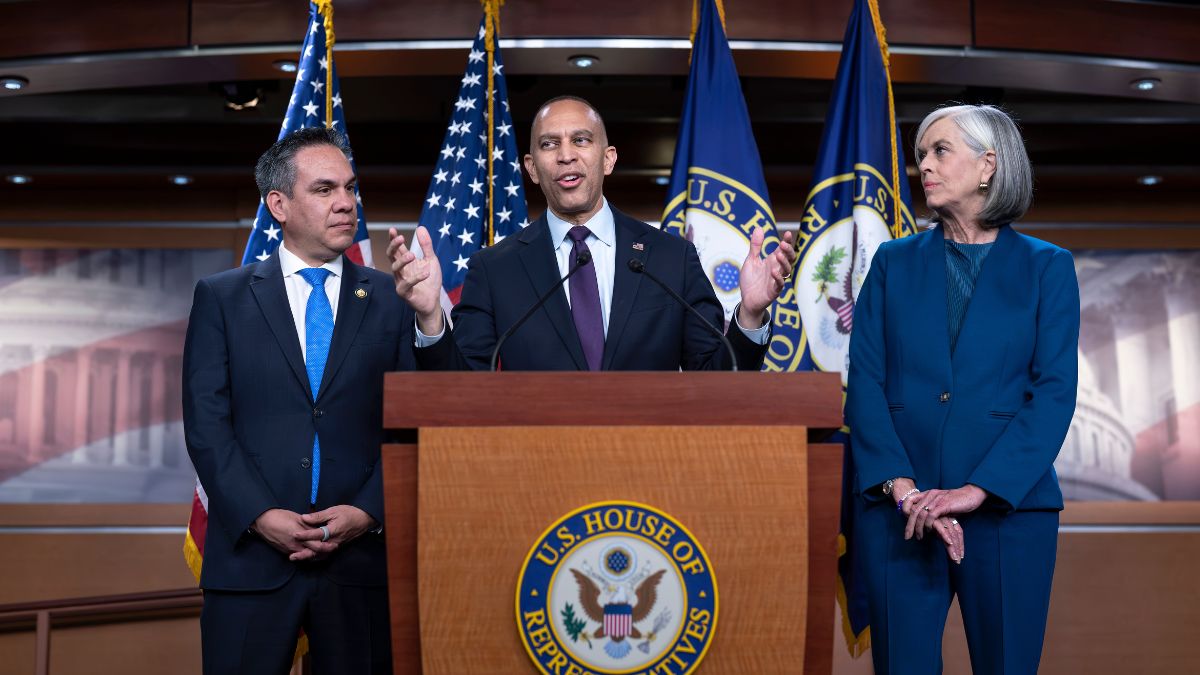
Speaker Mike Johnson has governed for two years on a 218-214 majority, in which a handful of hardliners could derail floor business and speakership votes could stretch to 15 ballots. Hakeem Jeffries, due to become the first Black Speaker on January 3, can lose dozens of votes on contentious measures and still reach the 218 needed to pass a bill. The margin frees him to manage caucus divisions without negotiating under duress, a luxury his predecessors rarely enjoyed.
The first use of that freedom is expected to be a 100-day programme aimed at household costs. Central items include rapid votes to reverse Republican cuts to Medicaid and to restore the expired Affordable Care Act tax credits. The party is not entirely of one mind on emphasis.
Alexandria Ocasio-Cortez describes the oversized class as a mandate for change, while Tom Suozzi from New York’s third district wants his colleagues to give 75 per cent of their attention to affordability and 25 per cent to accountability, tying each bill to the household budget.
Committee chairs plan wide inquiries into how Donald Trump and his family accumulated wealth after his return to office. Jeffries has declined to rule out a third impeachment effort. The White House has replied that such investigations could amount to "blatant criminality", a warning unlikely to deter lawmakers ready to issue subpoenas on alleged corruption and on federal enforcement tactics, including community raids by Immigration and Customs Enforcement.
Foreign policy offers a second front. Petrol prices rose with the war against Iran, and Democrats are preparing measures to restrict appropriations for continued strikes. Jeffries has also called for significant changes to American policy towards Israel, taking in military assistance and the handling of Gaza and the West Bank. Control of both chambers gives the party the budgetary authority to press such arguments, which a minority could only voice.
Trump has already warned that he would serve as "Mr Veto", which turns the majority's task from lawmaking into oversight and contrast. Bills may pass the House with ease and then die at the White House, leaving Democrats to argue that the fault lies elsewhere. Inside the party, the pressure to show results is acute.
The overwhelming mandate therefore carries a deadline. A majority this large controls the national narrative, but it also imposes on the Democrats the added responsibility of making voters feel some relief before the 2028 elections.
