


 Add as a preferred source on Google

Acting as if PM Modi’s rap on their knuckles last week did not even happen, India’s corporates have instead come back with a fresh wish-list, calling for a set of 15 priority financial sector reforms, saying it is essential if India’s GDP is to make it past $26 trillion by 2047 (it is presently around $4 trillion).
The immediate reason for this new charter of demands to the union government is the expected reforms in the banking and larger financial system. The Government has just set up a high-level committee on ‘Banking for Viksit Bharat,’ originally a budget promise from this February. The committee has a six-month mandate presently.
The Committee’s terms of reference include the long-term capital needs of banks, DFIs and NBFCs, a review of the priority sector lending framework, a roadmap for AI and digital adoption, and prudential norms.
The set of demands from India Inc came as a list from the Confederation of Indian Industry (CII), India’s premier business and industry chamber. Its call is for 15 priority reforms across banking, non-banking finance, capital markets, insurance and financial technology. These include a standing, rule-based liquidity window for well-governed NBFCs, a recalibrated priority sector lending framework, a wider investor base for lower-rated corporate bonds, parity for NBFCs in loan recovery, and a national catastrophe and climate risk pool.
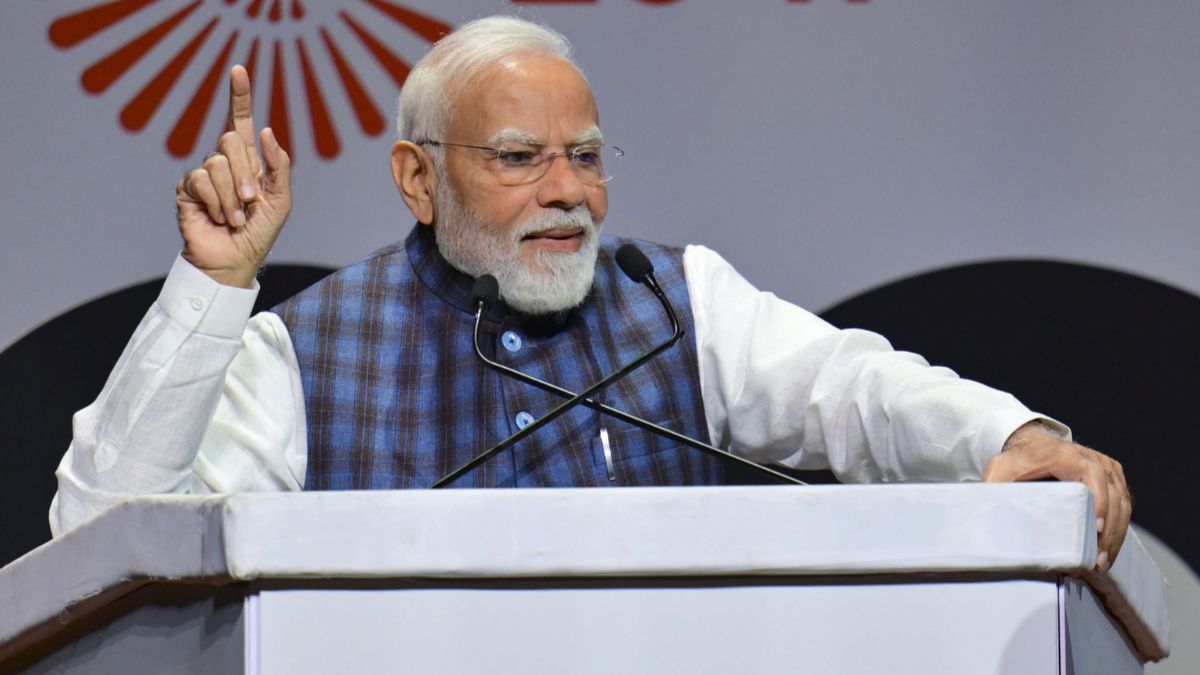
It was only last week that PM Modi, while addressing fellow business chamber FICCI’s annual meeting and centenary celebrations, scolded Indian corporates for not passing on all the benefits this government’s reforms had proffered them, from the corporate rate tax cut back in 2019, the various restructuring and easing of rules during the pandemic with Atmanirbhar Bharat, the raising of income tax limit as well as GST rate rationalisation last year. Despite the government being such a facilitator, PM Modi asked why the industry is still lining up with more demands instead of passing on the benefits in the form of fresh capital investment in new factories and businesses, more jobs and pay hikes to employees (which, as figures show, lag at an ignoble level once you also account for inflation during the present period).
But CII has instead come back with sweeping financial sector requests, ranging from recalibrating priority sector lending and export credit to protecting MSMEs (small businesses), etc.
The business body’s argument is that a crossing $26.5 trillion economy in 2047 will need close to $106 trillion of financial assets, against just about $7 trillion right now. Banking assets will need to grow 3.0 to 3.5 percentage points faster than nominal GDP, taking the bank assets-to-GDP ratio from about 1.0 times towards 1.5 times. Insurance and pension assets together are around 10 per cent of GDP, and the corporate bond market at about 15 per cent of GDP compares with 36 per cent in China and over 80 per cent in South Korea.
Chandrajit Banerjee, director-general of CII, explained, “The financial sector enters this phase from a position of strength, with healthy bank and NBFC balance sheets and a series of important measures by the Government and regulators over the past year. The task now is to build a system that can finance an economy several times its present size by 2047. That requires deeper and longer-tenor pools of capital, credit that reaches the sectors that will drive growth, and regulation that keeps pace with how finance is delivered. Our recommendations are intended to take the current reform effort to its next stage.”
