



Since the Russian invasion in Ukraine in February 2022, the war has cost lives, property and assets on both sides. In Ukraine, some regions have been illegally annexed by Russia. The regions of Donetsk, Luhansk, Kherson, and Zaporizhzhia constitute 15 per cent of land territory in Ukraine and were illegally annexed by Russia in September 2022. These regions are in the midst of a legal dispute between the warring nations.
On July 24, 2025, Ukraine’s state-owned bank, Oschadbank, had transmitted a formal Notice of Dispute to Russia, pointing out the loss of the bank’s substantial assets and operations in the above-mentioned annexed regions. The notice was transmitted under provisions of the Ukraine-Russia Bilateral Investment Treaty (Agreement between the Cabinet of Ministers of Ukraine and the Government of the Russian Federation on the Encouragement and Reciprocal Protection of Investments) signed in 1998. The notice also referred to Russia’s violations of its obligations under the treaty and general international law, according to Oschadbank.
The notice was the first step required to initiate international arbitration proceedings against Russia. Russia was asked to pay adequate compensation for all of Oschadbank’s losses within six months. The bank had obtained $1.1 billion for its losses during the annexation of Crimea in 2014 under the same treaty. However, Russia never responded to the notice.
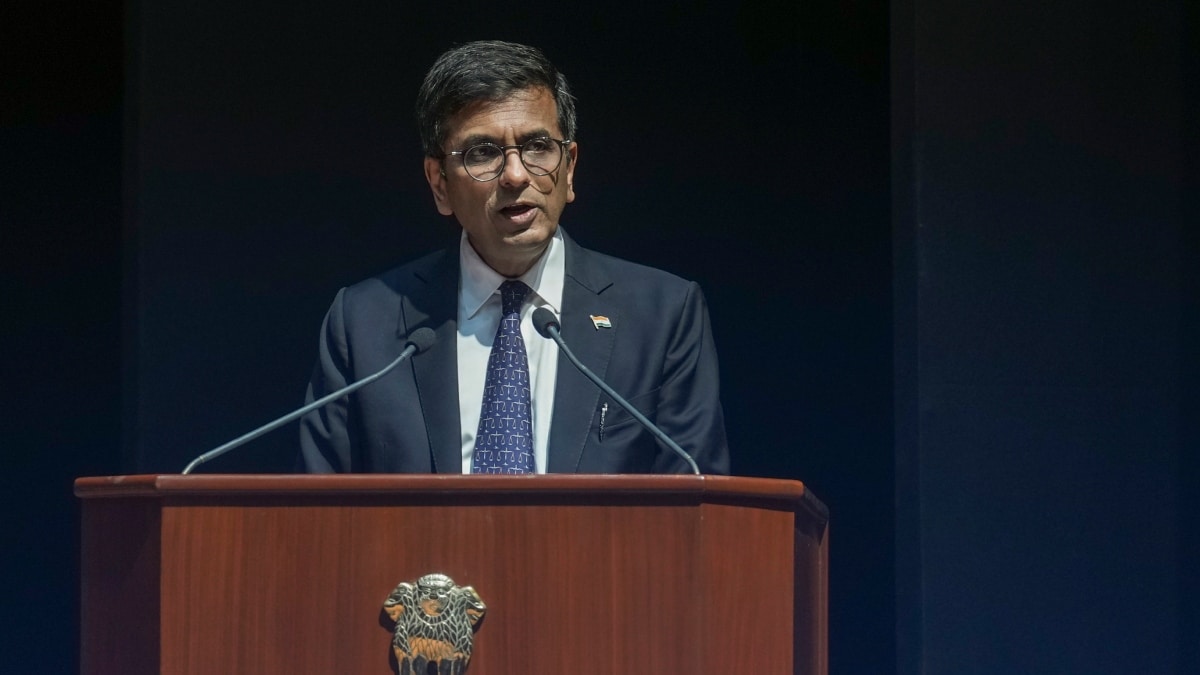
After eight months, on April 17, 2026, Oschandbank formally initiated international proceedings against Russia. The formation of an international arbitral tribunal was in accordance with the terms of the treaty. In order to evaluate the international investment dispute, former D.Y. Chandrachud has been appointed to represent Russia in the arbitration case.
The three-member tribunal will be presided over by Costa Rican arbitrator and former trade minister Dyalá Jiménez who was jointly picked by both sides. Stavros Brekoulakis, a professor at National University of Singapore, was appointed arbitrator by Oschadbank.
Retired high-court and apex court judges can serve as an independent and neutral judge rather than an acting advocate for the appointing country. They are usually appointed in international arbitration proceedings because of their extensive judicial knowledge and expertise.
However, this appointment comes after Chandrachud had previously declined Russia’s approaches to serve as its arbitrator for proceedings against Germany’s energy company Wintershall Dea under the Energy Charter Treaty and Ukraine’s energy entity Ukrenergo separately. This request coincided with the role designated by the Permanent Court of Arbitration (PCA) as the independent appointing authority for the Wintershall Dea v. Russia dispute. He subsequently stepped down from the position in the Wintershall Dea proceedings after disclosing the communications.
