



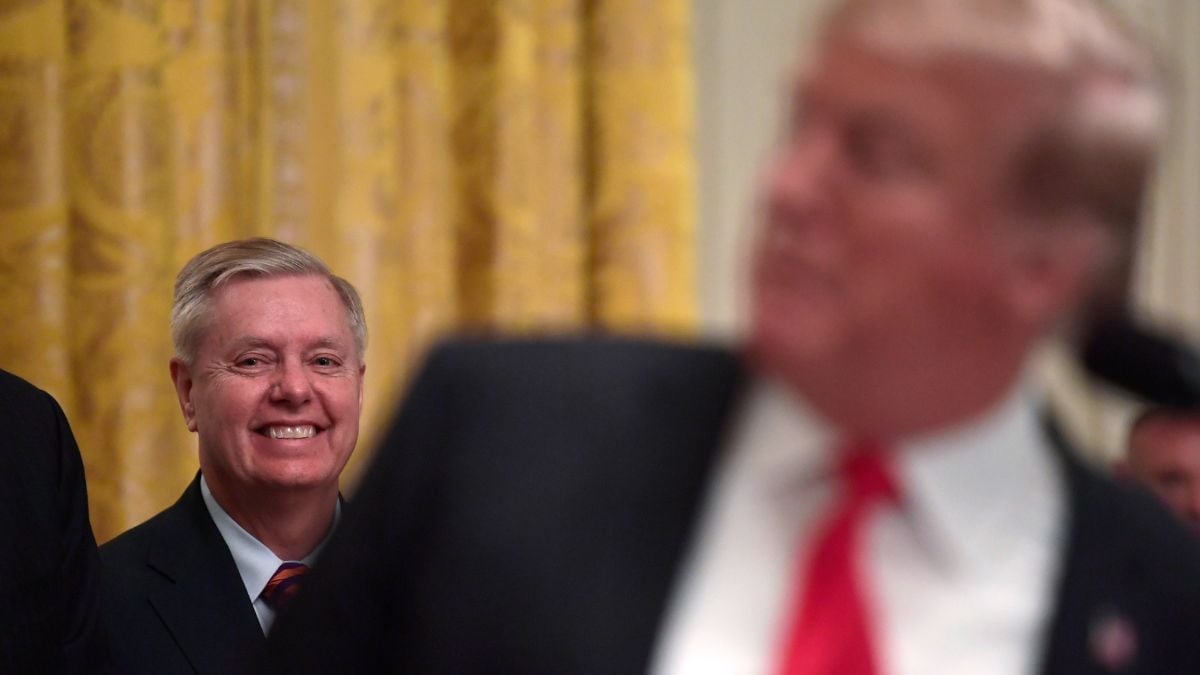
Lindsey Graham's sudden death on July 12 has left a serious legislative hole, one that threatens to badly hamper President Donald Trump's agenda both in the near term and further down the line. As a key Trump ally, committee chairman and seasoned dealmaker, Graham's absence narrows the Republican Senate majority and knocks momentum out of several White House priorities, from cabinet confirmations to defence spending and foreign policy.
Graham's death immediately cuts the Senate Republican majority to 52-47, a margin made even shakier by Senator Mitch McConnell's ongoing hospitalisation. This double absence changes the balance of power on key committees. On the Appropriations Committee, losing both Graham and McConnell leaves Republicans at 13 against 14 Democrats, raising a real chance of deadlocked or failed votes as Congress heads towards the September 30 government funding deadline. Graham also chaired the Appropriations subcommittee responsible for State Department funding, so a replacement will need to be found quickly to manage diplomatic spending during the ongoing US conflict with Iran. South Carolina Governor Henry McMaster will name a temporary successor to serve until a special election primary in August, though whoever takes the seat will not automatically inherit Graham's committee posts or his depth of legislative know-how.
An immediate test for the Trump agenda is the confirmation of acting Attorney General Todd Blanche. Graham was a dependable "yes" vote on the Senate Judiciary Committee, which now holds only an 11-10 Republican edge ahead of Blanche's hearings. Several committee Republicans, including retiring Senators Thom Tillis and John Cornyn, have yet to commit to backing Blanche, given the controversy over his handling of the Jeffrey Epstein files and an "Anti-Weaponization Fund". Should a single Republican such as Tillis vote against him, Blanche's nomination would fail in committee by 11 votes to 10. Even if it reaches a full floor vote, the tight numbers, made worse by McConnell's absence and possible defections from moderates like Lisa Murkowski and Bill Cassidy, mean his permanent appointment remains far from certain.
Graham chaired the Senate Budget Committee, where he had earlier played a central role in passing Trump's signature tax and spending bill. At the time of his death, he was putting together a third party-line reconciliation package designed to sidestep the 60-vote filibuster threshold. This "Reconciliation 3.0" bill was eagerly awaited by the White House, since it was expected to include a $350 billion boost for the military to restock supplies used up in the conflict with Iran, alongside measures aimed at easing living costs. Graham had recently met Defence Secretary Pete Hegseth to work out how reconciliation could be used to strengthen the Pentagon's position. His death leaves the Budget Committee without a leader, throwing plans for this complicated legislation into confusion and passing the gavel to likely successors by seniority, such as Senator Ron Johnson or Senator Roger Marshall.
Trump's flagship election security proposal, the SAVE America Act, which would require proof of citizenship and voter identification, has also taken a hit. The bill fell short of the 60 votes needed to beat a Democratic filibuster, but Graham had reportedly been looking at the budget reconciliation process as a way round that, allowing it to pass on party lines alone. Trump said he had spoken with Graham the night before his death, and that the senator had told him they were "all set" to move the legislation forward. Without Graham steering the parliamentary strategy, Trump has admitted that getting the voter ID bill through will now be a serious challenge.
Beyond domestic matters, Graham served as a crucial foreign policy interpreter for Trump, acting as a pragmatic adviser who understood how to work with the president's instincts. He often tempered Trump's "America First" leanings, standing as a check against the growing isolationist wing of the Republican Party. Only days before he died, Graham travelled to Ukraine, met President Volodymyr Zelensky, and announced a bipartisan agreement with the White House on a firm legislative package to sanction countries buying Russian oil and gas. With Graham gone and McConnell out of action, the two strongest voices for a traditional "peace through strength" Republican foreign policy have fallen silent, leaving the fragile Russia sanctions deal hanging in the balance.
Ultimately, Graham's rare ability to serve as a close confidant to Trump while still striking bipartisan deals in the Senate made him central to the White House's legislative strategy. His death threatens not only near-term cabinet confirmations and complex budget negotiations, but also reshapes the Senate's balance of power at a moment when the administration is managing international conflict alongside a tight domestic agenda. Going forward, the Trump administration must contend with a considerably tougher Senate landscape, having lost one of its most capable legislative operators.
