



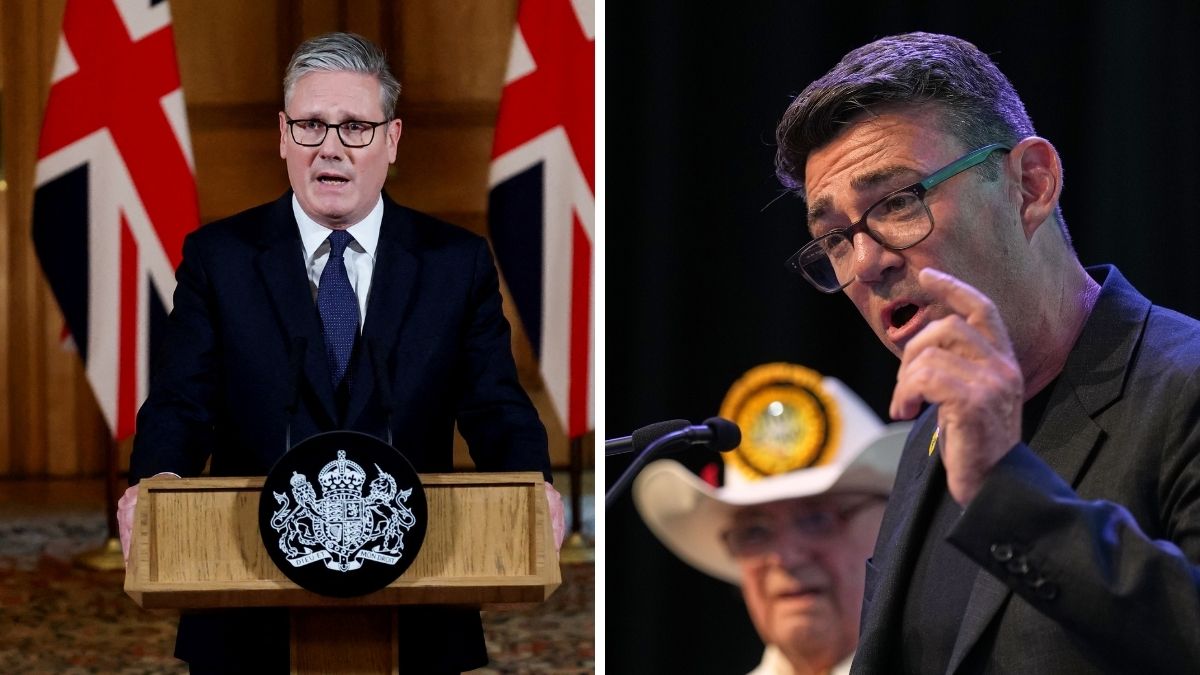
British Prime Minister Keir Starmer is expected to announce a timetable for his exit, a move that would bring his premiership to a dramatic end and clear the way for Britain's seventh prime minister in just over a decade. The crisis surrounding Starmer's leadership has been building for months. Labour's dismal showing in recent local council elections, in which the party lost nearly 1,500 seats, showed deep public frustration over the government's handling of the economy, alongside a string of political controversies. The immediate spark for the present upheaval, though, was Andy Burnham's return to parliament. The Greater Manchester mayor secured a commanding victory in the Makerfield by-election on June 18, comfortably defeating Reform UK and winning by almost 10,000 votes.
The campaign had been widely viewed as a vehicle to return Burnham to Parliament and position him for a leadership challenge. Burnham wasted little time in capitalising on the momentum. In his victory speech, he described the moment as Britain's "last chance to change" and promised to offer the country a "new path".
In the hours after the result, Starmer publicly projected confidence and determination. Speaking to reporters on June 19, he insisted he had no intention of stepping aside. "I have said repeatedly, I am not going to walk away," he declared, arguing that he owed a duty to those who had elected him. He also warned colleagues that a divisive leadership contest could undermine Labour's ability to govern effectively. Downing Street aides reinforced the message, insisting that the prime minister intended to spend the weekend focused solely on government business.
Behind closed doors, however, the political landscape was changing rapidly. During a weekend spent at Chequers with senior advisers and close allies, Starmer confronted the scale of the challenge facing him. Support for Burnham within the Parliamentary Labour Party surged at remarkable speed. By yesterday, Burnham's supporters claimed they had secured the backing of around 300 Labour MPs, effectively encompassing almost the entire parliamentary party. At the same time, more than 100 MPs had reportedly called on Starmer to establish a clear timetable for his departure. Senior figures expected that number to increase further once Parliament reconvened.
Pressure from within the cabinet proved particularly difficult to resist. Seven senior ministers, including Ed Miliband, Yvette Cooper, John Healey, Shabana Mahmood, Heidi Alexander, Douglas Alexander and Jonathan Reynolds, privately urged the prime minister to set a departure date. According to reports, ministers warned that if Starmer continued to insist publicly that he would fight on, a series of highly damaging resignations could follow.
Faced with the prospect of cabinet disintegration and a government paralysed by internal conflict, Starmer increasingly came to view an orderly exit as the least damaging option. The shift became apparent yesterday when Business Secretary Peter Kyle, one of Starmer's closest allies, appeared on television. Notably, Kyle declined to repeat the prime minister's earlier insistence that he would remain in office. Instead, he acknowledged that political "forces" were challenging Starmer's position and suggested the prime minister was reflecting on the new realities confronting him.
Kyle made clear that whatever transition took place, it had to allow the government to keep functioning effectively. His words were widely seen as tacit confirmation that preparations for Starmer's departure were already underway.
Reports indicate that Starmer and his advisers began drafting a resignation statement as early as June 20. Rather than announcing an immediate departure, the prime minister is expected to outline a timetable for transition, with autumn emerging as the most likely target for his exit.
Such a schedule would provide the government with greater stability during preparations for what is expected to be a politically sensitive autumn budget. It would also give Burnham time to assemble a prospective Downing Street team and allow the Labour Party to present a united front at its annual conference in late September. Early discussions about the transition are already said to have begun, including talks between Chief Secretary Darren Jones and Louise Haigh, a key figure in Burnham's camp.
While Burnham appears to be the overwhelming favourite to succeed Starmer, questions remain about whether a formal leadership contest will take place. Former Health Secretary Wes Streeting has reportedly secured the support of 81 MPs and has previously indicated he would stand in order to ensure a genuine debate about Labour's future direction. Some MPs favour a contest that would test Burnham's policy agenda, which includes proposals such as greater public control of utilities and replacing inheritance tax with a national care levy. However, there is growing speculation that Streeting could ultimately withdraw in the interests of party unity, potentially clearing the way for Burnham to assume the leadership unopposed.
The crisis has also attracted attention far beyond Britain. US President Donald Trump yesterday weighed in on the drama unfolding in Westminster. Trump used his Truth Social platform to confidently predict that the British prime minister would resign. He described Starmer's premiership as a failure and criticised Labour's approach to immigration and energy policy, particularly the government's decision to halt new oil and gas exploration in the North Sea. Declaring that Starmer had "failed badly". Trump nevertheless concluded his remarks with a parting message: "I wish him well."
