



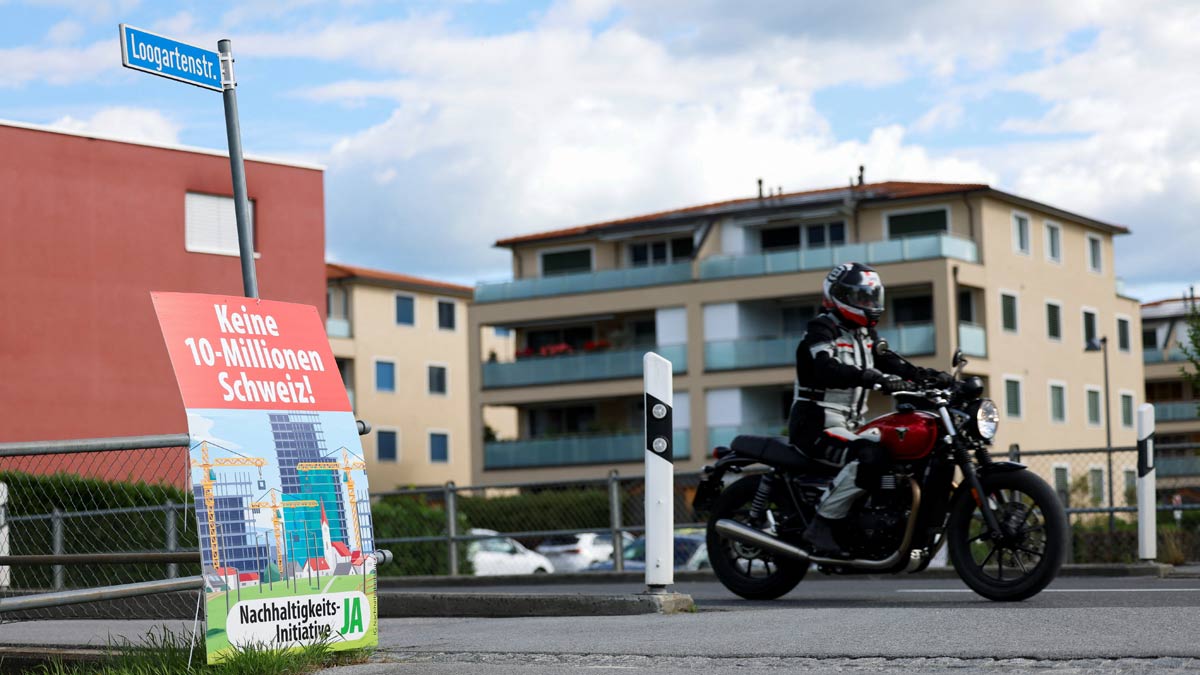
Voters in Switzerland have decisively rejected a controversial far-right proposal to cap the country’s population at 10 million, delivering a significant setback to the anti-immigration Swiss People’s Party (SVP) and reaffirming the nation’s commitment to economic openness and close ties with Europe.
In a referendum held under Switzerland’s unique system of direct democracy, around 55 per cent of voters rejected the measure while 45 per cent supported it. Turnout approached 60 per cent, reflecting the importance of a vote that many viewed as extending far beyond migration policy.
The initiative sought to prevent Switzerland’s population from exceeding 10 million by 2050. It proposed a series of strict measures if the country approached that limit. Should the population have reached 9.5 million before 2050, the government would have been required to impose tougher restrictions on asylum, residence permits and family reunification. If the population eventually exceeded 10 million, Switzerland could have been forced to withdraw from its bilateral agreement with the European Union on the free movement of people.
The proposal was championed by the SVP, the largest party in the Swiss parliament. Party leaders presented it as a “sustainability initiative”, arguing that rapid population growth driven by immigration was placing unsustainable pressure on housing, public transport, social services and natural resources. They also claimed it threatened the country’s traditional way of life.
Supporters pointed to the dramatic demographic changes Switzerland has experienced over the past two decades. Since a 2002 agreement with the European Union that eased cross-border movement, the country’s population has increased from roughly 7.3 million to 9.1 million. Foreign nationals now account for between 27 and 32 per cent of residents, among the highest proportions in the developed world.
The SVP successfully linked these demographic trends to everyday concerns such as rising rents, congested roads and overcrowded public services. Those arguments resonated with some centrist voters who felt the pace of population growth had outstripped the country’s ability to expand infrastructure and housing.
Yet the proposal faced opposition from an unusually broad coalition. The federal government, all major political parties outside the SVP and influential business groups campaigned against it. Critics argued that imposing a population cap would damage the Swiss economy by cutting off access to the foreign workers on whom so many sectors depend. Switzerland leans heavily on international talent, particularly in health care, hospitality, finance, technology and pharmaceuticals. Half of all hotel industry workers come from abroad, and hospitals and care facilities are equally reliant on foreign staff.
This dependence is becoming increasingly important as the country ages. Around one in five Swiss residents is now over the age of 65. Opponents of the initiative argued that Switzerland requires a steady inflow of younger workers, entrepreneurs and skilled professionals to maintain economic growth, support public services and help finance social welfare programmes as more citizens retire.
The referendum also became a test of Switzerland’s future relationship with the European Union. Many observers described the proposal as a potential “Swiss Brexit” because of the risk it posed to the country’s agreements with Brussels.
The EU remains Switzerland’s most important trading partner, purchasing more than half of its exports. European officials have repeatedly insisted that access to the single market is linked to acceptance of the free movement of people. Opponents, therefore, warned that the initiative could trigger economic uncertainty and damage relations with Switzerland’s largest market.
Following the result, Justice Minister Beat Jans welcomed the rejection as a vote for a “networked Switzerland”. He argued that voters had chosen stability, openness and reliability at a time of global economic uncertainty and growing geopolitical tensions.
The outcome also highlighted a clear geographical divide. Support for the proposal was strongest in rural and conservative areas, while major cities and border regions rejected it by large margins. In the capital, Bern, almost 84 per cent of voters opposed the measure. Geneva, home to numerous international organisations and United Nations agencies, also voted heavily against it. Tourism-dependent cantons such as Graubünden and Valais similarly rejected the proposal, reflecting concerns about labour shortages.
Switzerland has a long history of contentious immigration-related referendums. Previous votes have included the successful 2014 initiative against mass immigration and the ban on the construction of new mosque minarets. However, experts note that no country has ever adopted a hard numerical limit on its total population through a national vote.
Concerns about housing affordability, infrastructure and rapid population growth remain a live force in Swiss politics. Yet the referendum result suggests that a majority of voters were not prepared to jeopardise economic stability, public services and close integration with Europe in pursuit of strict population limits. In voting down the proposal, the Swiss chose pragmatism over restriction and reaffirmed the value of openness in a country whose prosperity is so closely tied to international mobility and trade.
