



The US now has its eyes set on acquiring Greenland. Just a day after it captured Venezuela’s leader, US President Donald Trump declared, “We need Greenland from he standpoint of national security.”
Experts say that the US's making a move to control the world’s largest island would break the NATO alliance.
Why Greenland?
The sparsely populated island is an autonomous part of Denmark, which ended its colonial rule in 1953.
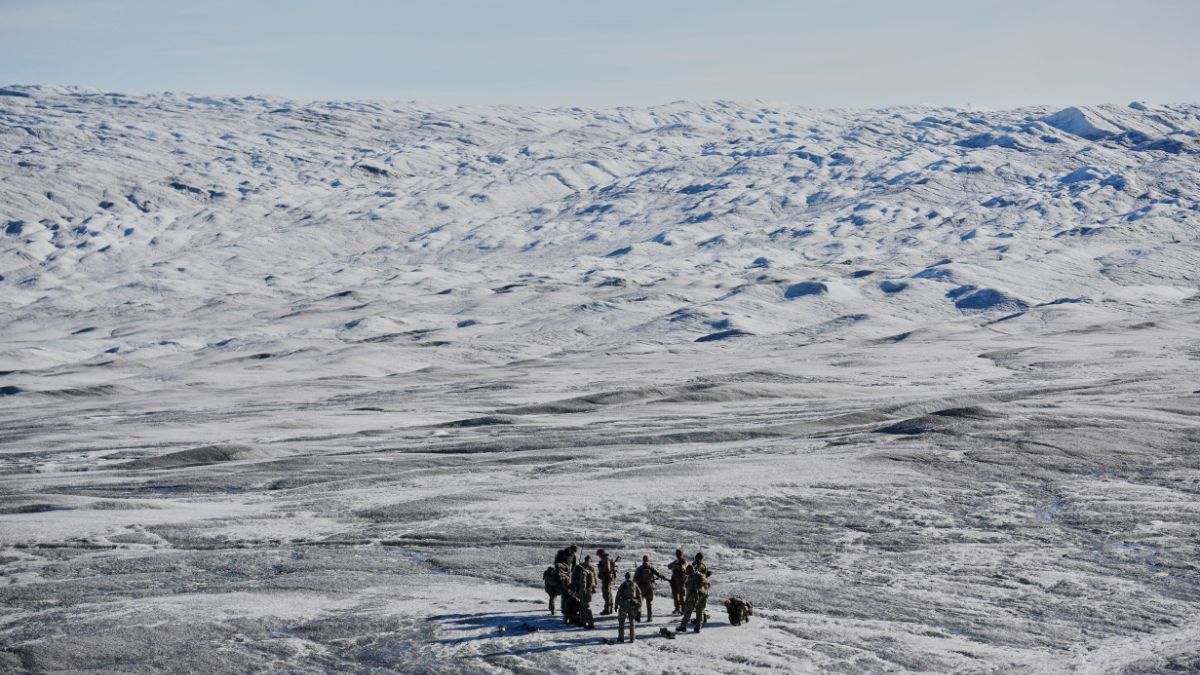
The entire territory, which spans a total area of 2,166,086 square kilometres, has only about 57,000 inhabitants, consisting mostly of the Inuit people. A majority of the island, approximately 80 per cent, except for a few coastlines, is covered in ice. The economy is based mainly on fishing and receives large subsidies from the Danish government.
Most of its population therefore lives in Nuuk, the capital, which is on the south-western coast.
Despite being part of Denmark, Nuuk is geographically closer to the US East Coast.
Trump has said that his ‘need’ for Greenland is for national security. The island’s position is strategic. Both China and Russia have been conducting military exercises in the Arctic seas. According to Trump, Denmark would be able to deter its forces from Greenland. Denmark's Foreign Minister Lars Lokke Rasmussen has rejected such statements from Trump. Just last year, the country pledged 42 billion Danish crowns ($6.58 billion) to boost its military presence in the Arctic despite knowing that Russia and China currently do not pose a significant military threat to the island.
The US currently operates one military base, the Pituffic space base, in the north west of the island. Only about 150 US personnel are currently stationed there. The base operates for missile defence, space and scientific research in the Arctic region. Apart from the base however, the US have not shown interest in increasing military presence around the island, despite offers from Denmark's prime minister last year.
A European defence official told Politico that “the white house is not interested” in bringing more military presence to the island.
Analysts say the biggest reason the US is considering occupying Greenland is due to its massive trove of minerals lying unexploited, under the ice.
Why now?
The land has rich deposits of natural resources, from oil, gas and rare earth minerals. Oil and gas companies have tried to find the island's gas and oil reservoirs (approximately 31,400 million barrels of oil), since the 1970’s according to a report by the BBC, but they left empty-handed due to the land's geology. The minerals found are used to manufacture everything from electric cars to military equipment. Greenlands's stroes of Uranium and graphite have been largely untapped.
Trump has downplayed the US’s need for Greenland's resources, telling reporters last month, “We need Greenland for national security, not for minerals.”
The country's ice sheet has also been melting due to climate change, which would make the terrain much easier to exploit. The decreasing ice in Arctic seas over the past few decades means that the ecosystem is changing and that the ocean passages to the country are opening up. However, the lack of infrastructure in the country would remain a hurdle to investors and companies seeking to mine the reserves.
Greenland has now been part of Denmark for about 300 years. Most Greenlanders would still favour eventual independence from their former colonisers. However, the US is now a much bigger threat, and very few Greenlanders would choose US leadership over Denmark’s. Reuters reported that 85 per cent of Greenlanders are against American rule.
The island’s government has repeatedly asserted that it does not want to the part of the United States.
Greenland Prime Minister Jens-Frederik Nielsen has called for the US to once again have “respectful dialogue.”
